

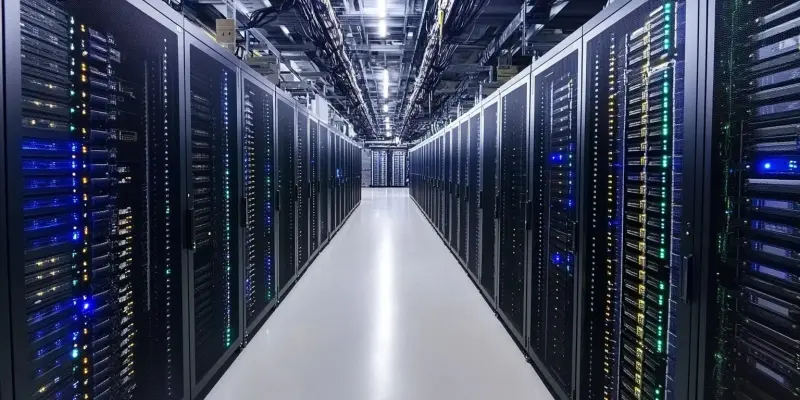
Flexential Builds Cutting-Edge Data Centers to Power AI Demands
As advancements in artificial intelligence continue to drive unprecedented demand for high-performance computing infrastructure, Flexential steps up to the challenge by constructing state-of-the-art data centers designed to meet these growing needs. Recognizing the critical role of robust and scalable facilities in supporting the immense processing power and storage requirements of AI applications, Flexential has committed to enhancing its infrastructure to ensure optimal performance, reliability, and security. By focusing on the development of sophisticated data centers equipped with advanced technology, Flexential aims to provide the backbone necessary for AI-driven industries to thrive in an increasingly data-centric world.
AI technologies require significant computing capabilities, strong connectivity, and efficient storage solutions to adequately manage their complex workloads. Flexential’s approach involves creating data centers that can handle large-scale applications, ensuring that the infrastructure is both powerful and flexible enough to adapt to evolving technological demands. This flexibility is crucial for accommodating the rapid advancements in AI, as new applications and use cases emerge that push the boundaries of existing technology. In response, Flexential continually upgrades its facilities to stay ahead of the curve, offering clients the cutting-edge capabilities they need to remain competitive.
The emphasis on advanced infrastructure is driven by the understanding that the success of AI initiatives depends heavily on the ability to process and manage vast amounts of data quickly and securely. Flexential’s data centers are designed to provide the high-performance computing environment required for such intensive tasks. This includes implementing state-of-the-art cooling systems, power management, and security measures to ensure that the centers operate efficiently and reliably without interruptions. By prioritizing these elements, Flexential guarantees that their clients can run AI applications smoothly, with minimal risk of downtime or data breaches.
Moreover, the company’s commitment to innovation extends beyond merely building advanced facilities. Flexential actively collaborates with clients to tailor their services to specific AI needs, offering customized solutions that align with unique industry requirements. This client-centric approach ensures that businesses leveraging AI can maximize their potential and achieve their strategic objectives without facing infrastructure-related bottlenecks. As AI technologies continue to evolve, so too do Flexential’s offerings, making it a key player in the AI ecosystem and a reliable partner for organizations seeking to harness the power of artificial intelligence.
In conclusion, Flexential’s ongoing efforts to develop state-of-the-art data centers underscore their crucial role in supporting the expanding demands of AI. Through continuous investment in infrastructure, technology, and client collaboration, the company has positioned itself at the forefront of the AI-driven era, providing the essential support needed for advanced computations and data management. This proactive approach ensures that Flexential remains a cornerstone in the AI landscape, enabling industries to reach new heights in innovation and efficiency.