

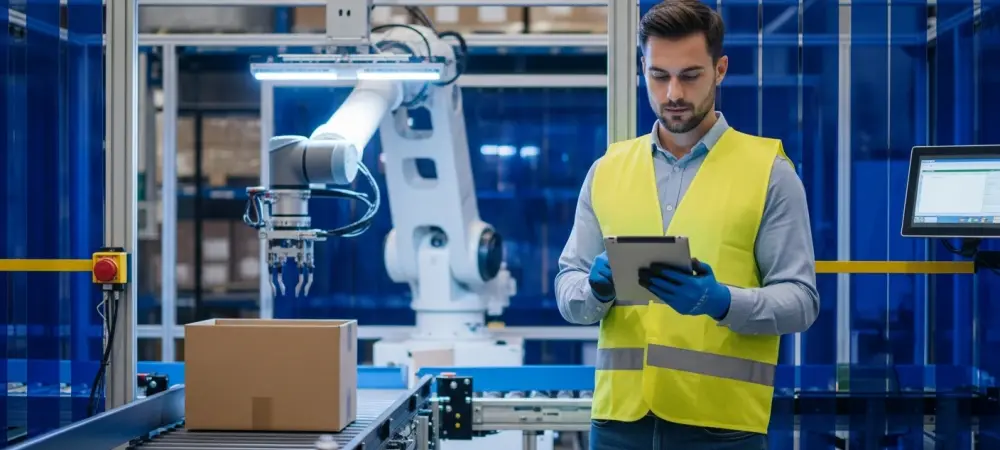
Surging e-commerce demand, next-day promises, and a shrinking labor pool have converged to make the warehouse pick not a background task but the profit-critical moment that decides whether orders ship on time, in full, and at a cost that margins can bear. That is the pressure cooker in which Smart Robotics built an embodied AI platform that replaces point-tool robots with turnkey cells designed to learn from real work, not just from labs.
Context and Stakes
Embodied AI in this setting means the software and the hardware are engineered as one system that senses its environment, evaluates uncertainty, and adapts behavior with minimal human retuning. The company’s choice to deliver complete robotic cells—vision, grippers, conveyors, safety, and the orchestration brain—counters the industry’s past reliance on generic arms plus integrator glue. That shift matters because most failures in high-variance picking come from edge-case items and flow breaks at the cell boundary, not from arm kinematics.
The macro tailwinds are clear: wage pressure, chronic vacancies, and seasonal spikes are pushing operators toward guaranteed outcomes, not toolkits. As service-level agreements become procurement’s north star, buyers favor vendors that can promise throughput and quality end-to-end. Against this backdrop, Smart Robotics’ claim of 99.5% uptime and up to 1,000 picks per hour is less a brag than a translation of engineering into CFO language: predictable capacity, fewer exceptions, steadier unit economics.
Deep Dive: Features and Performance
The platform stacks perception, planning, and control beneath a cell-level coordinator that arbitrates tasks, supervises health, and balances speed against risk. Perception is tailored for warehouse reality: reflective shrink, deformable mailers, polybags with air, and mixed totes. Vision models infer pose and material compliance, while grasp synthesis ranks candidate picks by success probability and downstream needs—such as label orientation for induction or pallet stability. The data engine is the centerpiece. With more than one billion documented picks across 120+ deployed robots, the system learns from actual SKU distributions, packaging quirks, and failure signatures. On-site feedback captures successes, misgrips, and regrasp cascades; the cloud trains refreshed models; updates propagate to fleets with safeguards for rollback. This loop compounds: every peak season hardens the policy against future stress, creating a network effect that a new entrant cannot fake with synthetic data alone.
Hardware is pragmatic rather than flashy. End-of-arm tooling swaps between suction, hybrid, and fingered grippers; conveyors meter flow; sensors monitor slip and seal; safety complements allow close human-robot coexistence without throughput-killing dead zones. Deployed cells span e-commerce piece picking, sorter induction, case palletizing and depalletizing, with a roadmap toward mixed case palletizing—where 3D bin-packing, stability modeling, and real-time re-planning must cohere under second-level deadlines.
Performance claims warrant context. Human pickers can burst fast but fatigue, while legacy automation is durable but brittle with SKU change. A cell sustaining 1,000 picks per hour with 99.5% uptime narrows labor exposure and stabilizes cost per order; the same adaptivity reduces packaging and improves shipping density by choosing picks and placements that minimize void. However, transparent, entangled, or novel items still trigger reattempts; integration into WMS and conveyor logic can elongate time-to-value; and data-sharing rules must balance customer privacy with cross-site learning.
Competitive Posture
Compared with Copal Handling Systems or Lowpad, which excel in defined handling or mobile movement, Smart Robotics distinguishes itself by depth of integration and the live-data moat. Turnkey SLAs and lifecycle support reduce buyer risk; continuous learning lifts performance quarterly rather than only at hardware refresh. The €10 million Series A—led by Rotterdamse Havendraken with Innovation Industries and Ernij Next—targets broader SKU coverage, new grippers, and higher throughput tiers, while funding the hard research in mixed case palletizing that, if cracked, unlocks top-tier value in retail distribution and 3PLs.
Verdict and What Comes Next
This technology earned credibility by converting messy, variable work into a managed service with measurable uptime, quality, and cost control, while using fleet data to climb the learning curve faster than integrator-led rivals. The defensibility lay in the feedback loop and full-stack ownership, yet the road ahead hinged on taming edge-case items, streamlining WMS integration, and codifying data governance that enables federated learning without eroding trust. For operators, the actionable next step was to pilot a cell where variance hurts most, instrument end-to-end KPIs, and expand only when the data proved sustained gains.