

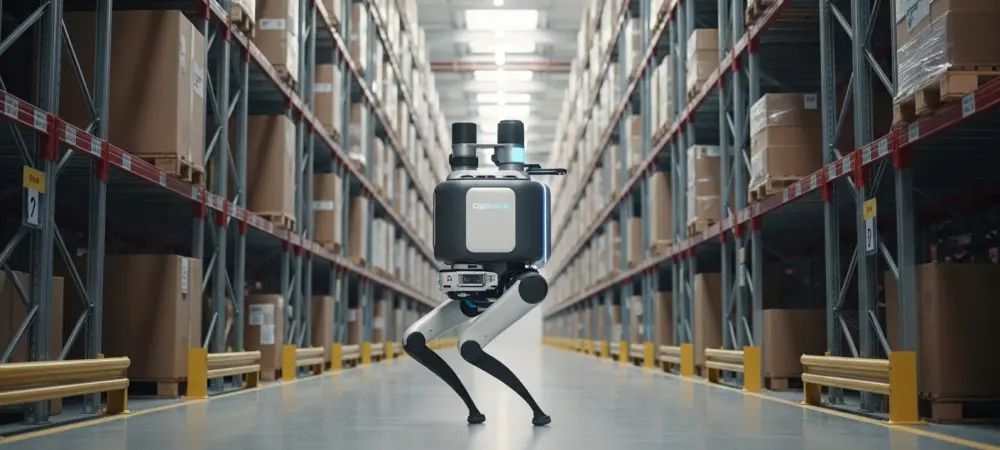
The traditional image of a warehouse as a chaotic maze of manual labor and heavy machinery is rapidly evolving into a sophisticated ecosystem where biological and mechanical intelligence coexist. At the Hannover Messe technology trade show, Accenture unveiled the results of a groundbreaking initiative that successfully integrated humanoid robots into live operations at a Vodafone facility in Duisburg, Germany. This collaboration, involving SAP and Vodafone Procure & Connect, represents a pivotal shift from experimental robotics to the practical application of physical AI within the industrial supply chain. By utilizing advanced hardware and cloud-based logic, these machines transitioned from laboratory curiosities to functional assets capable of navigating complex environments. This pilot proved that the introduction of versatile humanoid systems can address chronic labor shortages while simultaneously improving the precision of logistical workflows that were previously prone to human error. The project demonstrated how the convergence of robotics and enterprise software can create a more resilient operational framework.
Operational Efficiency Through Collaborative Intelligence
Central to this deployment was the implementation of a proprietary Robot Brain system developed by Accenture to facilitate natural communication between humans and machines. These humanoid units did not simply operate in isolation; they engaged with warehouse personnel through a combination of voice commands, text interfaces, and intuitive gestures to ensure a safe and collaborative workspace. This level of interaction was supported by a deep integration with the SAP Extended Warehouse Management system, allowing the robots to receive and execute transactional data in real time. Unlike traditional automated guided vehicles that follow fixed paths, these robots autonomously navigated the facility to perform granular inspection tasks. They identified damaged packaging, located misplaced inventory items, and evaluated the structural integrity of pallet stacking. This ability to interpret physical surroundings while adhering to strict business logic represents a significant leap forward in warehouse automation technology. Beyond the standard inventory checks, the humanoid bots patrolled warehouse aisles to proactively identify physical hazards that could jeopardize worker safety or impede machinery. They monitored weight distribution on shelving and scanned for unused storage capacity, feeding this critical information back to human operators through a unified data dashboard. The robots served as mobile sensor platforms, capturing high-fidelity information that traditional static cameras often miss due to blind spots. By assuming responsibility for repetitive and physically demanding oversight tasks, the machines allowed human staff to focus on higher-level problem-solving and exception management. The synergy between autonomous robotics and enterprise software created a closed-loop system where every physical action was recorded and analyzed to optimize the overall throughput of the facility.
Virtual Training and Future Scalability
A fundamental technical highlight of this initiative involved the use of high-fidelity digital twins to streamline the pre-deployment training phase for the robotic fleet. Leveraging the Physical AI Orchestrator alongside the Nvidia Omniverse and Metropolis libraries, the engineering team created a virtual mirror of the Vodafone warehouse to test various scenarios. This simulation environment allowed the robots to acquire complex motor skills through imitation and reinforcement learning without the risks associated with training in a live environment. By the time the physical units were introduced to the floor, they had already mastered the nuances of navigating narrow corridors and interacting with diverse object geometries. This methodology ensured that the machines remained versatile and adaptable to shifting operational requirements rather than being restricted to a single, repetitive function. The use of synthetic data to refine robotic behavior significantly reduced the time required for onboarding, proving that virtual training is essential for scaling.
The successful pilot in Duisburg established a robust blueprint for organizations seeking to modernize their supply chains through the adoption of flexible, autonomous workforces. Industrial leaders looked toward expanding these capabilities by integrating more diverse sensor arrays and refining the edge computing power required for faster local processing. Future considerations focused on establishing standardized communication protocols between different robotic brands to ensure interoperability within a single warehouse environment. Companies prioritized the development of more energy-efficient actuators to extend the operational runtime of bipedal units, ensuring they could keep pace with high-volume shift schedules. The transition toward humanoid-assisted logistics provided a clear path to reducing workplace injuries and stabilizing labor costs in an increasingly volatile global market. By moving away from rigid automation toward adaptable physical AI, businesses secured a competitive advantage that balanced technological innovation with human-centric design.