

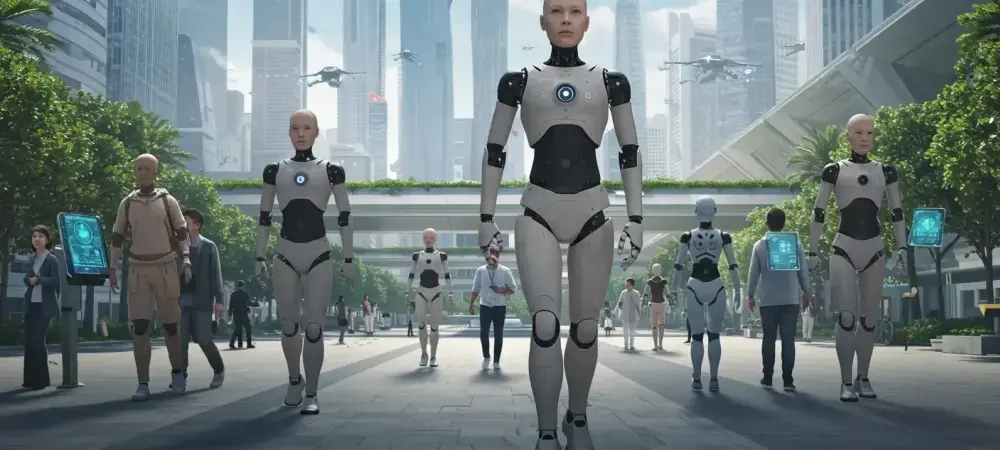
The rise of autonomous systems is reshaping industries, and at the heart of this transformation is the embrace of embodied AI in robotics. By integrating human-like perception and physical capabilities into machines, embodied AI is elevating robots from repetitive task performers to versatile collaborators in complex environments. McKinsey’s recent insights reveal a growing interest in such technology, with over $1 billion in annual investments for general-purpose robots since 2025, and patent filings rising by 40% each year, demonstrating the potential of robotic coworkers in various domains.
Decoding Embodied AI
Embodied AI is more than an enhancement; it signifies a paradigm shift where robotics progress beyond mere automation. Defined by the fusion of sensory perception and mechanical agility, this technology empowers robots to interact with and adapt to their surroundings in a manner reminiscent of human behavior. Perception involves understanding and responding to diverse stimuli, while physical capabilities ensure robots can navigate and manipulate objects effectively. This synergy is essential as industries demand smarter, more adaptable robotic solutions.
Prominent advances in AI technologies like computer vision and natural language processing are imparting sensory perception to machines. Equipped with these capabilities, robots can interpret visual and auditory cues, allowing seamless interaction with dynamic environments. This level of understanding is pivotal in performing delicate tasks that rely on precision and nuance, marking a significant departure from traditional robotic systems.
Building Blocks of Human-like Robotics
Sensory and Perceptual Technologies
Technological strides underpinning sensory perception in robotics emulate human senses, albeit in digital form. Advances in sensors, cameras, and microphones enable machines to perceive their surroundings, reacting with unprecedented accuracy. Such technologies bridge the gap between human and machine interaction, facilitating a flow of information that enhances decision-making processes and enables robots to function autonomously in diverse settings.
The implementation of human-like perception brings profound implications for enhancing robotic interactions with environments. As robots become adept at interpreting stimuli such as touch, sight, and sound, they can perform tasks once confined to human capability. This development fosters intuitive engagement, particularly in industries where contextual comprehension is crucial.
Agile Movement and Manipulation
In parallel to improved perception, robotics has witnessed significant progress in mimicking human-like physical movements. Advances in algorithms and mechanical design allow robots to execute tasks with fluidity and coordination, closely paralleling human dexterity. This advancement opens doors to applications in complex and unpredictable settings, ranging from healthcare to disaster response.
The capability for agile manipulation and movement transforms task execution in environments where adaptability is key. Robots can perform intricate operations, respond swiftly to changes, and seamlessly integrate into workflows. These strides underscore embodied AI’s potential to redefine efficiency and precision across various sectors.
Innovations and Emerging Trends
Recent innovations in embodied AI continue to outpace traditional robotics, driving significant shifts in industry landscapes. Companies are pivoting toward developing multipurpose robots capable of fulfilling myriad roles. This pivot aligns with consumer expectations for versatile and responsive solutions tailored to dynamic business ecosystems. The surge in patent filings and rising investments underscore the trend toward integrated, general-purpose robotic solutions. Market projections indicate substantial growth, with an expected contribution of half from China by 2040, reflecting the anticipated demand for such technologies. As demands evolve, businesses must stay attuned to these advancements to remain competitive.
Industry-wide Applications
Embodied AI’s adaptability is evident in its deployment across diverse sectors. Logistics, traditionally reliant on manual labor, is witnessing an upheaval as robots now handle sorting, packing, and transportation tasks. The healthcare sector, too, benefits from robotic assistance, such as automated surgical tools and companion devices for patient care, showcasing embodied AI’s versatility. Incorporating embodied AI opens doors to pioneering use cases within industries. With its ability to adapt and improve processes, companies are increasingly turning to robotic solutions to tackle unique challenges. As robots expand their roles, industries tap into boundless potential for innovation and efficiency.
Navigating Challenges
Despite promising advancements, embodied AI faces several hurdles that impede widespread adoption. Technical challenges, ranging from limited battery life to developing robust task-specific models, are significant constraints. These issues restrain operational viability, particularly in roles requiring sustained performance over extended periods. Additionally, regulatory frameworks and societal acceptance pose barriers. Ensuring that robots operate within legal parameters while maintaining public trust necessitates a meticulous approach to deploying these technologies. Efforts to address these concerns are underway, involving collaboration between tech companies, regulators, and society to create conducive environments for growth.
Future Trajectory
As embodied AI continues to evolve, the horizon promises even more transformative breakthroughs. Future developments may include advanced algorithms that further enhance robots’ cognitive abilities and adaptability. The integration of AI with robotics holds potential for revolutionizing workplace dynamics, fostering the emergence of electronic coworkers and reshaping labor markets.
The evolution of technology standards and guidelines is equally pivotal in shaping embodied AI’s future. A stable regulatory environment will promote responsible innovation and integration across industries. Knowledge sharing and cooperation among stakeholders will pave the way for a balanced approach to harnessing the full potential of this technology.
Summation
Embodied AI in robotics has emerged as a game-changer, redefining traditional perceptions of automation. This technology blends perception with physical capability, enabling robots to transcend routine tasks and assume more complex roles across industries. The journey toward widespread adoption necessitates tailored approaches, coupled with overcoming technical challenges and regulatory considerations. Embracing this technological evolution promises to unlock new efficiencies, expand possibilities, and ultimately reshape how industries and societies function in the years following.