

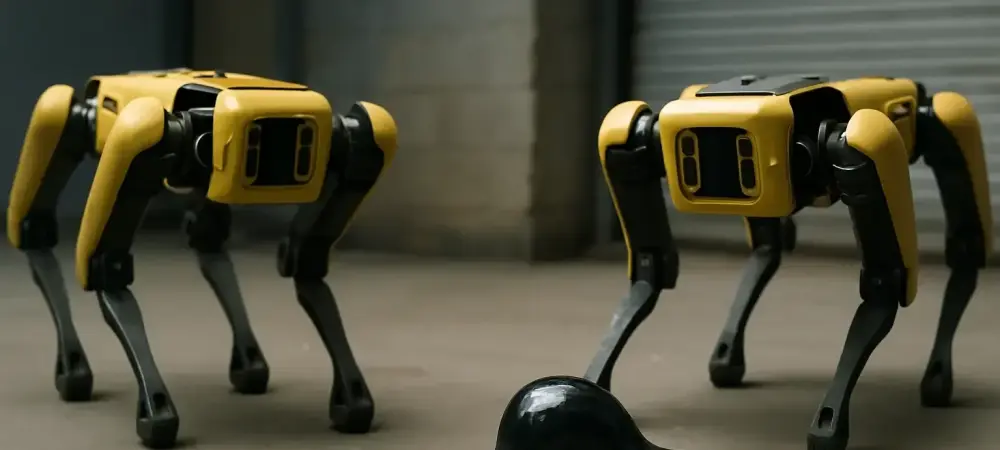
Robotics are advancing rapidly. In 2025, more than half of healthcare facilities surveyed reported using robotics, signaling a new era in empathetic robotics. Among these innovations are robotic dogs and magnetic slime robots, which are changing approaches to elder care and minimally invasive medical procedures. These technologies are designed to heal and engage with humans emotionally and biologically, offering compelling solutions where traditional methods may fall short.
Exploring Robotic Dogs’ Features and Applications
Robotic dogs are a groundbreaking addition, primarily serving as therapeutic companions in elder care and dementia therapy. Current models are interactive and lifelike, with the capability to respond to human touch and voice, simulate breathing, and express emotions. This realistic behavior significantly reduces anxiety and agitation, promoting emotional well-being in patients, especially those suffering from conditions like dementia or Alzheimer’s. Townsville University Hospital in Australia has incorporated robotic puppies into dementia therapy, reporting moments of happiness and enhanced mental clarity among patients.
Pricing varies based on features of robotic dogs. Basic models like Joy for All Companion Pets, priced between $150 and $250, are prevalent in US and UK healthcare homes, offering lifelike reactions for emotional companionship. In contrast, advanced models like Tombot’s Jennie, priced around $3,000, feature over 1,200 sensors for facial recognition and deep learning to emulate human-like interactions. While some express concerns about replacing human interaction, results indicate that robotic dogs often provide comfort where human help or medication fails, especially for patients with advanced dementia.
Advancements in Magnetic Slime Robots
Magnetic slime robots have revolutionized minimally invasive medicine, offering novel approaches to in-body procedures. Composed of jelly-like materials with magnetic particles, these robots can be remotely guided, adapting to both liquid and solid states to reach areas traditional tools can’t access safely. Their innovative abilities facilitate medical processes like removing swallowed objects in children and precisely delivering drugs to organs or infection sites, minimizing systemic side effects. Despite being in experimental stages, preliminary research highlights their potential for minimally invasive surgeries and diagnostics. Experiments conducted by Prof. Li Zhang at the Chinese University of Hong Kong showcased promising results where slime robots successfully picked up foreign objects in simulated environments. However, challenges such as biocompatibility remain; the magnetic materials, if broken down inside the body, pose toxicity risks. Protective coatings like silicon dioxide are under investigation to ensure safety in human trials.
Emerging Trends in Empathetic Robotics
Empathetic robotics are shifting toward creating machines that fulfill human needs in deeply personal and impactful ways. Robotic dogs and magnetic slime robots are front-runners in demonstrating technology’s potential to enhance emotional and medical interventions. These innovations are part of a broader trend redefining care and healing. They illustrate how robots are now engaging empathetically with humans beyond mere automation, suggesting that the future of robotics involves nurturing both physical and emotional well-being. Robotic pets shouldn’t be viewed solely as replacements for live therapy animals, but rather as complementary tools providing low-maintenance alternatives in scenarios where real pets aren’t feasible. Their use in therapeutic settings challenges conventional approaches, introducing new possibilities while necessitating ethical reflection, particularly concerning transparency about their nature and capabilities.
Real-World Applications and Case Studies
Robotic dogs and magnetic slime robots have seen successful real-world applications within healthcare sectors. These technologies are improving elder care and enabling minimally invasive medical procedures that were previously inconceivable. For instance, robotic puppies at healthcare facilities have become integral in dementia therapy, fostering positive emotional responses, while magnetic slime robots demonstrate effectiveness in experimental settings for drug delivery and object retrieval, showcasing their potential in diverse applications.
Unique use cases underscore these technologies’ adaptability and promise in therapeutic settings, encouraging further exploration and integration within varied industries. Their ability to cater to specific needs, from elder companionship to delicate medical maneuvers, portrays their transformative role and potential to become healthcare mainstays.
Looking Forward: Future Prospects
The trajectory of empathetic robotics suggests promising future developments. As technology advances, robotic dogs and magnetic slime robots are likely to play increasingly significant roles in healthcare. Potential breakthroughs include improving the lifelikeness and functionality of robotic dogs while addressing biocompatibility issues in slime robots. These technologies may pave the way for more sophisticated empathetic interactions and more effective medical interventions.
With costs expected to decline and accessibility to increase, integrating these robots into everyday life and medical practice could become more common. Their presence might resemble that of a playful toy or unique medical device, emphasizing emotion and empathy as primary considerations in robotic design.
Final Thoughts on Technological Integration
In conclusion, robotic dogs and magnetic slime robots are transformative technologies in modern healthcare, revolutionizing approaches to emotional support and medical procedures. As empathetic robotics evolve, they redefine care by prioritizing emotional and biological engagement, offering compelling solutions where traditional methods may not suffice. These innovations symbolize a shift in technology use, heralding a future where robots are integral not just as tools but as empathetic partners in healthcare and daily living.