

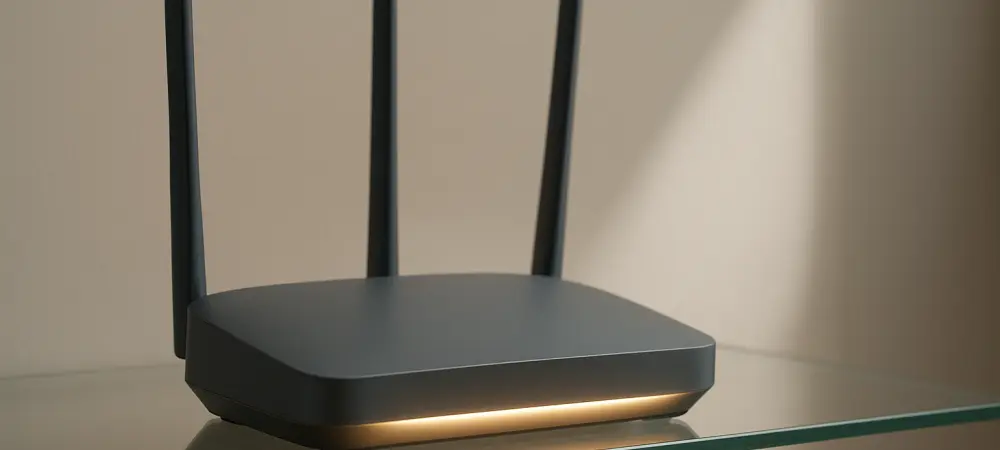
By prioritizing network phase coordination, the Archer 8 Ultra maintains low latency even when multiple high-bandwidth applications are running simultaneously. This strategic shift in engineering marks a departure from the industry’s obsession with peak theoretical speeds, focusing instead on the practical reality of maintaining a stable connection in congested residential environments. As we navigate the complexities of digital life, the sheer number of wireless signals from neighboring networks creates a chaotic atmosphere where even fast routers struggle to provide a consistent experience. The Archer 8 Ultra addresses these challenges by implementing the core tenets of the Wi-Fi 8 standard, also known as IEEE 802.11bn. Rather than simply widening the data pipe, this hardware focuses on the efficiency of every packet transmitted, ensuring that jitter and packet loss are minimized even when the local spectrum is saturated with competing traffic from smart devices.
Engineering a New Standard for Wireless Stability
StabilityEngine: The Core of Throughput Consistency
At the heart of the Archer 8 Ultra lies a sophisticated Broadcom Wi-Fi 8 chipset that powers the proprietary StabilityEngine suite. This system integrates advanced technologies, including Ultra-Efficient Quadrature Modulation (UEQM) and a refined Modulation and Coding Scheme (MCS), which optimize how data is encoded and transmitted. By utilizing 2xLDPC, or Low-Density Parity-Check, the router significantly enhances its error-correction capabilities, allowing it to maintain a steady flow of information even as a user moves further away from the access point. Preliminary testing suggests that these innovations provide a 33% improvement in consistent throughput at long ranges when compared to previous Wi-Fi 7 hardware. This is particularly beneficial for large homes where signal degradation at the edges of the property has historically led to frustrating slowdowns during critical tasks like video conferencing or professional gaming sessions.
Network Phase: Optimizing Congestion Management
Managing a network becomes difficult as the number of connected devices grows, but the Archer 8 Ultra utilizes Network Phase Coordinated Access (NPCA) to mitigate this specific problem. In traditional setups, devices often compete for airtime in a way that leads to collisions and retransmissions, which ultimately drives up latency and reduces the quality of service. NPCA allows the router to synchronize the communication phases of various clients, organizing the traffic so that each device receives the necessary bandwidth without interfering with others. This level of coordination is essential for the modern smart home, which can feature over a hundred distinct sensors, cameras, and entertainment systems all vying for a slice of the wireless spectrum. By ensuring that these high-density environments remain responsive, the Archer 8 Ultra proves that reliability is the new benchmark for excellence, moving beyond the era where raw speed was the only metric that mattered.
Physical Innovation and Long-Term Connectivity Strategies
Integrated Hardware: Redefining Coverage and Expandability
The physical design of the Archer 8 Ultra is ambitious, featuring eighteen high-performance internal antennas that utilize a specialized Multi-Floor Mode. This system does not just blast a signal in all directions; it intelligently reshapes the wireless footprint to optimize coverage based on the specific layout of the residence, whether it is a sprawling single-story ranch or a narrow multi-level townhouse. This adaptability ensures that the 19 Gbps of total tri-band bandwidth is distributed effectively across up to 3,600 square feet of living space. Furthermore, the inclusion of a dedicated Wi-Fi 8 RF chip with Range Boost technology allows the router to maintain robust communication with low-power Internet of Things devices that are often situated at the extreme edges of the network. This comprehensive approach to coverage eliminates dead zones and provides a foundation for a seamless mesh experience, especially when paired with compatible nodes.
Strategic Rollout: Future-Proofing the Home Network
The initial launch of the Archer 8 Ultra in regions such as the UK and Canada set a high bar for the market, though the premium pricing reflected its status as a flagship solution for early adopters. It was observed that the initial rollout focused on the most critical stability features, while future capabilities like Dynamic Spectrum Optimization and Enhanced Link Reliability remained scheduled for subsequent updates. For those seeking to modernize their infrastructure, the most effective path forward involved evaluating the current saturation of their local wireless environment before committing to such a significant investment. As the industry moved toward a mesh-centric future, many users found that integrating the Deco 8 Ultra system provided a more scalable way to achieve uniform reliability. Ultimately, the transition to Wi-Fi 8 prioritized the quality of every connection, encouraging a shift in focus toward long-term network health rather than just immediate gains.