

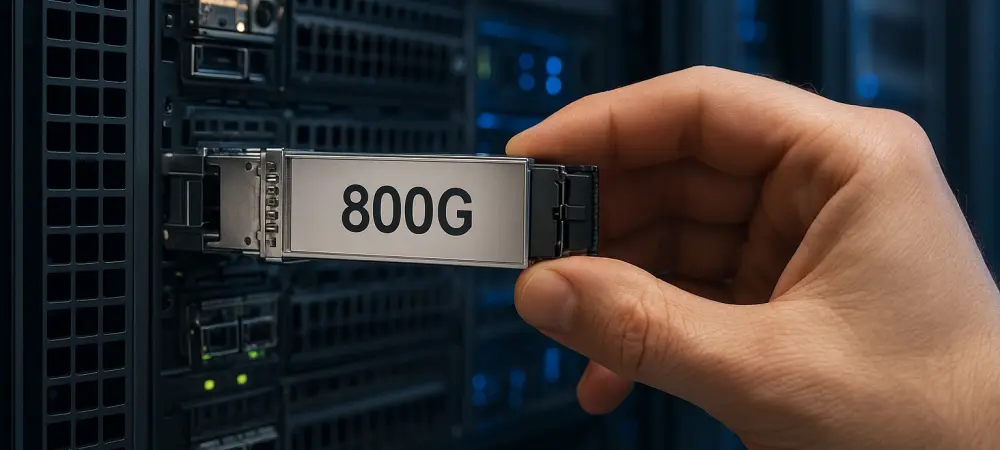
Relying on breakout configurations to bridge the speed gap between 400G ports and 100G legacy systems requires total alignment of switch logic, transceivers, and management software. In the high-stakes environment of 2026, where a single millisecond of latency can derail a massive artificial intelligence training operation, the stakes for network precision have never been higher. As the digital economy accelerates, the architectural blueprint for high-capacity networking has moved beyond mere speed upgrades to a sophisticated exercise in physical and protocol synchronization. This shift demands a granular understanding of optical interfaces, as the margin for error in signal integrity vanishes at higher frequencies. Organizations find that simply swapping modules is insufficient when the underlying fiber plant and electrical backplanes are pushed to their limits by the requirements of modern computational clusters. Navigating this transition successfully involves a holistic view of the ecosystem to prevent hardware failures.
The Catalysts: AI Demands and Standard Maturity
The primary driver behind these infrastructure upgrades is the rapid maturation of artificial intelligence training and deployment cycles. Within modern data centers, massive bandwidth is essential for connecting vast arrays of specialized accelerators, while inference systems demand high-speed, low-latency movement between compute nodes and storage arrays. As of 2026, the density of these clusters has reached a point where legacy 100G pipelines act as significant bottlenecks, impeding the performance of large language models and real-time processing engines. Consequently, the transition to 400G and 800G has evolved into a mandatory requirement for maintaining competitive operational efficiency. Network architects must now account for the specialized traffic patterns inherent in AI workloads, which often feature massive data bursts and a requirement for non-blocking fabric performance that traditional enterprise designs were never intended to sustain or support.
To support this massive growth, regulatory and technical bodies have finalized critical frameworks such as the IEEE 802.3cu and 802.3df standards. These protocols provide the foundational specifications for 400G and 800G transmission over single-mode fiber, yet they also introduce a wide array of physical-medium alternatives. The existence of these diverse standards means that Ethernet speed is no longer a singular, predictable metric for hardware compatibility across a global network. Every deployment requires a specific verification of whether the selected transceivers align with the designated reach and fiber type of the existing plant. While these standards offer a technical roadmap for the 2026 to 2028 timeframe, they also demand a higher level of engineering scrutiny. Operators can no longer assume that any module rated for a specific speed will operate correctly without verifying the exact sub-specification governing the optical and electrical lanes.
Connectivity Challenges: Interoperability and Fabric Gaps
A recurring challenge in the current networking landscape involves the widespread confusion surrounding the LR4 optical designation. Many technicians mistakenly treat LR4 as a universal hand-off, yet the specific generation of the technology is non-negotiable for interoperability. For instance, a 100GBASE-LR4 interface is fundamentally incompatible with a 400G interface, despite the shared naming convention. These interfaces differ significantly in signaling rates, host power requirements, and precise optical specifications. The 400G development cycle introduced the 400GBASE-LR4-6 standard, where the numerical suffix denotes a specific six-kilometer reach. This nuance is vital for operators working within carrier hotels and colocation facilities where distances can exceed traditional short-reach limits. Simply upgrading a switch to 400G does not guarantee that legacy 100G connections will remain functional, making a granular audit of every physical port essential.
The transition to higher speeds is further complicated by the divergent requirements between internal data center fabrics and external connectivity boundaries. Internal fabrics are designed for high-density, short-reach links, often utilizing multimode fiber to connect switches directly to AI accelerators. Conversely, external hand-offs involve carrier-facing connections that require long-reach optics and must terminate on equipment managed by third-party providers. Because the 800G standard covers a range from copper backplanes to long-haul single-mode fiber, organizations often face a significant speed gap where internal cores operate much faster than the external edge. This mismatch requires a strategic approach to buffering and traffic management to ensure that the high-speed internal network does not overwhelm the lower-speed external gateways, leading to packet loss and latency spikes that can degrade the performance of sensitive applications.
Migration Strategies: Breakout Configurations and Coherent Optics
Because the wholesale replacement of legacy infrastructure is frequently impossible from a financial or logistical standpoint, organizations are increasingly turning to breakout modes. In a typical 400G breakout configuration, a single high-capacity port is logically divided into several lower-rate lanes, such as 4x100G, to accommodate existing hardware. However, successful implementation of this strategy is not guaranteed by the hardware alone; it requires that the switch logic, the transceiver module, and the network management software are all synchronized to support the specific lane configuration. Furthermore, the resulting breakout lanes must align perfectly with the optical properties of the receiving end, including wavelength and modulation formats. Protocol compatibility at the Ethernet layer does not resolve physical mismatches, and a failure to verify these parameters often leads to intermittent link failures that are notoriously difficult to troubleshoot.
As network capacities reach the 800G threshold, coherent optics are becoming the standard for data center interconnect applications. The recent implementation of the 800ZR Coherent Implementation Agreement has provided a clear path for high-capacity signals across metropolitan distances. It is vital for network planners to distinguish between direct-detection optics, which are suitable for shorter spans, and coherent technology, which uses sophisticated modulation and error correction for longer distances. These two optical technologies are not interchangeable, and a modern network design typically adopts a hybrid approach to maximize efficiency. Localized, intra-facility links continue to rely on the lower cost and power consumption of direct-detection optics, while facility-to-facility connections utilize the robust performance of 800ZR. This bifurcation of the optical strategy allows for scalable growth while maintaining the necessary signal integrity for high-volume data transfers.
Strategic Precision: The Core Requirement for Operational Success
The physical environment of the data center presents additional hurdles when deploying 800G infrastructure. Existing fiber plants must be rigorously audited for signal loss and fiber count, as many 800G variants require parallel fiber paths—often eight pairs—rather than the single transmit/receive pair used in older generations. Furthermore, the thermal dynamics of high-speed transceivers cannot be overlooked, as 800G modules generate significantly more heat and consume more electrical power than their predecessors. Network planners must verify that their switch chassis and cooling systems can provide the necessary airflow and power density to prevent hardware failure. Ignoring these environmental factors can lead to localized hotspots in the rack and premature component degradation. Total cost of ownership calculations must therefore include not just the cost of the optics, but also the potential power and cooling upgrades required to support the new density. Achieving success in the transition to 400G and 800G required a departure from generalized networking practices in favor of extreme technical precision. Operators who moved beyond shorthand terminology and focused on the rigorous mapping of every physical connection successfully avoided the pitfalls of interoperability. By validating component compatibility across diverse vendors and maintaining a clear distinction between local Ethernet requirements and coherent interconnection strategies, these organizations created resilient foundations for the AI era. Future-proofing the network involved selecting hardware with clear second-source availability and a lifecycle that matched the long-term operational goals of the facility. This strategic approach ensured that the infrastructure could scale alongside evolving computational demands without facing sudden bottlenecks. The resulting architectures maintained the integrity of high-volume data flows while respecting the constraints of legacy systems.