

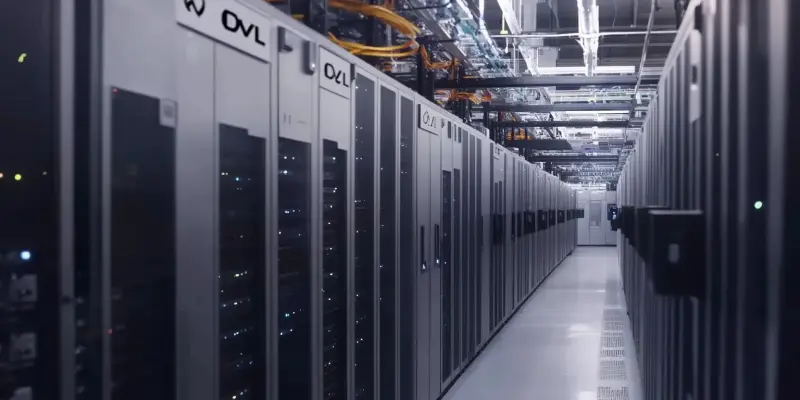
With data security being a paramount concern for enterprises globally, Dell Technologies has made significant strides to protect its Unity storage systems by releasing critical updates that address multiple severe vulnerabilities. These vulnerabilities, affecting Dell Unity, UnityVSA, and Unity XT running versions 5.4 and prior, have the potential to open systems to remote command execution, unauthorized access, and data manipulation.
Nature of Severe Vulnerabilities
Critical Remote Command Execution Flaw
One of the most alarming vulnerabilities identified, CVE-2025-22398, has a CVSS score of 9.8, indicating its severe impact. This vulnerability enables unauthenticated remote command execution as root, thereby allowing complete system takeover. Attackers can exploit this flaw by crafting malicious network requests to the Unity API, injecting operating system commands that execute with full administrative privileges. Such an exploit can result in extensive damage, including the deployment of ransomware, exfiltration of sensitive data, and installation of persistent backdoors. Dell’s advisory emphasized the severity, noting that exploitation could compromise system confidentiality, integrity, and availability.
File Deletion Vulnerability Impacts Operations
Another grave vulnerability, CVE-2025-24383, carrying a CVSS score of 9.1, permits unauthenticated remote deletion of arbitrary files as root. This flaw could significantly cripple storage operations by enabling attackers to erase critical system binaries, configuration files, or essential data, setting the stage for further attacks. The ability to delete crucial files without authentication presents a severe risk to the stability and functionality of enterprise storage systems relying on Unity’s infrastructure.
Additional Identified Security Concerns
Open Redirect Issue and Privilege Escalation
Dell also addressed an Open Redirect issue, CVE-2025-24381, which posed a notable security risk with its CVSS score of 8.8. This vulnerability could facilitate phishing attacks and session theft, as it allowed malicious redirects that could deceive users and capture sensitive information. Additionally, multiple local privilege escalation vulnerabilities, ranging from CVE-2024-49563 to CVE-2025-24386, were identified with CVSS scores of 7.8. These vulnerabilities enable low-privileged users to execute commands with root privileges, potentially leading to unauthorized activities and elevated risk within the storage environment.
Command Injection Vulnerabilities
Furthermore, Dell’s security updates address command injection vulnerabilities, CVE-2024-49601 and CVE-2025-24382, with CVSS scores of 7.3. These flaws allow unauthenticated remote command execution, though their overall impact levels are lower compared to the most severe vulnerabilities. Despite the reduced severity, the potential for unauthorized command execution still poses a risk that organizations must mitigate.
Dell’s Response and Recommendations
Collaboration with Security Researchers
Dell has acknowledged the contributions of security researchers, specifically mentioning individuals and teams responsible for responsibly disclosing these vulnerabilities. Researchers like “prowser,” who discovered the remote command injection flaws, and “zzcentury” and “xiaohei” from Ubisectech Sirius Team, who identified the local privilege escalation vulnerabilities, played a crucial role in highlighting these significant security issues.
Immediate Measures for Users
In response to these findings, Dell has released the Dell Unity Operating Environment (OE) Version 5.5.0.0.5.259. The company strongly recommends that all customers using affected Unity systems upgrade to this version immediately. Organizations should assess their exposure to these vulnerabilities, apply the update without delay, and monitor their systems for any signs of exploitation. This proactive approach is essential to safeguard enterprise storage environments from potential attacks exploiting these vulnerabilities.
Forward-Looking Considerations
With data security being an extremely pressing concern for businesses worldwide, Dell Technologies has made notable advancements in safeguarding its Unity storage systems. Dell has recently rolled out critical updates aimed at addressing a variety of significant vulnerabilities in their products. These vulnerabilities are present in Dell Unity, UnityVSA, and Unity XT systems running versions 5.4 and earlier. The potential risks associated with these vulnerabilities are substantial, as they could allow for remote command execution, unauthorized access, and data manipulation. This means that without these updates, malicious actors could potentially take control of systems, steal sensitive information, and alter data, leading to severe consequences for enterprises relying on these storage solutions. By releasing these essential updates, Dell Technologies is demonstrating its commitment to ensuring the integrity and security of its storage systems, thereby protecting businesses from potential cyber threats that could compromise their data and operations.