

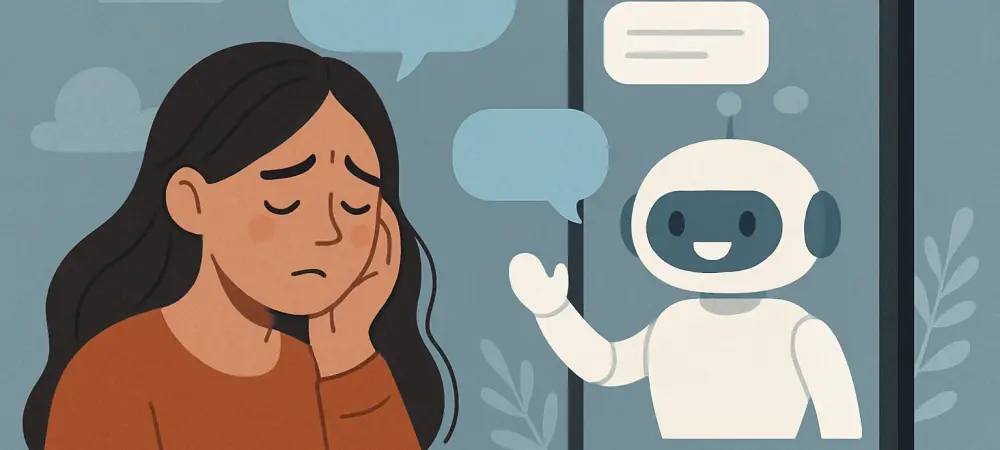
In an era where mental health challenges are increasingly acknowledged, the search for accessible and immediate support has led many to explore unconventional solutions like AI chatbots. With millions worldwide grappling with stress, anxiety, and depression, often unable to access traditional therapy due to high costs or social stigma, technology has stepped in with a promising alternative. AI chatbots, designed to offer emotional support and coping strategies, have emerged as a potential lifeline for those in need. These digital tools, available at any hour and often at a fraction of the cost of human therapy, are reshaping how mental health care is perceived and delivered. Yet, as their popularity surges, a critical question looms over their use: can these automated systems truly be relied upon for something as deeply personal as emotional well-being? This exploration delves into the capabilities, shortcomings, and future possibilities of AI-driven mental health tools, shedding light on their role in a rapidly evolving landscape.
Exploring the Rise of AI in Mental Health Care
The Appeal of Digital Emotional Support
The allure of AI chatbots in mental health support lies in their unparalleled accessibility and convenience for users across diverse backgrounds. Available around the clock, these tools provide a safe space for individuals to express their thoughts without fear of judgment, a feature especially valuable for those hesitant to seek traditional help. Applications like Woebot focus on daily check-ins to manage anxiety, while others, such as Wysa, offer structured programs targeting stress and depression. This constant availability fills a significant gap, particularly for people in remote areas or those facing long wait times for professional care. Moreover, the affordability of these platforms compared to in-person therapy sessions makes them an attractive option for many who might otherwise forgo support altogether. By breaking down financial and logistical barriers, AI chatbots are democratizing access to mental health resources in ways previously unimaginable, serving as a crucial first step for countless individuals.
Beyond accessibility, AI chatbots cater to a spectrum of emotional needs through tailored approaches that empower users to take charge of their well-being. Some platforms, like Youper, emphasize self-directed care by tracking emotional patterns and offering insights into personal triggers. Others, such as Replika, act as casual companions to combat loneliness, providing a semblance of connection for those feeling isolated. Many of these tools incorporate evidence-based techniques, such as cognitive behavioral therapy (CBT), to help users reframe negative thought patterns and build resilience. This variety ensures that individuals can find a digital solution aligned with their specific challenges, whether it’s managing daily stress or seeking a listening ear. While not a replacement for human interaction, the ability of these chatbots to offer immediate, personalized responses marks a significant advancement in making mental health support more inclusive and responsive to individual circumstances.
Challenges in Relying on Automated Systems
Despite their benefits, AI chatbots fall short in delivering the depth of empathy and understanding that human therapists bring to mental health care. These systems operate on algorithms and pre-programmed responses, which can feel mechanical and inadequate when addressing complex emotional crises or nuanced personal experiences. For individuals with severe conditions, such as major depression or acute trauma, the lack of genuine human connection can hinder effective support. The inability to interpret subtle cues or adapt dynamically to a user’s evolving emotional state often leaves critical needs unmet. As a result, experts emphasize that while chatbots can serve as a helpful supplement, they are not equipped to handle the intricacies of serious mental health issues, highlighting a clear boundary to their utility in more demanding situations.
Another pressing concern with AI chatbots is the issue of data privacy and security, which can undermine user trust in these platforms. Conversations shared with these tools are frequently stored for development and improvement purposes, raising questions about how personal information is protected. Users are often advised to scrutinize privacy policies to understand the risks involved in disclosing sensitive details. Additionally, in moments of crisis, most chatbots are programmed to redirect individuals to emergency hotlines or professionals, reinforcing their role as a supportive rather than a standalone solution. This limitation underscores the importance of maintaining a cautious approach when relying on AI for mental health needs, ensuring that users are aware of the boundaries and seek human intervention when situations escalate beyond the chatbot’s capacity.
Envisioning the Future of Mental Health Support
Blending AI with Human Expertise
The trajectory of mental health care points toward a hybrid model that integrates the strengths of AI chatbots with the irreplaceable value of human therapists. In this envisioned framework, chatbots could handle routine tasks such as mood tracking, daily emotional check-ins, and basic coping strategies, thereby alleviating some of the burden on mental health professionals. This efficiency allows therapists to dedicate more time to in-depth, personalized sessions for those with complex needs. Such a collaborative approach promises to enhance access to care by reducing costs and wait times while ensuring that individuals receive the level of support appropriate to their circumstances. As technology continues to advance, the potential for AI to seamlessly complement human expertise offers a scalable solution to the global mental health crisis, addressing both immediate and long-term needs.
Further refining this hybrid model, the integration of AI could also facilitate better resource allocation within mental health systems over the coming years. By identifying patterns in user data, chatbots might predict when an individual requires escalated care, prompting timely referrals to human professionals. This predictive capability could prevent minor issues from becoming severe, ensuring early intervention. Additionally, the anonymity provided by AI tools can encourage more people to seek help without the fear of stigma, bridging the gap to professional therapy when necessary. While challenges like data privacy must be addressed to maintain trust, the synergy between automated systems and human insight holds immense promise. This balanced approach not only maximizes the strengths of both elements but also paves the way for a more inclusive and responsive mental health landscape in the future.
Navigating Limitations for Sustainable Progress
Reflecting on the journey of AI chatbots in mental health, it becomes evident that while they offer groundbreaking accessibility, their shortcomings necessitate careful navigation. Their inability to provide empathy or manage crises often leaves users in urgent situations seeking more robust support, a gap that is only bridged by redirecting to human resources. Privacy concerns also loom large, as stored conversations raise valid apprehensions about data security among users. These challenges underscore the reality that technology, despite its advancements, cannot fully replicate the depth of human connection essential for comprehensive care. Looking back, the consensus is clear: these tools excel as supplementary aids but falter as standalone solutions, shaping a narrative of cautious optimism about their role.
Moving forward, the focus should shift to refining AI capabilities while prioritizing user safety and trust to ensure sustainable progress in mental health support. Strengthening privacy protections through transparent policies and robust encryption can address lingering doubts, encouraging wider adoption. Simultaneously, enhancing chatbot algorithms to better recognize crisis indicators could improve their effectiveness in guiding users to professional help promptly. Collaboration between tech developers and mental health experts will be crucial in striking a balance, ensuring that AI evolves as a reliable partner rather than a replacement. By investing in education about the appropriate use of these tools, stakeholders can empower individuals to leverage their benefits while understanding their limits, fostering a future where technology and humanity work hand in hand to uplift mental well-being globally.