

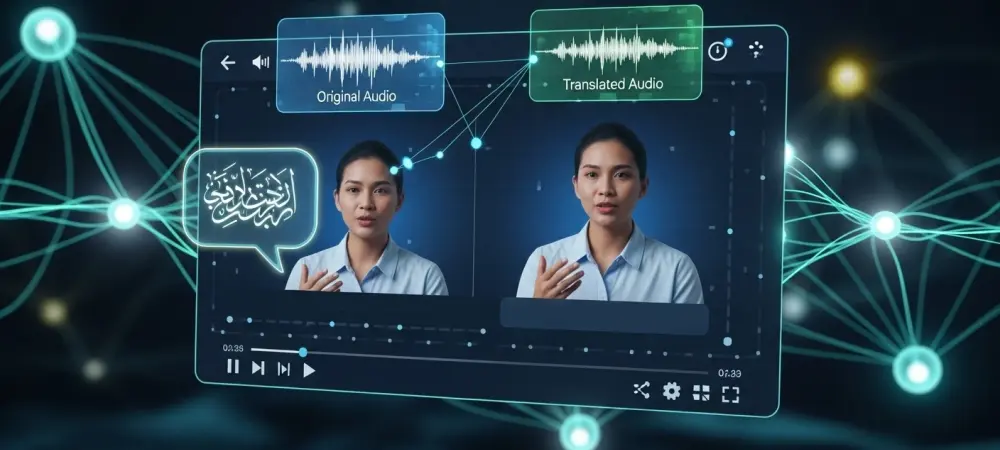
Imagine a world where a small content creator in a remote village can share their story with millions across the globe, unhindered by language barriers, reaching viewers in Tokyo, Paris, and Sao Paulo with just a click, thanks to the transformative power of AI video translation technology. This is no longer a distant dream but a reality powered by cutting-edge innovation. In an era dominated by digital content, this technology stands as a pivotal force in connecting diverse audiences, ensuring that language differences do not impede the flow of ideas. Its significance lies in fostering inclusivity, enabling creators and businesses to transcend borders, and making content accessible to all. This analysis delves into the current landscape of AI video translation, explores its real-world impact, gathers expert insights, and looks toward its transformative potential in shaping global communication.
The Rise of AI Video Translation: A Game-Changer in Communication
Market Growth and Adoption Trends
AI video translation has witnessed remarkable growth, becoming an indispensable tool across various sectors. Industries such as entertainment, education, and corporate communication have increasingly adopted these tools to cater to multilingual audiences. According to recent industry reports, the market for AI-driven translation services is projected to grow significantly from this year to 2027, driven by the rising demand for accessible content. Streaming platforms and social media giants have fueled this surge, as they strive to deliver videos in multiple languages to maximize viewer engagement.
The demand for multilingual content is not just a passing trend but a response to the globalized nature of digital platforms. Online learning environments have also embraced this technology to make educational resources available to non-native speakers, breaking down barriers to knowledge. Statistics indicate that content in a viewer’s native language boosts engagement by a substantial margin, highlighting why businesses and creators are investing heavily in AI solutions to expand their reach.
This rapid adoption reflects a broader shift toward inclusivity in the digital space. As more organizations recognize the value of connecting with diverse audiences, the integration of AI translation tools into content strategies continues to accelerate. The technology’s scalability ensures that even smaller players can compete on a global stage, marking a democratization of content distribution.
Real-World Applications and Success Stories
The practical applications of AI video translation are as varied as they are impactful. YouTube creators, for instance, have leveraged this technology to dub their videos into multiple languages, significantly increasing their international subscriber base. A notable example is a travel vlogger who saw a 40% rise in viewership after using AI tools to offer content in Spanish and Mandarin, demonstrating the power of reaching beyond linguistic boundaries.
Leading platforms with AI-driven translation services have pioneered features such as real-time subtitle generation and lip-sync technology, ensuring that translated videos maintain a natural viewing experience. Businesses, too, have reaped benefits by using these tools for marketing campaigns, allowing them to communicate with global customers without the hefty costs of traditional translation services. A multinational company reported a 30% increase in customer engagement after rolling out AI-translated training videos for its international staff.
Case studies further underscore the measurable impact of this technology. An e-learning provider utilized AI video translation to offer courses in over ten languages, resulting in doubled enrollment from non-English-speaking regions. Such success stories highlight how this innovation not only enhances accessibility but also drives tangible growth for creators and organizations alike.
Expert Perspectives on AI Video Translation’s Impact
Insights from industry leaders and tech innovators reveal the profound influence of AI video translation on global communication. Many experts emphasize that this technology is a cornerstone for inclusivity, allowing smaller creators to access markets previously out of reach due to language constraints. A prominent tech analyst noted that AI tools are leveling the playing field, enabling startups to compete with established giants in content delivery.
However, challenges remain, as pointed out by academic researchers in the field. Ensuring cultural accuracy and capturing nuanced expressions pose significant hurdles for AI algorithms, often requiring human oversight to refine translations. Proposed solutions include hybrid models where AI handles bulk translation while humans fine-tune for context, ensuring authenticity in cross-cultural communication.
Experts also highlight the broader societal implications of this technology. A thought leader in digital media suggested that AI video translation could redefine how stories are shared, making global narratives more diverse and representative. This perspective underscores the potential for AI to not just translate words but to bridge cultural divides, fostering a deeper understanding among global audiences.
Future Horizons: What Lies Ahead for AI Video Translation
Looking ahead, AI video translation is poised for groundbreaking advancements that could further revolutionize content sharing. Innovations on the horizon include near-perfect translations that capture emotional undertones and contextual subtleties with unprecedented accuracy. Integration with virtual reality platforms is another anticipated development, promising immersive multilingual experiences for users worldwide.
The potential benefits are vast, from enabling seamless real-time translations during live streams to enhancing corporate communication across borders. Yet, ethical concerns, such as data privacy and the risk of misrepresentation, loom large, necessitating robust guidelines and human intervention to maintain trust. Balancing automation with oversight will be crucial to address these challenges effectively.
Across sectors like education, entertainment, and business, the implications are profound. The possibility of language barriers becoming virtually nonexistent could transform how knowledge is disseminated, how stories are told, and how global teams collaborate. As AI continues to evolve, it holds the promise of creating a digital landscape where communication is truly borderless, uniting people through shared content.
Embracing the AI Video Translation Revolution
Reflecting on the journey of AI video translation, it becomes evident that this technology plays a crucial role in dismantling language barriers, amplifying real-world impact through diverse applications, and setting the stage for a connected future. Its influence spans from empowering individual creators to enabling multinational outreach, reshaping the way content is consumed globally. To move forward, stakeholders should prioritize integrating advanced AI tools into their strategies, focusing on hybrid models that blend automation with human insight for optimal accuracy. Investing in platforms that emphasize cultural sensitivity and ethical standards will be key to sustaining trust and relevance in this evolving space. As the digital world continues to shrink, embracing these innovations offers a pathway to not just adapt but to lead in crafting a truly inclusive global narrative.