

The landscape of modern high-performance computing has undergone a radical shift where the once-dominant trend of aggressive neon lighting is rapidly yielding to sophisticated industrial design. Consumers are no longer satisfied with sheer speed; they increasingly demand that their technology integrates seamlessly into the curated aesthetics of their living spaces or professional studios. This evolution has birthed a new class of hardware that prioritizes organic materials and muted tones without compromising on the underlying silicon’s raw capabilities. As workstations move from hidden corners to central design elements in the home, the need for components that mirror fine furniture has become a significant market driver. The Gigabyte X870E Aero X3D Dark Wood emerges as a definitive answer to this demand, offering a masterclass in how premium materials can elevate a motherboard beyond its functional roots. By challenging the traditional “gamer” aesthetic, it sets a new benchmark for elegance in the high-end AM5 ecosystem.
A New Approach to Hardware Design
Aesthetic Details: Blending Natural Elements with Technology
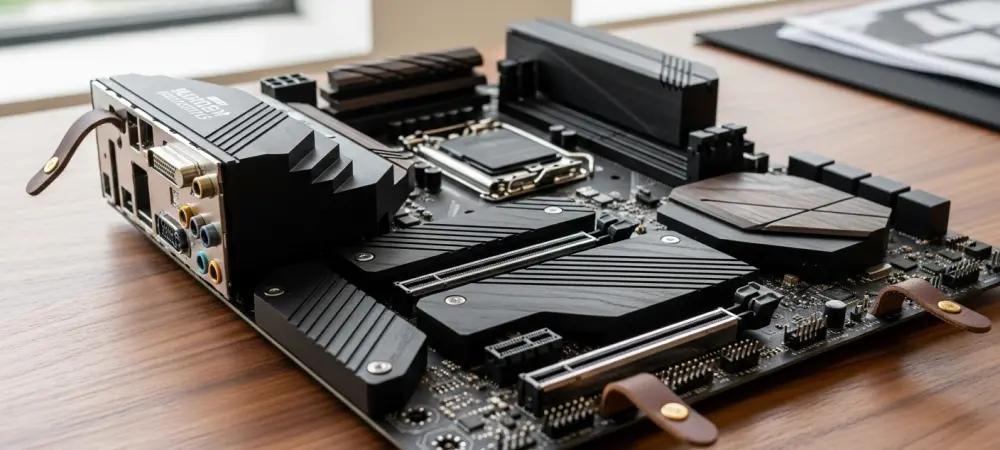
The visual identity of this motherboard is defined by its courageous use of dark wood accents and high-quality leather pull tabs, which create a striking contrast against the dark black PCB. These organic elements are not merely surface-level additions but are integrated into the thermal heat sinks to provide a cohesive, sophisticated look that is often characterized as classical elegance. By moving away from the translucent plastics and harsh angles typically found in the PC market, the design team has created a component that feels at home alongside high-end audio equipment or architectural models. The matte finish on the metallic components absorbs light rather than reflecting it, ensuring that the motherboard remains a subtle yet powerful presence inside a chassis. This aesthetic choice specifically targets professionals and enthusiasts who have gravitated toward minimalist cases, where the internal hardware is expected to contribute to a sense of calm and order rather than visual chaos.
Material Sophistication: Refining the Professional Workspace
Beyond the immediate visual impact of the wood grain, the inclusion of leather pull tabs on the M.2 thermal guards introduces a tactile dimension rarely seen in computer hardware manufacturing. This design philosophy acknowledges that the modern PC is often an extension of an individual’s personal brand and professional environment, necessitating a shift toward more mature material palettes. The dark metal heatsinks are precision-machined to offer a clean silhouette, effectively hiding the complex circuitry while still suggesting the high-performance nature of the platform. This approach naturally complements wood-themed computer cases that have gained popularity among creative directors and home-office architects who view their setup as a long-term investment. By eliminating the reliance on software-controlled lighting, the board achieves a timeless quality that will not look dated as design trends continue to evolve toward sustainable and natural motifs in the coming years.
Engineering Excellence: Power Delivery and Build Quality
Beneath the elegant exterior lies a formidable power delivery system featuring a 16+2+2 digital VRM design that is engineered to handle the most demanding workloads of 2026. This sophisticated arrangement ensures that the latest Ryzen 9 processors receive a clean and consistent flow of power even when subjected to extreme multi-threaded rendering or complex simulation tasks. The use of high-grade capacitors and premium chokes minimizes electrical noise and heat generation, which is critical for maintaining long-term stability in a professional environment. An eight-layer PCB serves as the foundation for this power architecture, providing the necessary signal integrity and structural rigidity to support heavy components. This level of over-engineering ensures that the system can sustain peak boost clocks for extended periods, allowing users to focus on their creative output without worrying about hardware-induced bottlenecks or system crashes during critical deadlines.
Structural Integrity: Premium Construction for Longevity
Durability is a core pillar of the design, as evidenced by the implementation of 2oz copper layers within the PCB to enhance thermal dissipation and electrical efficiency. This specialized construction technique allows the board to act as a massive heat sink in its own right, pulling warmth away from critical components and distributing it across a larger surface area. Furthermore, the motherboard features reinforced soldering and high-quality mounting points to prevent the warping that can occur over years of thermal cycling. This focus on longevity is particularly important for users who do not plan on upgrading their base platform frequently and require a reliable foundation that can withstand the physical stress of heavy graphics cards. The inclusion of specialized shields around the most sensitive circuits protects against electromagnetic interference, ensuring that high-speed data remains uncorrupted even when the system is operating at maximum capacity under intense workloads.
Advanced Performance and Cooling
High-Speed Standards: Memory and Storage Capabilities
The platform is fully optimized for the latest memory standards, supporting DDR5 speeds that can reach an impressive 9,000 MT/s through advanced BIOS tuning and high-quality signal routing. This extreme bandwidth is essential for memory-intensive applications such as 8K video editing, large-scale data analysis, and high-fidelity gaming where every microsecond of latency matters. With four DIMM slots available, users have the flexibility to install high-capacity kits that are specifically validated for the AM5 architecture, ensuring seamless compatibility and performance. The memory traces are shielded within the internal layers of the PCB to reduce cross-talk and improve the stability of high-frequency signals. This level of attention to detail allows enthusiasts to squeeze every drop of performance out of their hardware while maintaining the rock-solid stability required for day-to-day productivity. The result is a system that feels incredibly responsive, regardless of the complexity of the tasks.
Data Throughput: Harnessing the Speed of PCIe 5.0
Storage performance is a high priority on this motherboard, which features four M.2 slots, including two that are fully compatible with the ultra-fast PCIe 5.0 standard. These slots allow for data transfer speeds that were previously unimaginable, making the system ideal for working with massive project files or loading complex game worlds in an instant. To prevent the thermal throttling that often plagues high-speed NVMe drives, each slot is equipped with a dedicated thermal guard that makes direct contact with the drive’s surface. The primary PCIe slot for graphics cards is also reinforced with a specialized metal shield known as Ultra Durable PCIe Armor, which provides the necessary strength to support the massive coolers found on flagship GPUs. This reinforcement prevents the slot from bending or cracking, ensuring that the connection remains secure even if the system is moved or transported frequently. This combination of speed and durability makes the board a versatile powerhouse for any high-end build.
Thermal Management: Advanced Direct-Touch Cooling Solutions
Maintaining optimal temperatures is vital for a board that packs this much power, and the Thermal Armor Advanced system is designed to meet that challenge head-on. By utilizing direct-touch heat pipes that lead directly from the VRMs to the large aluminum heatsinks, the system can rapidly evacuate heat before it accumulates. High-performance thermal pads with high conductivity are used throughout the board to ensure that every heat-generating component has an efficient path to the cooling surfaces. This proactive approach to thermal management allows the system to remain quiet even under heavy load, as the fans do not need to spin at maximum speeds to keep temperatures in check. This is a significant advantage for users who work in quiet studios or open-plan offices where acoustic comfort is just as important as computational speed. The thermal design is not just about raw cooling capacity but about intelligent airflow and heat distribution across the entire surface of the motherboard.
Intelligent Optimization: Modern I/O and System Tuning
The motherboard includes a unique technology called X3D Turbo Mode 2.0, which uses AI-driven tuning to maximize the performance of AMD’s specialized 3D V-Cache processors. This feature analyzes the specific demands of the running application and adjusts power delivery and cache management to provide a measurable boost in frame rates or processing speed. Users can easily toggle between different optimization profiles, such as a dedicated Gamer mode for low-latency performance or a Creator mode that prioritizes multi-core stability. This intelligent software integration ensures that the hardware is always running at its most efficient settings without requiring manual overclocking expertise. It is a powerful tool for those who want to get the absolute most out of their high-end CPU while maintaining a simple and streamlined user experience. This focus on intelligent optimization reflects a modern approach to performance, where software and hardware work in perfect harmony to deliver results.
Strategic Integration: Redefining Hardware Standards for Future Workstations
The industry recognized that the convergence of luxury materials and extreme performance was not a niche requirement but a fundamental shift in consumer expectations. Builders who prioritized modularity and aesthetic cohesion found that these specialized components offered a more sustainable approach to system design, allowing technology to age with grace alongside traditional furniture. Designers prioritized the removal of unnecessary visual noise while maintaining the raw throughput required for modern computational demands, ensuring that the machine remained a quiet partner in the creative process. Moving forward, stakeholders recommended that manufacturers continue to emphasize tool-less maintenance and AI-driven thermal profiles to further reduce the friction of ownership. This evolution signaled a permanent departure from the plastic-heavy designs that had defined the previous decade. Ultimately, the integration of dark wood and leather accents provided a tangible solution for professionals seeking a sophisticated and powerful workspace in 2026.