

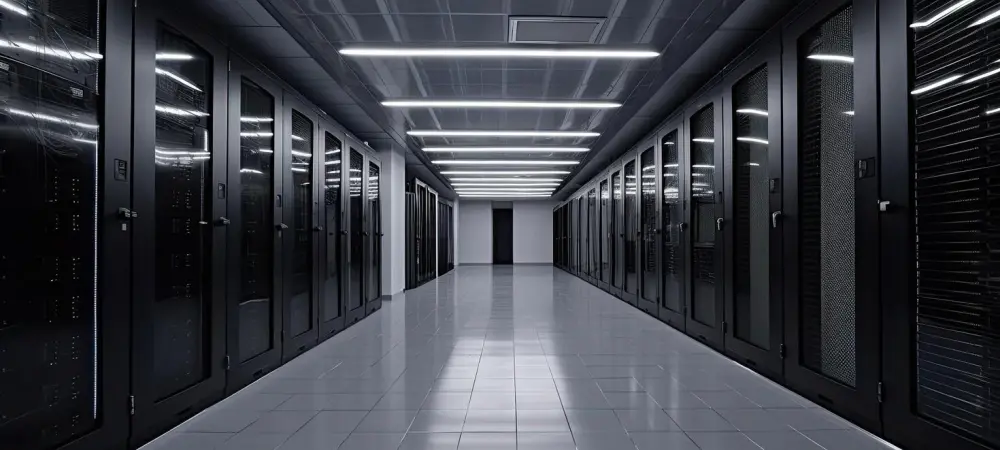
The ever-increasing reliance on artificial intelligence, machine learning applications, and data-heavy operations demands an unprecedented level of efficiency and adaptability from data centers worldwide. As these digital hubs grapple with escalating data volumes and the unpredictable nature of modern workloads, traditional network architectures have reached critical inflection points. Historically, these systems were perceived as remarkably efficient. Yet, the stagnant and rigid formations, often likened to monotonous grids, struggle to withstand the intricacies of dynamic data traffic. This deficiency manifests in sporadic bandwidth bottlenecks and significant procedural inefficiencies. Ahead of the curve, researchers from Technische Universität Berlin have ventured into new territories, postulating a breakthrough through innovations termed ‘Self-Adjusting Networks.’ Banked financially by the European Research Council, these networks fundamentally revise data transmission paradigms, foretelling transformative possibilities for the structures underpinning data centers.
Bridging the Gap: Rethinking Conventional Network Architectures
Static Networks: Limitations and Challenges
The intrinsic limitations of static network systems are noticeably pronounced when juxtaposed against the demands of contemporary data environments. Static frameworks predominantly rely on predefined pathways for data transmission, creating a rigidity that fails to accommodate sudden shifts in data flows and increasing loads. The static nature of these architectures means they often operate below optimal levels, bypassing the flexibility needed to cater to real-time data demands. Such inflexibility becomes particularly glaring during peak data traffic periods, where networks choke under pressure, leading to bottlenecks that compromise overall efficiency and speed. Moreover, these traditional setups tend to exhibit significant energy inefficiencies. The constant operation, regardless of the volume and nature of data being processed, results in unnecessary energy consumption. Often, energy is wasted on maintaining unused or under-utilized data pathways as the rigid framework lacks the capability to dynamically redirect resources where most needed.
Synthesis of Innovation and Sustainability
Contemporary digital infrastructures must seamlessly integrate innovative solutions and sustainable practices for long-term success and viability. As data-intensive processes increasingly define the operational landscape, old systems cannot remain stagnant; radical upgrades informed by both technological and environmental imperatives are essential. Researchers at Technische Universität Berlin aim to create networks that can adapt fluidly to changing data flows while minimizing energy wastage. This dual focus ensures the developed systems will efficiently meet real-time demands, optimizing data throughput and reducing downtime. Utilizing optical technology introduces many advantages, particularly in efficiency. The new structures promise faster data transfers and offer the ability to scale computational power instantaneously without affecting sustainability. Ultimately, by marrying state-of-the-art technology with eco-friendly practices, organizations can anticipate more resilient, adaptive infrastructures.
Re-Imagining Data Centers: The Role of Self-Adjusting Networks
Dynamic Adaptation: A Technological Leap
Across all sectors, data centers act as pivotal hubs directing the flow of information and power spanning continents. This indispensable role is safeguarded by the seamless operation of advanced technological benchmarks. Enter the realm of self-adjusting networks, characterized by heightened responsiveness to instantaneous changes in data traffic. Anchoring this technology is the innovative utilization of optical switches. These switches serve a pivotal role in expediting the reconfiguration of network architecture. Harnessing the potential of light transmitted through fiber-optic cables, a paradigm shift in data transfer speed and energy efficiency emerges. In what feels akin to digital evolution, data channels autonomously remediate, enabling a seamless, unperturbed information flow across multiple touchpoints. When scaled and integrated, this facilitates closeness to real-time computational abilities akin to human reflexes.
Harnessing the Power of Pattern Recognition
The strategic deployment of pattern recognition technology augments self-adjusting networks by creating knowledgeable pathways, yielding significant operational efficiencies. By analyzing telemetry data in real-time, self-adjusting networks glean insights into ordinary traffic flows and adapt infrastructural conditions accordingly. This perpetual feedback loop anticipates surges and dissipations akin to preemptively accommodating traffic waves on a bustling bridge. Where repetitive patterns are acknowledged, data lanes are optimally adjusted, curbing excessive wait times and energy consumption. Through the marriage of real-time insight with predictive anticipation, these networks promise more than infrastructure efficiency—they herald business agility. Enterprises can leverage these efficiency gains to pivot services faster, orchestrating resource allocation deftly and precisely.
Implications for Tech Giants and Cloud Service Providers
Meeting AI-Driven Workloads
The digital footprint of tech giants and cloud service providers is colossal, with AI-driven workloads representing a substantial fraction of that operational burden. These entities require networks that scale efficiently, adapt dynamically, and orchestrate data transmission with precision. Given the vast magnitude of data under their purview, the underlying networks must contend with herculean challenges—static systems can strain and stretch but often falter. Self-adjusting networks cater to this need by enabling service providers to accelerate processing speeds while accommodating fluctuating workloads, which allows organizations to offer enhanced customer experiences. Furthermore, dynamic networks reduce latency rates, enhancing the response time of AI models relying on immediate access to data. Consequently, these enhancements shift competitive advantage to organizations willing to invest in innovations designed with future-ready processes.
Shifting Industry Norms Towards Sustainability
As organizations shift towards self-adjusting networks, sustainability becomes a central theme throughout the wider tech industry. Enhanced performance is inextricably linked to reduced carbon footprints—opting for a greener paradigm aligns multimodal operational efficacy with the moral prerogative shared within environmental expediency. Streamlined configurations drastically reduce the amount of energy expended in data transmission, these networks offer incentive structures favoring energy conservation for providers and users alike. The shift toward sustainable technologies influences business evaluations, often transcending traditional metrics such as capitalization or revenue and extending into contextually relevant measurements of ecological stewardship. Embodying such values reflects well on businesses committed to translating innovation into ecological responsibility.
Pioneering a Sustainable and Adaptable Future
The Roadmap for Future Development
Looking forward, there is an opportunity to harness groundbreaking technological advancements in creating forward-thinking network solutions resilient to demand forecasts. Leveraging both academic inquiry and practical experimentation, these innovations outline an expansive roadmap for gradual adoption. On creating foundations formulating accepted standards, collaboration among academic institutions, technology companies, and policy enactors establishes benchmarks aligning innovation with feasibility. Their shared vision directs foundational research toward practical, scalable implementations cross-pollinating expertise while inspiring the next generation of technological pioneers. Meanwhile, industry leaders craft forward-looking mandates and mono-organizational structures tasked with pioneering adaptability-driven approaches fused with environment-friendly processes. These efforts will enable broader market readiness and adoption rates reflective of harmonious aspirations with global welfare.
Beyond the Horizon: Contemplating Broader Implications
As data centers worldwide rely increasingly on artificial intelligence, machine learning applications, and data-heavy operations, they face the pressing demand for unparalleled efficiency and adaptability. The surge in data volumes and the unpredictable nature of contemporary workloads are pushing traditional network architectures to a critical point. Once considered highly efficient, these systems now resemble rigid, monotonous grids, struggling with the complex nature of dynamic data traffic. This struggle results in sporadic bandwidth bottlenecks and procedural inefficiencies. Finding innovative solutions, researchers from Technische Universität Berlin have embarked on groundbreaking work with their ‘Self-Adjusting Networks.’ Supported by the European Research Council, these networks aim to fundamentally redefine data transmission paradigms. This innovation holds the potential to reshape the structures that support data centers, hinting at transformative changes in how data is managed and delivered across these essential digital hubs.