

Regional enterprise tenants in sectors such as retail banking and logistics face higher hosting overheads as massive regional pipeline projects stall due to infrastructure gaps. The global hunger for artificial intelligence processing has pushed traditional electrical grids to their breaking point, forcing major developers to look toward the most isolated corners of the Australian continent for relief. At the center of this movement is Energy North and its ambitious Project Ares, a 1-gigawatt data center campus proposed for the remote Northern Territory. This facility was envisioned as a sanctuary from metropolitan congestion, yet it recently encountered a significant setback when the developer withdrew its operational target for 2028. This delay was triggered by a regulatory impasse with the Northern Territory Environment Protection Authority, which suspended its review to align with forthcoming federal policies regarding high-density AI infrastructure.
Environmental Challenges: Logistical and Ecological Realities
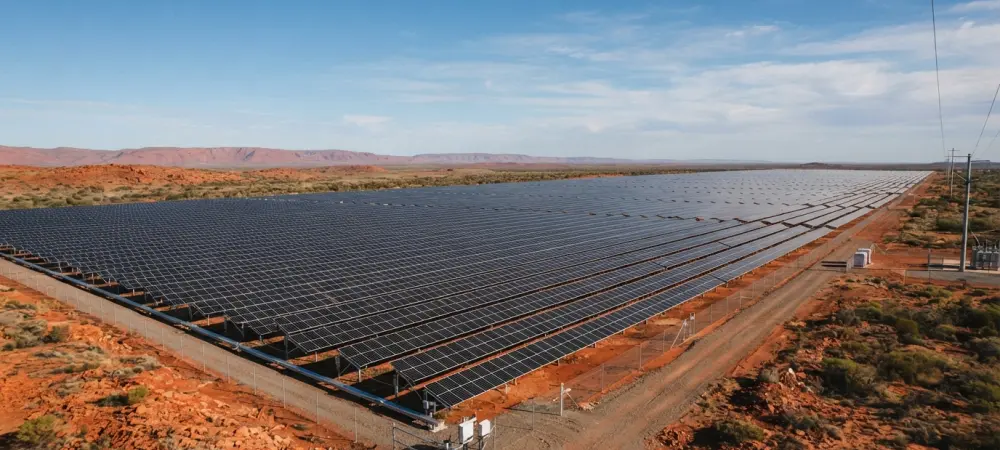
The physical and logistical scale of Project Ares is unprecedented in the history of Australian technological development, requiring a level of self-sufficiency usually reserved for sovereign municipalities. Spanning a 1-gigawatt cattle station located over 600 kilometers from any urban center, the proposal demands a dedicated private airfield and a massive temporary township to house a construction workforce of roughly 4,300 people. Operating such a facility requires a sophisticated hybrid energy solution that pairs expansive solar arrays with high-output gas-fired turbines to ensure 24/7 reliability. This design attempts to solve the problem of grid connectivity by creating an autonomous energy island, but the sheer physical footprint creates a massive challenge for local logistics. Transporting specialized cooling equipment and server racks across rugged terrain adds layers of complexity that urban projects never face, making the development more of a feat of civil engineering than simple IT expansion.
Regulators have voiced serious skepticism regarding the long-term sustainability of such a massive facility in a region known for its ecological fragility. The Northern Territory Environment Protection Authority identified ten distinct environmental threats in its preliminary assessment, ranging from the disruption of local ecosystems to the significant depletion of underground water tables. These aquifers are a lifeline for the arid interior, and the cooling demands of a 1-gigawatt campus could place an unsustainable strain on these hidden resources. Furthermore, the agency expressed a low level of confidence in the developer’s current risk mitigation strategies, noting that the physical disruption of the landscape could have irreversible effects. This regulatory caution underscores a fundamental tension between the rapid acceleration of AI investment and the deliberate pace of environmental stewardship, suggesting that isolation does not grant immunity from rigorous public oversight.
Infrastructure Constraints: Urban Gridlock and Energy Supply
The sudden pivot toward remote basins like the Northern Territory is a direct consequence of the exhaustion of metropolitan infrastructure in Australia’s primary economic hubs. In cities like Sydney and Melbourne, data center developers are struggling against a phenomenon known as power queuing, where the demand for electricity far exceeds the capacity of the distribution network. Traditional grids were never designed to support the continuous, high-volume baseload power required by modern hyperscalers and generative AI platforms. Recent years have seen high-profile projects abandoned in suburban areas because utility providers could not guarantee the necessary load without multi-year upgrades to the primary transmission lines. This bottleneck has created a frantic search for alternative locations where land is plentiful and power generation can be handled on-site, leading many to believe that the vast outback was the only remaining frontier for large-scale computing.
While the Northern Territory is home to significant gas reserves like the Beetaloo Basin, the technical requirements for a 1-gigawatt facility are staggering. Current estimates suggest that a project of this magnitude would consume ten times the daily gas production of the region’s only active extraction site. This massive disparity highlights a significant gap between the ambition of tech developers and the actual maturity of the local energy supply chain. Even with government support for the region to become an AI hub, the physical infrastructure to fuel these mega-campuses is still years away from reality. Developers must reconcile their high-speed implementation targets with the slower reality of resource extraction and pipeline development. Analysts noted that without a rapid expansion of local production, the dream of a gigawatt-scale outback campus remains a technical impossibility, forcing the industry to consider the limitations of local resource capacity in their 2026 to 2030 planning cycles.
Strategic Considerations: Social License and Economic Growth
Navigating the Australian interior requires deep engagement with the Indigenous traditional owners of the land, as much of the Northern Territory is subject to cultural heritage protections. The Northern Land Council warned that rushing the consultation process is a recipe for project failure, as lawful consent is a transparent and prolonged necessity that cannot be bypassed. For developers, the seemingly empty spaces of the outback are actually rich with cultural significance that demands meticulous identification and protection. Failure to secure this social license can lead to legal vulnerabilities that stall projects indefinitely, regardless of their technological importance. Simultaneously, these delays have left enterprise tenants in retail and banking struggling with rising hosting costs as the expected relief of new capacity remains out of reach. This intersection of social responsibility and economic pressure has forced a fundamental rethink of how data infrastructure is deployed across culturally sensitive and remote landscapes.
Industry leaders eventually recognized that a balanced approach to off-grid computing required more than just remote land; it demanded an integrated strategy involving early federal collaboration and modular energy designs. They shifted their focus toward smaller, more sustainable edge facilities that minimized the strain on local water tables while maintaining high-efficiency AI processing. This transition was supported by enhanced transparency in Indigenous consultations, which established a blueprint for shared economic benefits and long-term land stewardship. Organizations also prioritized the development of on-site gas processing units to bridge the gap between extraction and consumption, ensuring a more resilient fuel supply for their operations. These actionable steps proved vital in transforming the high-stakes gamble of outback data centers into a viable reality. By acknowledging the limitations of isolation and prioritizing holistic planning, the sector successfully navigated the path toward a more sustainable and culturally respectful infrastructure model.