

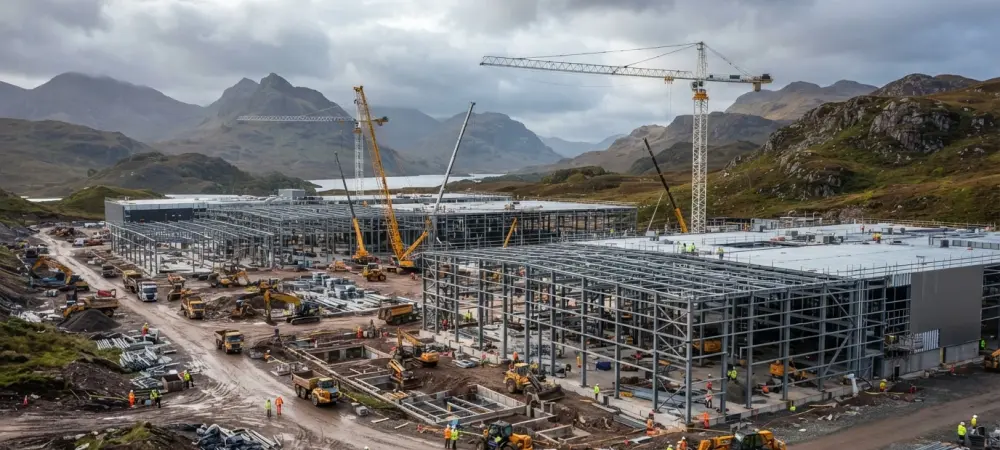
The classification of data centers as nationally significant infrastructure effectively silences community opposition to projects that consume massive amounts of local water. This regulatory maneuver marks a pivotal shift in the British landscape, where the race for artificial intelligence supremacy has transformed digital infrastructure from a backend utility into a front-line industrial priority. As of 2026, the United Kingdom finds itself at a crossroads, balancing a desperate need for sovereign computational power against the mounting physical costs of an energy-hungry industry. The sheer velocity of this expansion is reflected in a development pipeline that has surged toward 20 gigawatts, a figure that would have emerged impossible just a few years ago. However, beneath the polished veneer of high-tech progress lies a complex web of speculative property deals, grid constraints, and environmental tensions. The fundamental challenge for policymakers is determining whether this rapid scaling is built on a foundation of genuine economic necessity or if it represents an unsustainable bubble driven by inflated industry metrics. As rural areas from North Devon to Scotland are earmarked for massive hyperscale campuses, the conversation is shifting from the promise of the digital economy to the preservation of local resources and the stability of the national power grid.
Navigating the Power Paradox and Regulatory Shifts
The most formidable obstacle facing the expansion of data centers in the United Kingdom is the “power paradox,” where the quest for digital innovation is consistently throttled by the physical limitations of the electricity grid. Every new server rack and cooling system requires an immense and steady supply of megawatts, placing data centers in direct competition with residential developments and other industrial sectors for limited energy resources. This competition has reached a fever pitch in 2026, with operators scrambling to secure grid connections years before their facilities are even built. The scarcity of available power has turned energy access into the primary currency of the digital age, dictating where centers can be located regardless of proximity to end-users or labor markets. As a result, the geographic distribution of the industry is being radically reshaped, moving away from traditional urban hubs like Slough and the Docklands toward regions where the grid still possesses a sliver of unallocated capacity.
In a bold attempt to break this bottleneck, the government has implemented a “presumption of consent” through new planning guidelines that essentially fast-track projects exceeding the 100-megawatt threshold. By elevating these developments to the status of nationally significant infrastructure, the central government has reclaimed authority from local councils, a move intended to prevent lengthy planning disputes and ensure the UK remains a global data hub. While this deregulation is celebrated by international investors and tech giants as a necessary step for economic growth, it has created a significant democratic deficit at the local level. Communities now find themselves unable to effectively protest the industrialization of their landscapes or the environmental impact of facilities that require millions of gallons of water for cooling. This centralization of power serves the interests of rapid industrialization, but it risks fostering long-term resentment among citizens who feel that their local environments are being sacrificed for the benefit of a digital economy that offers few local jobs.
Analyzing the Discrepancy Between Capacity and Consumption
A striking revelation in the current data center landscape is the massive gap between the theoretical capacity cited by developers and the actual energy consumed by these facilities. The industry standard for measuring size is the “IT Load,” which represents the peak potential power a data center can draw when operating at full throttle. However, national energy statistics indicate that actual electricity usage often hovers at only 36% of this theoretical inventory. This discrepancy suggests that the “capacity deficit” frequently used to justify aggressive planning interventions and emergency grid upgrades may be significantly overstated. Many operators reserve vast quantities of power that they never fully utilize, creating a situation where energy is effectively “hoarded,” preventing other vital infrastructure projects from accessing the grid. This inefficiency is a central point of contention, as it forces the public to bear the cost of grid reinforcements for power that remains largely unused.
This pattern of over-allocation has led to a crisis in the national grid connection queue, which in 2026 remains clogged with nearly 80 gigawatts of requests—a figure nearly double the peak daily demand of the entire country. A deep dive into these applications reveals that a substantial portion is speculative, submitted by property developers and real estate agents rather than established technology companies. These “placeholder” applications are often designed to increase the value of a piece of land by securing a precious grid connection, which can then be sold to the highest bidder. Because these theoretical projects occupy space in the queue, genuine developments like affordable housing and new renewable energy plants are forced to wait for a decade or more to connect to the power supply. The government and energy regulators are now facing intense pressure to reform this “first-come, first-served” system to prioritize projects that provide immediate utility and have confirmed tenants, rather than allowing speculative interests to paralyze national infrastructure development.
The Transformation Toward Hyperscale Megaprojects
The British data landscape is currently undergoing a fundamental transformation, moving away from a network of small, localized data rooms and toward massive, centralized “hyperscale” campuses. Only a few years ago, the majority of the UK’s facilities were modest operations under 10 megawatts, serving local businesses and government agencies. In 2026, however, the pipeline is dominated by megaprojects that exceed 100 megawatts, some even reaching gigawatt-scale capacity. This shift toward extreme scaling is driven by the specific requirements of large-language models and advanced AI training, which demand unprecedented concentrations of computing power and cooling. These campuses are not just buildings; they are massive industrial complexes that permanently alter the physical and environmental character of their surroundings. This move toward hyperscale centralization reflects a global trend where a few massive nodes process the vast majority of the world’s digital information, concentrating both power and risk in a handful of high-capacity sites.
As these megaprojects search for large tracts of land and available energy, the industry is expanding into rural territories previously untouched by heavy industry. Regions like North Devon, South Wales, and the Scottish Highlands are seeing proposals for data centers that would dwarf the local communities they border. While these projects are often marketed as engines of local economic renewal, the reality is that they are highly automated and require very few permanent employees once construction is complete. Furthermore, the existing infrastructure in these rural areas—ranging from high-voltage power lines to water supply networks—was never designed to support the intense industrial load of a 500-megawatt data center. The environmental footprint of these developments is substantial, often requiring the construction of new substations and massive cooling towers that dominate the rural skyline. This geographic diversification is essential for the industry’s survival, but it brings the data center boom into direct conflict with rural conservation efforts and traditional land uses.
Corporate Sovereignty and the Rise of Big Tech
Despite the government’s rhetoric regarding “sovereign AI” and the importance of a domestic digital industry, the physical infrastructure of the UK’s data boom is increasingly under the control of American technology giants. Amazon, Microsoft, and Google—collectively known as the “hyperscalers”—are on track to control more than half of the UK’s total data center capacity by the end of this decade. These firms have moved beyond simply leasing space from British providers; they are now designing, building, and operating their own massive self-built campuses. This vertical integration allows them to control the entire technology stack, from the physical building and specialized cooling systems to the proprietary chips and software used to train AI models. While this investment brings significant capital into the UK, it also places the nation’s digital backbone in the hands of a few foreign corporations whose primary allegiance is to their global shareholders rather than the British public interest.
This concentration of corporate power raises profound questions about national digital sovereignty and the long-term economic benefits for the UK. Under the current model, British firms are often relegated to the role of construction contractors or landlords, providing the labor and land for these facilities while the high-value activity of data processing and algorithmic development remains a proprietary American enterprise. The profits generated by the “intelligence” processed within these British walls flow back to Silicon Valley, while the UK is left to manage the environmental consequences and energy costs of the physical infrastructure. As the industry moves toward 2026 and beyond, there is a growing concern that the UK is becoming a digital “client state,” providing the raw resources of land and electricity for a global tech ecosystem that it does not truly control. The challenge for the government is to ensure that international investment is balanced with the development of domestic capabilities and that the digital infrastructure on British soil serves the needs of the British economy first.
Drawing Lessons from the American Experience
To understand the potential risks of the UK’s current trajectory, one must look at established data center hubs in the United States, which serve as a cautionary tale for unchecked expansion. In Northern Virginia, home to the world’s largest concentration of data centers, the rapid growth of the industry has led to a series of unintended consequences. Local residents have seen their electricity bills soar as they are forced to subsidize the multi-billion-dollar grid reinforcements required to power massive server farms. Furthermore, the sheer demand for electricity has forced the region to delay the decommissioning of aging coal and gas plants, undermining climate targets and increasing local air pollution. The experience in Virginia proves that when data centers are allowed to grow without rigorous oversight, the costs—both economic and environmental—are eventually passed on to the public. The UK risks repeating these mistakes if it continues to prioritize speed of construction over long-term grid sustainability and consumer protection.
In Texas, the situation reached a breaking point when the state’s power grid, already under strain from extreme weather, was hit by an overwhelming volume of data center and crypto-mining connection requests. The sheer scale of the demand threatened to destabilize the entire energy market, eventually forcing a temporary moratorium on new connections to prevent a total grid collapse. This “grid distortion” occurs when a single industry consumes such a massive share of resources that it dictates the price and availability of power for everyone else. The UK, with its more centralized and fragile grid, is particularly vulnerable to this kind of distortion. Without a more transparent and strategic approach to how megawatts are allocated, the British energy market could find itself hostage to the demands of a few large operators. The lessons from the United States suggest that a “growth at any cost” strategy is rarely sustainable and that the true measure of a successful data center boom is not how much capacity is built, but how well that capacity is integrated into the broader needs of society.
Strategic Imperatives for Sustainable Digital Infrastructure
The investigation into the UK’s data center expansion determined that the current “breakneck” pace of development required a significant recalibration to avoid the creation of digital white elephants. Throughout 2026, the landscape shifted from speculative enthusiasm toward a more grounded assessment of actual computational needs versus infrastructure reality. It became clear that the path forward necessitated a radical increase in data transparency, moving beyond industry-provided estimates to a government-audited inventory of actual power consumption. The analysis found that by aligning grid allocation with real-world usage rather than theoretical peaks, the government successfully unlocked gigawatts of power for other critical sectors. This transition away from speculative “placeholder” energy reservations was the first essential step in restoring balance to the national infrastructure queue, ensuring that only viable projects with confirmed tenants proceeded to construction.
The conclusion of the current expansion phase proved that local oversight remained a vital safeguard against industrial overreach. By reintroducing meaningful community consultation for hyperscale projects, the planning process evolved to include more robust environmental protections, such as mandatory heat-export systems that utilized waste energy to heat local homes and businesses. The investigation concluded that the most successful projects were those that functioned as “good neighbors,” contributing to local energy security rather than just draining it. To maintain digital sovereignty, the government shifted its focus toward supporting domestic providers and ensuring that the economic value of AI processing remained within the country. This strategic pivot ensured that the UK did not merely become a physical host for foreign tech giants, but instead built a resilient, sustainable, and truly sovereign digital infrastructure that served the long-term interests of the public and the environment.