
Can NVIDIA Overcome Production Hurdles for AI Chips in China?

Article Highlights
Off On

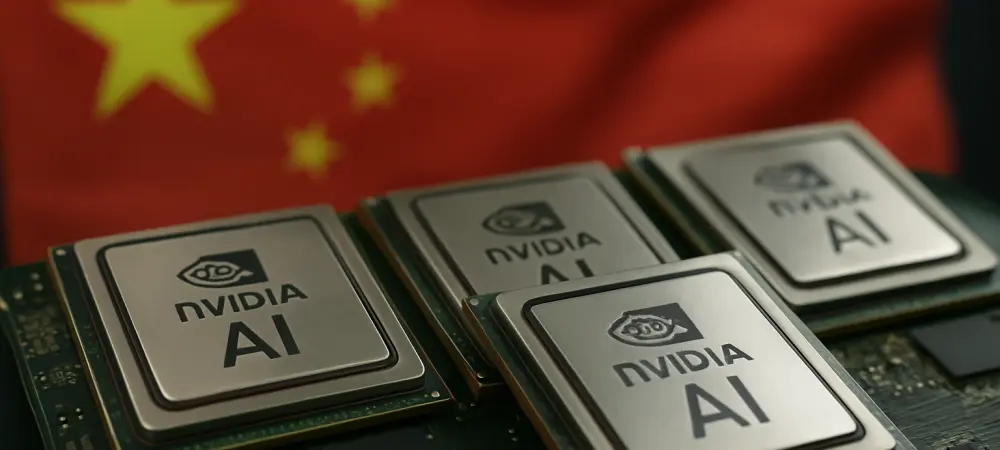
The landscape of global trade is continuously evolving, and amidst this dynamic environment, NVIDIA is striving to maintain its competitive edge in AI chip production, particularly in China. Recently, the U.S. lifted an export ban, allowing NVIDIA to reintroduce its ##0 AI chips to the Chinese market. Despite this positive change, several challenges await the tech giant, as persistent production hurdles temper immediate progress. NVIDIA partners with various global suppliers, making a robust supply chain critical to its operations. Yet, significant partners like TSMC are hesitant to adapt their production lines quickly, due to existing commitments to other high-demand tech products. This reluctance does not just pose a challenge; it underscores the complex landscape of semiconductor manufacturing where decision-making is influenced by global demands rather than individual corporate strategies.

Navigating Supply Chain and Market Dynamics

In response to various challenges in China, NVIDIA is leveraging its current ##0 chip inventory to address immediate demand. Simultaneously, the company is pivoting towards newer technologies such as the B20 AI chip and the RTX PRO 6000D, broadening its product range to meet diverse market needs in sectors like automotive, healthcare, and consumer electronics. This strategic move is part of an industry-wide trend where innovation is crucial for maintaining relevance. Despite optimistic revenue forecasts from China, logistical issues might slow financial gains, underscoring the importance of efficient supply chain coordination.

NVIDIA’s approach demonstrates a commitment to resilience, innovation, and market leadership. By diversifying beyond the ##0 chip, NVIDIA aims to be adaptable amid changing market dynamics and technological advancements. Challenges like regulatory navigation and supply chain restructuring also offer opportunities for NVIDIA to reshape its strategic presence in China, a market poised for significant AI growth. Successfully maneuvering these challenges could solidify NVIDIA’s position as a global semiconductor leader, capturing future opportunities.

Explore more

Is a Hiring Freeze a Warning or a Strategic Pivot?

When a major corporation abruptly halts its recruitment efforts, the silence in the human resources department often resonates louder than a crowded room full of eager job candidates. This phenomenon, known as a hiring freeze, has evolved from a blunt emergency measure into a sophisticated fiscal lever used by modern human capital managers. Labor represents the most significant operational expense

Trend Analysis: Native Cloud Security Integration

The traditional practice of routing enterprise web traffic through external security filters is rapidly collapsing as businesses prioritize native performance within hyperscale ecosystems. This shift represents a transition from “sidecar” security models toward a framework where protection is an invisible, intrinsic component of the cloud architecture itself. For modern enterprises, the friction between high-speed delivery and robust defense has become

Alteryx Debuts AI Insights Agent on Google Cloud Marketplace

The rapid proliferation of generative artificial intelligence across the global corporate landscape has created a paradoxical environment where the demand for instantaneous answers often clashes with the critical necessity for data accuracy and regulatory compliance. While thousands of employees within large organizations are eager to integrate large language models into their daily workflows to boost individual productivity, senior leadership remains

What Is the True Scope of the Medtronic Data Breach?

The recent confirmation of a sophisticated network intrusion at Medtronic has sent ripples through the medical technology sector, highlighting the persistent vulnerability of critical healthcare infrastructure in an increasingly digital world. This specific incident came to light after the notorious cybercrime syndicate known as ShinyHunters publicly claimed to have exfiltrated over nine million records from the company’s internal databases. These

How Does BlueNoroff Use AI to Target Global Crypto Assets?

The boundary separating a standard business interaction from a sophisticated state-sponsored financial heist has blurred as threat actors integrate generative artificial intelligence into their core operations. This shift represents a fundamental evolution in how state-aligned groups secure funding, moving away from crude attacks toward highly personalized, machine-learning-enhanced strategies. BlueNoroff, an elite subunit of the notorious Lazarus Group, has emerged as