

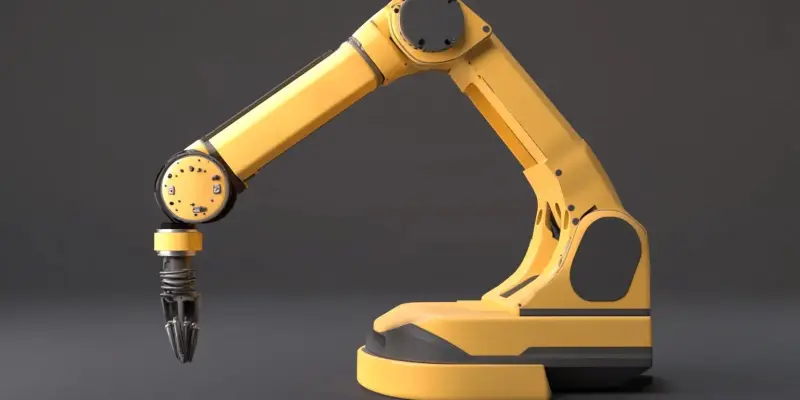
The recent $5 million funding secured by Mantis Robotics, a leader in “physical AI” for robotic automation, marks a significant milestone in the advancement of human-centric robotic technology. Led by Emerald Technology Ventures, this investment also drew participation from the Amazon Industrial Innovation Fund. The aim is to scale Mantis Robotics’ operations, enhance its product portfolio, and broaden its market presence within the industrial robotics sector.
The Core Innovation of Mantis Robotics
Advanced Robotic Arms
At the heart of Mantis Robotics’ technological prowess is its development of adaptive, human-centric robotic arms. These advanced robots are engineered to be inherently safe for human interaction, removing the necessity for costly external safety measures such as fences or laser barriers. By integrating a proprietary sensor suite, Mantis robots can detect obstacles and humans in real-time. This innovation allows the robots to autonomously adjust their behavior to ensure the safety of their human colleagues, effectively blending advanced artificial intelligence with practical everyday use.
The introduction of intuitive deployment software featuring a 3D real-time Digital Twin further enhances the usability of these robots. Requiring no technical or coding expertise to operate, this software makes it possible for a wide range of industries to implement robotic solutions without incurring high operational costs. In fact, Mantis Robotics asserts that such ease of use can reduce operational expenses by up to 75 percent compared to traditional robotic deployments. This considerable cost saving, combined with the inherent safety features, positions Mantis Robotics at the forefront of a new wave of industrial automation.
Real-World Applications
Mantis Robotics aims to bridge the gap between artificial intelligence and the physical world, facilitating safe and effective human-robot collaboration. This transformational technology holds substantial potential not only within manufacturing and warehousing but also across a variety of sectors such as healthcare, logistics, and food production. By creating robots that act as extensions of human capabilities, Mantis Robotics envisions a future where machines and humans work side by side seamlessly.
Gerry Vannuffelen, the founder and CEO of Mantis Robotics, emphasizes the company’s vision of enhancing human capability through robotic technology that ensures safe interaction. He believes that AI-driven systems can greatly contribute to workplaces where human-robot cooperation is not only possible but optimized for productivity and safety. This vision is echoed by Michal Natora of Emerald Technology Ventures, who underscores the revolutionary potential of Mantis’s unique sensor technology. Similarly, Franziska Bossart from Amazon highlights the significance of collaborative technology in fostering ergonomic and secure working environments.
The Role of Investment in Scaling Operations
Expansion and Market Penetration
The recent $5 million funding will be pivotal in accelerating the ambitions of Mantis Robotics to advance human-centric robots. The infusion of capital will enable the company to significantly expand its operations, boosting its capability to innovate and refine its product offerings. This growth will not only enhance the functional capabilities of Mantis’s robotic arms but will also allow the company to delve into new and emerging markets, further solidifying its industry presence.
An essential component of this expansion strategy involves refining the existing product portfolio to better meet the unique needs of various industries. By concentrating on the development of user-friendly, intuitive software and robust sensor technology, Mantis Robotics aims to provide solutions that are both cutting-edge and accessible. This user-focused approach ensures that the technology will be easy to integrate and use, appealing to a broad spectrum of industries from small-scale workshops to large manufacturing plants.
Industry Implications
Mantis Robotics, a pioneer in “physical AI” for robotic automation, recently secured $5 million in funding, a considerable achievement in the evolution of human-centric robotic technology. This financing round was spearheaded by Emerald Technology Ventures and also received notable contributions from the Amazon Industrial Innovation Fund.
The substantial investment is intended to scale the company’s operations, improve its product line, and expand its presence in the industrial robotics sector. As Mantis Robotics aims for broader market penetration, it plans to enhance the capabilities offered by its current robotic solutions to meet diverse industrial needs. The company’s focus remains on innovating within “physical AI,” which is poised to revolutionize how robots interact with human workers, making them safer and more efficient. The new capital will accelerate research and development to ensure their technology remains at the forefront of the industry.
With this fresh funding, Mantis Robotics is well-positioned to make significant strides in both technological advancements and market reach, potentially setting new standards for robotics in industrial environments.