

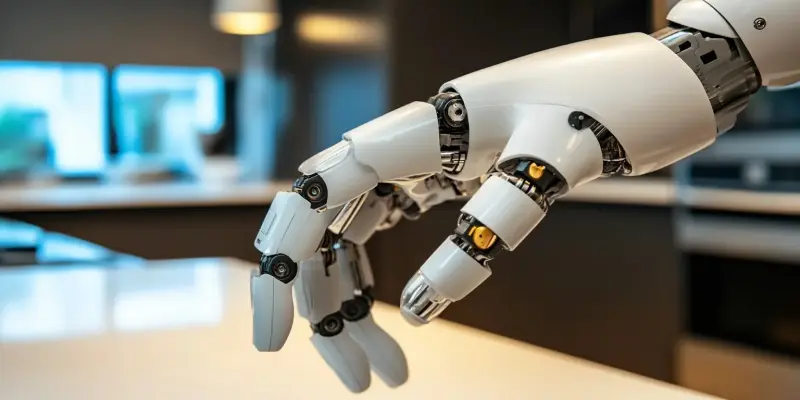
Household robotics has seen significant development in recent years, driven by technological innovation and a rising desire for home automation. The team at Intelligent Future, a student group at XJTLU Entrepreneur College (Taicang), is at the forefront of this evolution. They aim to revolutionize domestic chores with intelligent software that empowers robots to manage tasks like organizing and decluttering household items autonomously.
Technological Innovations in Household Robotics
Advanced Software and Machine Learning
Intelligent Future’s software is the backbone of their innovation, focusing on user behavior adaptability. By integrating machine learning and sophisticated algorithms, their robots can observe and learn from users, customizing their assistance to suit individual needs. This adaptability is crucial for creating efficient and adaptive robotic systems that can handle a variety of household tasks. The robots benefit greatly from the data-driven approach, leading to improved performance with each task they undertake.
One of the critical features of this software is its robust object recognition capability, achieved through the use of YOLOv5, a state-of-the-art computer vision model. This allows the robotic system to identify various household items with high precision, a capability essential for effective task execution. Moreover, the incorporation of collaborative filtering algorithms tailors the robotic assistance according to predictive analytics of user preferences and habits. These combined technologies enable the robots to not only recognize objects but also to predict and adapt to user needs efficiently.
Overcoming Development Challenges
The development phase of Intelligent Future’s projects has not been without challenges, particularly in creating systems that can accurately identify objects and effectively predict user preferences. However, through significant collaboration and leveraging advanced technological tools, the team has made substantial progress. Chief Product Officer Zhenhao Guo and Chief Technology Officer Bojun Long have been pivotal in combining various technologies to enhance the learning and task execution capabilities of the robots. Their leadership has been instrumental in tackling the complexities inherent in such innovations.
Their work has been supported by Dr. Fan Zhu from the School of Robotics and the startup incubator X3 Co-Venture, which offers essential resources and space for teamwork. This collaborative environment has been crucial in overcoming technical hurdles and pushing the boundaries of what household robotics can achieve. Integrating insights from multiple disciplines, the team has managed to build a cohesive system capable of managing complex home environments with increasing effectiveness.
Market Trends and Potential Use Cases
Rising Demand for Home Automation
The demand for automation solutions is rising, particularly in smart homes integrated with other intelligent devices. As modern lifestyles become increasingly fast-paced, the convenience offered by household robots is becoming more appealing to a wider audience. These robots can play a vital role in elderly care by assisting with daily tasks to enhance independence, thereby improving the quality of life for many users. They can also relieve busy families by managing domestic pressures, making life more convenient and efficient while offering consistent and reliable assistance.
As AI and machine learning continue to advance, household robots are expected to integrate further into our daily lives. These robots will contribute more significantly to home management, offering customized cleaning experiences based on user preferences and performing tasks with a precision that could surpass human efforts in some scenarios. The seamless integration of these technologies promises a future where robots become indispensable household helpers, effectively managing daily routines.
Benefits and Challenges
The potential benefits of household robotics are numerous. By automating routine tasks, these robots can save time and offer customized cleaning experiences tailored to individual preferences. However, the initial investment in such technology can be substantial, presenting a barrier for widespread adoption. Early-stage technologies may also have limitations in managing complex environments or unexpected challenges, necessitating ongoing development and improvement.
Additionally, the constant monitoring required for these robotic systems raises valid privacy concerns regarding data security. Users must trust that their personal information is safeguarded against misuse or unauthorized access. Despite these challenges, the advancements made by Intelligent Future signify a promising direction for the household robotics industry. Under the mentorship of X3 Co-Venture and expert guidance, the team is working towards creating a miniaturized robotic arm tailored to improve home organization, showcasing an innovation-driven approach that sets them apart in the nascent field of household robotics.
Future Prospects and Industry Growth
Projected Market Growth
The household robotics market is projected to grow significantly in the coming years. As more consumers seek these automation solutions, pricing strategies will likely evolve, potentially making the technology accessible to a broader audience over time. The long-term benefits and potential savings in time and effort could render household robotics an attractive proposition for many households, offering practical solutions to everyday challenges. This growth is spurred by the continuous improvements in AI and machine learning technologies, which increase the functionality and reliability of robotics systems.
The increasing integration of robots in smart home ecosystems also contributes to their growing appeal. As devices become more interconnected, the efficiency and utility of household robots will only continue to improve. This enhanced connectivity will facilitate more seamless and intuitive interactions between users and robots, further driving market demand and adoption rates.
Intelligent Future’s Vision
The field of household robotics has experienced remarkable progress over recent years, fueled by technological advancements and an increasing interest in home automation. This trend has paved the way for innovative solutions that make everyday life more convenient. A prominent example of this innovation is the Intelligent Future team, a student group operating out of XJTLU Entrepreneur College (Taicang). This team is working at the cutting edge of this technological revolution. Their goal is to transform domestic chores through intelligent software, which will enable robots to autonomously handle tasks such as organizing and decluttering household items. Their vision represents a significant leap toward fully automating various aspects of home management, sparing individuals from mundane chores and giving them more time for other activities. By leveraging sophisticated algorithms and state-of-the-art technology, these student innovators aim to create a seamless and efficient household experience. The advancements they’re pursuing not only promise to change how we interact with our homes but also set the stage for a future where robots play an integral role in everyday life.