

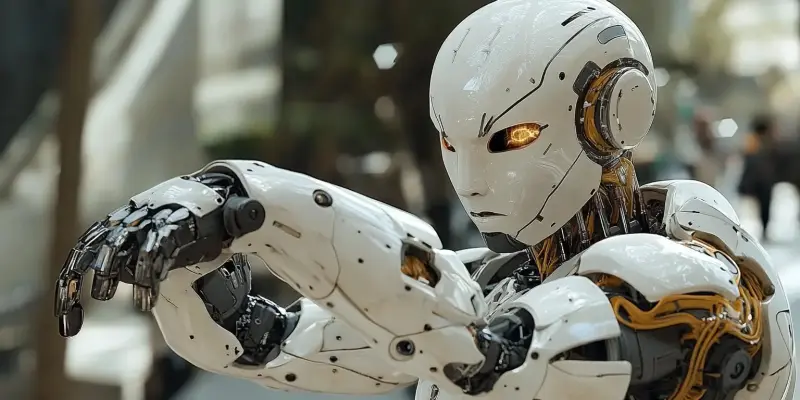
In a groundbreaking development, Unitree Robotics has unveiled its latest creation, the G1 humanoid robot, capable of performing complex kung fu movements with remarkable precision and balance. The G1’s ability to execute intricate martial arts techniques marks a significant leap in the fields of robotics and artificial intelligence. Originally designed as an agile dancer, the G1 has undergone extensive training in a virtual environment powered by Nvidia’s Isaac Simulator, transforming it into a martial arts expert. This metamorphosis, achieved through reinforcement learning, involved the creation of a digital twin to mimic human movements, later bridging the simulated actions to the physical world using a process known as Sim2Real.
Advanced Training Environments
From Dance to Kung Fu
The G1 humanoid robot’s journey from a nimble dancer to a kung fu master underscores the potential of advanced virtual training environments. Employing Nvidia’s Isaac Simulator, developers created a digital twin of the G1, enabling the robot to learn and perfect complex movements in a controlled virtual setting. This method allowed for rigorous testing and refinement of kung fu techniques without the physical constraints and risks associated with real-world training.
Reinforcement learning played a crucial role in this development process. By analyzing and imitating human movements, the G1 progressively improved its martial arts skills. The use of Sim2Real techniques facilitated the transfer of these virtual skills to the physical robot, ensuring that the movements performed in the simulation could be replicated with precision in the real world. This successful transition highlights the effectiveness of combining simulated environments with advanced learning algorithms to enhance robotic capabilities.
Precision and Dexterity
Showcasing its mastery in kung fu, the G1 impressively executes punches, roundhouse kicks, and intricate sequences with a level of dexterity previously unseen in humanoid robots. The robot’s 23 degrees of freedom—each joint capable of moving in various directions—allow for highly coordinated and fluid movements. This advanced dexterity not only demonstrates the robot’s capability in martial arts but also reflects the potential for application in other complex tasks.
Unitree Robotics’ broader vision for the G1 encompasses a wide array of applications beyond martial arts. With its precise movements and balance, the G1 could be instrumental in performing tasks in environments such as homes, factories, and hospitals. The development of an open-source full-body dataset by Unitree, which includes a redirection algorithm to optimize movements based on various constraints, further enhances the flexibility and adaptability of humanoid robots. This dataset could significantly contribute to advancing robotic applications across different sectors.
Broader Implications and Future Applications
Beyond Martial Arts
The evolution of the G1 from a dancing robot to a kung fu master exemplifies the rapid advancements in humanoid robotics, driven by sophisticated hardware, artificial intelligence algorithms, and innovative training techniques. The G1’s ability to perform complex tasks accurately indicates a future where humanoid robots could seamlessly integrate into various aspects of daily life. From assisting with household chores to participating in industrial operations, the possibilities are vast and promising.
The application of the G1’s advanced capabilities extends to critical areas such as healthcare and eldercare, where precision and reliability are vital. For instance, G1 could assist medical professionals by performing routine tasks or provide support to elderly individuals in their homes, ensuring they remain safe and healthy. The development and deployment of such versatile robots could significantly enhance the quality of life, particularly for vulnerable populations who require constant care and support.
Ethical Considerations
Unitree Robotics has made a groundbreaking advance with its latest creation, the G1 humanoid robot. This innovative robot can perform complex kung fu movements with astonishing precision and balance. The G1’s ability to carry out intricate martial arts techniques marks a significant breakthrough in robotics and artificial intelligence. What began as an agile dancing robot, the G1, has now been transformed into a martial arts master after extensive training in a virtual environment powered by Nvidia’s Isaac Simulator. The robot underwent significant development through reinforcement learning, which involved creating a digital twin to imitate human movements. This virtual training was then translated into real-world actions using a process called Sim2Real, successfully bridging the gap between simulated and physical performance. As a result, the G1 showcases the merging of advanced robotics with highly refined human-like motion, illustrating the potential for robots to master complex tasks with accuracy.