

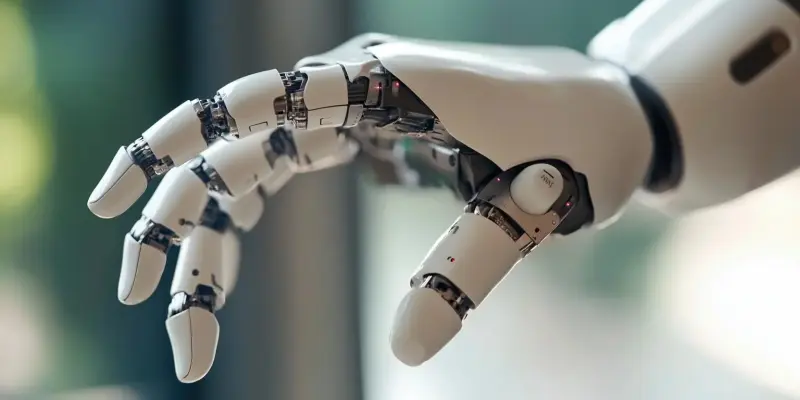
Artificial intelligence (AI) is reshaping the landscape of robotics, driving significant advancements in both technology and practical applications. Initially confined to specific, pre-programmed tasks, robots have evolved into far more capable entities, thanks to breakthroughs in machine learning and automation. A McKinsey report from 2023 underscored the economic impact of AI-driven robotics, suggesting that their integration could boost global GDP by as much as $4.4 trillion annually. This marks a transformative period wherein robots have graduated from basic automation to complex decision-making and problem-solving capabilities.
Enhanced Automation and Efficiency
Advanced Decision-Making Capabilities
One of the primary ways AI is revolutionizing robotics is through improved decision-making capabilities. Traditional robots operated on predetermined commands, limiting their ability to respond to unforeseen situations. Similarly, AI’s ability to predict maintenance needs through condition monitoring and predictive analytics has extended the lifespan of machinery and minimized downtime, creating a more resilient production environment.
Improved Human-Robot Collaboration
A significant development in robotics through AI integration is the emergence of collaborative robots, also known as cobots. These robots are designed to work alongside humans, boosting productivity and safety. In healthcare, for example, cobots assist surgeons during complex procedures, offering unparalleled precision and control. By combining human expertise with robotic dexterity, outcomes are improved, and recovery times are shortened. Cobots have also been adopted in automotive manufacturing, where they perform tasks like assembling parts and welding with exceptional accuracy, while human workers handle more intricate or decision-based tasks.
This symbiotic relationship between humans and robots has also penetrated the retail sector. AI-driven robots can manage inventory, sort items, and even stock shelves, enabling human employees to focus on customer service and sales. The adaptability and reliability of cobots have made them invaluable assets in various industries, ensuring that humans can work safely and efficiently in high-risk environments or with heavy loads.
Learning and Adaptation
Machine Learning and Continuous Improvement
AI empowers robots with the ability to learn and improve from experience, a process called machine learning. This allows robots to perform progressively better over time as they assimilate new data. In the realm of autonomous vehicles, companies like Tesla and Waymo utilize AI to interpret traffic patterns, pedestrian behavior, and road conditions, thereby enhancing navigation and safety. In customer service, AI-driven chatbots and virtual assistants continuously learn from interactions to better respond to customer queries. This leads to more efficient and personalized customer support. Similarly, in financial services, robotic process automation (RPA) systems utilize machine learning to detect fraudulent transactions, ensuring secure and efficient financial operations. These applications highlight the expansive potential of machine learning in enhancing robot functionality across diverse sectors.
Emergence of Service Robots
Service robots have become an integral part of both commercial and residential settings, thanks to advancements in AI. In homes, personal assistant robots manage daily tasks, provide companionship, and even offer medical support. Businesses have also embraced service robots; for instance, robotic chefs in restaurants prepare meals with consistent quality, while hotels use robots for room service and concierge duties.
The widespread adoption of service robots is anticipated to continue growing, with a Statista report projecting the global market to reach $50 billion by 2030. This growth is largely driven by AI innovations that enhance the capabilities and reliability of these robots. In educational institutions, service robots assist in teaching, tutoring, and even providing special needs support, demonstrating AI’s role in enhancing learning experiences. The increasing integration of service robots signifies a shift towards more automated and efficient environments, shaped by the capabilities of AI technologies.
Future Prospects and Innovations
Expanding Applications of AI in Robotics
The future trajectory of AI in robotics promises further advancements and wider applications across various industries. Deep learning and computer vision are expected to foster new functionalities, such as improved object recognition and environmental understanding. In agriculture, AI-powered robots could revolutionize farming techniques by performing complex tasks like planting, monitoring crop health, and even harvesting with minimal human intervention. Similarly, in the medical field, robots equipped with AI could assist in diagnostics, surgery, and patient care, enhancing the overall quality of healthcare services.
Space exploration is another frontier where AI in robotics is making significant strides. Autonomous robots on Mars, for instance, can conduct research, gather samples, and perform maintenance with minimal human guidance. These developments highlight AI’s potential to transform traditional practices and introduce innovative solutions to longstanding challenges.
Enhancing Communication and Complexity Handling
The evolution of AI in robotics is also expected to enhance human-robot communication and the ability to handle complex tasks. Conversational AI and natural language processing are improving robots’ abilities to understand and respond to human speech, making them more intuitive and user-friendly. This is particularly relevant in customer service, where robots can handle inquiries and provide information in a natural and engaging manner. Moreover, AI enables robots to tackle tasks that require high levels of dexterity and precision, such as performing intricate surgical procedures or assembling delicate electronic components.
As AI continues to evolve, the boundary between human and robotic capabilities will blur, leading to a future where robots play an even more integral role in our daily lives and industries.
Accelerating the Transformation of Industry
Artificial intelligence (AI) is transforming the field of robotics, spearheading significant advancements in both technology and real-world applications. Initially, robots were limited to performing specific, pre-programmed tasks. However, with breakthroughs in machine learning and automation, robots have evolved to become much more proficient and versatile. These advancements have enabled robots to perform complex decision-making and problem-solving tasks, far beyond their original capabilities. A McKinsey report from 2023 highlighted the economic impact of AI-driven robotics, estimating that their integration could potentially increase global GDP by up to $4.4 trillion annually. This signifies a groundbreaking period where robots transition from basic automation roles to more advanced functions, fundamentally altering numerous industries. The continuous development in AI and robotics promises to reshape the future, bringing unprecedented efficiency and capabilities to various sectors, from manufacturing to healthcare and beyond.