

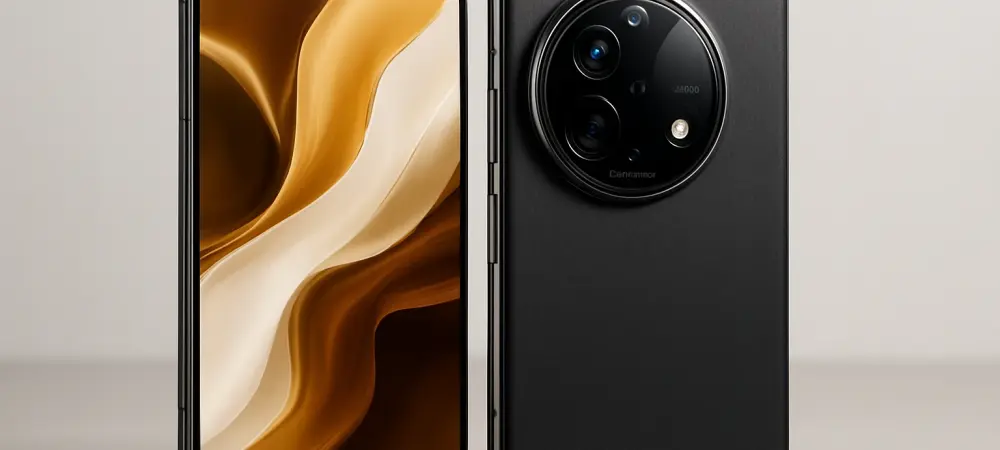
The smartphone industry has reached a pivotal juncture where the novelty of folding glass must finally yield to the demanding rigor of professional-grade utility. While early iterations of foldable devices often compromised on camera quality or battery longevity to maintain a slim profile, the Oppo Find N6 attempts to bridge this gap by integrating high-performance hardware typically reserved for traditional flagship “slabs.” This shift signifies a broader trend toward making foldables the primary choice for power users rather than a secondary luxury.
Evolution of the Find N series and the Foldable Market
The trajectory of the Find N series reflects a maturation of the foldable concept from a compact curiosity into a robust productivity tool. Initially, the series focused on a unique aspect ratio that prioritized one-handed use, but the market now demands larger canvases and uncompromised internal specifications. This evolution occurs as competitors saturate the market, forcing manufacturers to innovate beyond the hinge and into the realm of specialized silicon and optics. The emergence of the Find N6 is a response to this competitive pressure, positioning itself as a comprehensive desktop-in-pocket solution. By refining the structural integrity and expanding the screen real estate, the device addresses the historical skepticism regarding the fragility and limited functionality of folding screens. It represents a shift where the folding mechanism is no longer the main attraction but rather a foundational feature of a high-end workstation.
Technical Innovations and Flagship Components
The Hasselblad-Tuned Quad-Camera Imaging System
At the heart of this device lies an ambitious quad-camera array that challenges the status quo of foldable photography. The inclusion of a 200-megapixel primary sensor is a bold move, as such large components usually struggle to fit within the thin chassis of a folding phone. This sensor, paired with proprietary Danxia color imaging lenses, aims to deliver color accuracy and dynamic range that rivals professional mirrorless cameras.
Unlike its predecessors, which often featured modest secondary lenses, the Find N6 incorporates a 50-megapixel telephoto and a 50-megapixel ultra-wide sensor. This symmetry in resolution ensures that users do not lose detail when switching between different focal lengths. This setup is particularly significant for content creators who require consistent image quality across various perspectives without carrying bulky external equipment.
Snapdragon 8 Elite Performance and Hardware Architecture
Powering the device is the Snapdragon 8 Elite, a chipset designed to handle the thermal demands of a dual-screen interface. With up to 16GB of RAM, the hardware architecture is built to support aggressive multitasking and high-fidelity gaming. This performance tier is necessary to drive the complex software layers that allow seamless transitions between the cover screen and the expansive inner display. The 6,000mAh battery is perhaps the most critical hardware achievement, providing the energy density required to sustain such powerful components throughout a full workday. In a market where 5,000mAh has been the standard ceiling for foldables, this increase suggests a breakthrough in battery chemistry or internal spatial optimization. It ensures that the high refresh rate screens and 5G connectivity do not prematurely drain the device.
Display Engineering and Crease-Free Design
The visual experience is centered on a massive 8.12-inch 2K LTPO inner screen that offers fluid motion and vibrant color reproduction. Oppo has focused heavily on the mechanics of the “waterdrop” hinge to minimize the tactile and visual presence of the screen crease. This engineering feat is vital for users who find the physical indentation of foldables distracting during stylus use or media consumption.
Complementing the internal panel is a 6.62-inch cover display that functions like a standard smartphone screen. This dual-display approach ensures that the device remains functional even when closed, preventing the “secondary screen” feel of earlier models. The use of LTPO technology on both surfaces allows for dynamic refresh rates, which preserves battery life by scaling down when high-speed motion is not required.
Current Trends in Foldable Hardware and Connectivity
The foldable market is currently moving toward a “no-compromise” philosophy, where the gap between folding and non-folding flagships is virtually non-existent. Manufacturers are now focusing on durability and specialized communication to differentiate their products. This trend reflects a growing consumer expectation that a premium price tag should guarantee the best available technology in every category, from processing power to structural resilience.
Connectivity is also becoming a key battleground, with satellite communication emerging as a standard for high-end devices. This shift indicates that mobile phones are being reimagined as essential safety tools for remote exploration rather than just social media portals. The industry is moving away from purely aesthetic innovations toward functional upgrades that provide tangible value in emergency or professional scenarios.
Real-World Applications and Specialized Use Cases
The Find N6 finds its strongest application in industries requiring high-density data visualization on the move, such as finance or engineering. The large inner display allows for complex spreadsheets and architectural blueprints to be viewed with a level of detail impossible on standard screens. This utility transforms the smartphone from a communication device into a portable workstation for field professionals.
Furthermore, the “Satellite Edition” introduces a critical use case for users in remote areas where traditional cellular networks are absent. This feature enables two-way messaging and emergency positioning via satellite, making it an indispensable tool for researchers and outdoor enthusiasts. Such specialized implementations highlight how foldable technology is adapting to meet the niche needs of a globalized, mobile workforce.
Navigating Technical Challenges and Adoption Barriers
Despite these advancements, the foldable segment still faces significant hurdles regarding long-term durability and high entry costs. The complexity of the hinge and the flexible display layers makes these devices inherently more susceptible to damage from dust or impact compared to traditional glass sandwiches. While Oppo has implemented rigorous testing, the perception of fragility remains a barrier to mainstream adoption.
Moreover, the premium pricing of these devices limits their reach to a specific demographic of tech enthusiasts and corporate executives. Reducing the cost of flexible OLED panels and sophisticated hinge components is necessary to move these devices into the mid-range market. Ongoing research into new composite materials and simplified manufacturing processes will be essential to mitigate these economic and physical limitations.
Future Outlook and the Trajectory of Mobile Computing
The future of mobile computing appears to be leaning toward modularity and adaptive form factors. As the Find N6 demonstrates, the ability to transition from a pocketable device to a small tablet is no longer a gimmick but a functional requirement for modern digital life. Future iterations will likely integrate even more sophisticated sensors and perhaps even rollable elements to further expand the screen-to-body ratio.
We may also see a deeper integration of artificial intelligence that anticipates which screen the user needs based on the task at hand. This predictive software environment will work in tandem with hardware to optimize power consumption and user interface layouts. As the ecosystem matures, the distinction between tablets and smartphones will continue to blur, leading to a single, versatile device that serves all digital needs.
Final Assessment of the Oppo Find N6
The transition toward high-resolution imaging and high-capacity batteries marks a turning point for the Find N series. This device moved the needle by proving that a foldable does not have to sacrifice photographic excellence or endurance for its form factor. Its success relied on the delicate balance of high-end specifications and refined ergonomics, catering to a market that is increasingly weary of iterative updates. Moving forward, the industry must prioritize making these structural innovations more accessible to a wider audience. The next logical steps involve enhancing the software ecosystem to take full advantage of the unique hardware, ensuring that third-party applications can natively support the variable aspect ratios. As reliability continues to improve, the foldable design is poised to become the standard blueprint for the next generation of personal computing.