

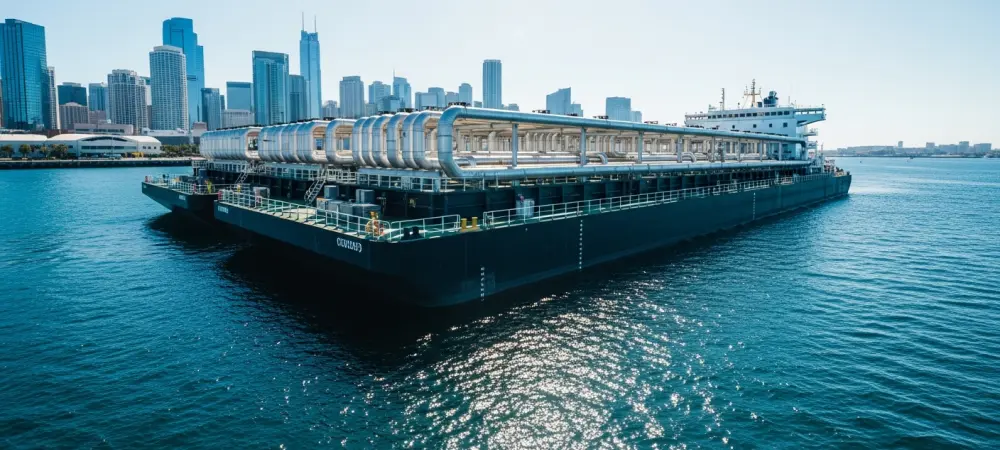
The relentless expansion of generative artificial intelligence has pushed traditional terrestrial power grids and real estate markets to their absolute breaking points, leaving hyperscalers searching for unconventional alternatives. While the demand for high-density compute clusters continues to skyrocket, the availability of land with sufficient electrical infrastructure has plummeted, creating a bottleneck that threatens to stall the pace of technological innovation. Floating data centers, once relegated to the realm of experimental prototypes, have emerged as a pragmatic response to these physical constraints by utilizing the vast, underused surface area of coastal waters. These aquatic facilities offer a unique combination of proximity to major metropolitan hubs and direct access to cooling resources that are simply unavailable in landlocked regions. By decoupling data processing from the limitations of the terrestrial grid, maritime computing presents a paradigm shift in how digital infrastructure is deployed today. This transition is not merely a novelty but a strategic necessity for the industry.
Overcoming Land Scarcity and Power Grid Congestion
Municipalities in major tech hubs such as Northern Virginia and Santa Clara have begun implementing stricter zoning laws and energy consumption caps, which severely limit the construction of new mega-scale facilities. These restrictions are not merely bureaucratic hurdles but reflect a genuine crisis in grid capacity where the arrival of a single large-scale AI training center can destabilize the power supply for entire residential neighborhoods. Floating barges provide an elegant solution to this geographic deadlock by positioning compute resources in offshore or industrial maritime zones where traditional real estate competition is non-existent. Furthermore, these vessels can be moored near undersea cable landings, reducing the latency associated with long-distance data transmission while bypassing the need for complex land-rights negotiations. This strategy allows companies to bypass the years-long waiting lists for terrestrial power hookups that have become the standard in high-demand markets during the 2026 fiscal cycle.
The mobility inherent in barge-based infrastructure allows for a more flexible response to shifting regional demands and localized energy surpluses that might otherwise go to waste. For instance, a floating data center can be towed to a region with an abundance of offshore wind energy or tidal power, effectively serving as a mobile consumer that balances the load on emerging renewable energy networks. This portability also serves as a hedge against geopolitical instability or localized natural disasters, as the entire processing hub can be relocated to a safer harbor if environmental conditions deteriorate. Unlike permanent brick-and-mortar structures that become stranded assets if local conditions change, maritime facilities retain their value through their ability to traverse international waters. This fluidity is essential for a global digital economy where the requirements for processing power are constantly shifting across different jurisdictions and time zones, ensuring that infrastructure remains as dynamic as the software it supports.
Thermal Efficiency and Scalable Cooling Solutions
One of the most significant operational advantages of maritime data centers is the virtually unlimited access to naturally chilled water for heat dissipation systems. In traditional facilities, massive amounts of electricity are diverted away from compute tasks just to run evaporative cooling towers or complex air-conditioning units that struggle with the heat density of modern GPUs. By utilizing heat exchangers that interact directly with the surrounding seawater or river currents, floating barges can achieve much lower power usage effectiveness ratings than their terrestrial counterparts. This direct-to-chip liquid cooling integration is particularly vital for the newest generation of AI accelerators, which generate thermal loads that exceed the cooling capacity of standard air-cooled server racks. The abundance of the water body serves as a massive heat sink, allowing for a higher density of hardware within a smaller physical footprint. This efficiency gain translates into lower operational costs and a significantly reduced environmental impact.
Stakeholders recognized that the initial pilot programs for floating data centers successfully proved the viability of using maritime environments to alleviate the constraints of the terrestrial power grid. The industry shifted its focus toward establishing standardized safety and environmental protocols that allowed for the rapid expansion of these facilities across various international jurisdictions. It became clear that the integration of mobile compute units into the broader energy landscape provided the necessary flexibility to handle the volatile demands of artificial intelligence workloads. Companies prioritized the development of partnerships with port authorities and renewable energy providers to create a sustainable roadmap for future growth. The transition to waterborne infrastructure addressed the immediate crisis of land and power scarcity while opening new avenues for technological efficiency. Ultimately, the move offshore represented a decisive step in building a more resilient and scalable digital foundation that balanced the needs of innovation with the realities of the physical world.