

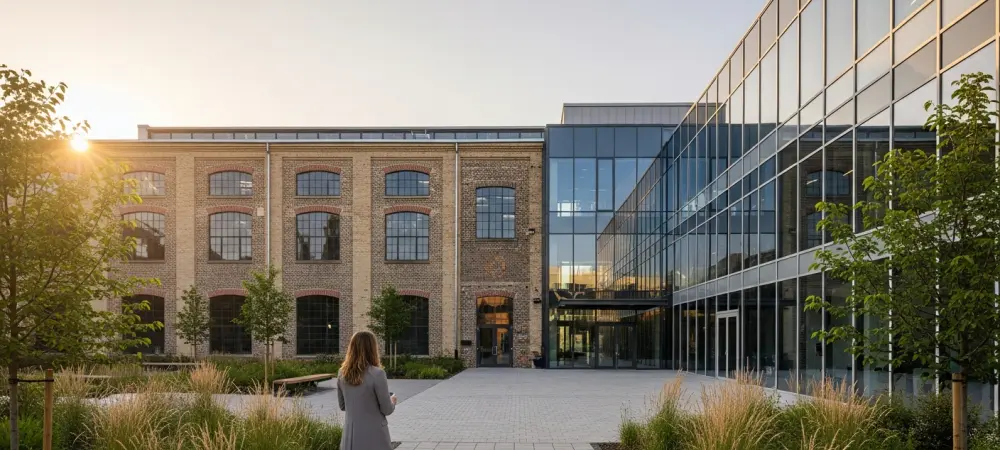
Dominic Jainy brings a wealth of experience to the intersection of physical infrastructure and digital transformation. As legacy industries like print media face declining demand, Jainy analyzes how firms like Legacy Investing are breathing new life into massive industrial footprints. This discussion explores the conversion of the 500,000-square-foot Heritage Printing Facility in Minneapolis into a high-tech 20MW data center, illustrating the evolution of urban landscapes into critical hubs for the digital economy.
The Heritage Printing Facility has served Minneapolis for decades, but what specifically makes a mid-80s printing plant a prime candidate for a 20MW data center conversion today?
These structures are built with a level of industrial resilience that you simply do not find in modern commercial office buildings. When you look at the 13-acre site at 800 First St. N., you see more than 500,000 square feet of heavy-duty production and warehouse space that was originally designed to handle massive, vibrating machinery. Converting a facility built in 1986 requires an expert touch, but the existing footprint allows a developer to bypass the shell construction phase and move straight into the complex electrical and cooling overhauls. There is a certain weight to the history there, and moving from mechanical printing presses to next-generation servers feels like a natural, sensory progression of the local story.
Legacy Investing mentioned a “hybrid approach” to this redevelopment project; how do you see the integration of digital infrastructure and mixed-use components working in an urban setting?
It is no longer enough to just drop a windowless gray box into a city center because the local community expects more from their urban environment. By pairing a next-generation data center with mixed-use components, the project can bridge the gap between the invisible digital world and the vibrant life of a neighborhood. Legacy has a deep bench of experience, managing around 20 million square feet of industrial and life sciences real estate, which allows them to weave these diverse elements together. They are not just building a server farm; they are creating a master-planned redevelopment that respects the legacy of the Star Tribune while looking toward a high-tech future.
Minneapolis recently implemented a moratorium on data center development, so how does a project of this size navigate such a complex regulatory landscape?
Timing and scale are everything when you are dealing with a city council that is actively evaluating the impact of data infrastructure on the local grid and community. The current moratorium in Minneapolis is set to expire this November and specifically targets facilities larger than 350,000 square feet, which makes the 500,000-square-foot Heritage site a major focal point for regulators. Since the sale of the $20 million plant is not expected to close until Q4 2026, there is a significant window to align the development plans with the city’s long-term vision. It is a delicate dance of ensuring the project meets local standards while securing the necessary power and permits for a facility of this magnitude.
The Star Tribune’s decision to outsource printing to Iowa highlights a major industry shift, but what does this sale tell us about the current valuation and utility of large-scale urban industrial sites?
The shift from the Star Tribune’s in-house printing to an outsourced model in Iowa was driven by the hard reality of declining print circulation and the under-utilization of their massive facility. This plant was previously valued at an estimated $20 million, a figure that reflects its prime location rather than its outdated mechanical function. By offloading this asset, the publication is able to focus on its digital future while the buyer transforms an under-utilized warehouse into a high-value data node. We are seeing this pattern repeat across the country, from former stock exchanges in Chicago transformed into 33MW centers to old karting tracks in Texas becoming 50MW facilities, as the demand for digital space outstrips traditional manufacturing.
What is your forecast for the expansion of urban data centers across the Midwest?
I expect to see a surge in these types of conversions as cities realize that proximity to users is non-negotiable for low-latency applications. The Midwest is becoming a powerhouse for this growth because of the existing industrial bones and a climate that can sometimes assist with cooling efficiencies. With major firms already managing dozens of facilities across Texas, Oregon, and California, the expansion into the Minneapolis-Chicago corridor is the next logical step in building a national digital backbone. We are entering an era where the most valuable real estate is no longer just where people live or work, but where the data they generate is processed and stored.