

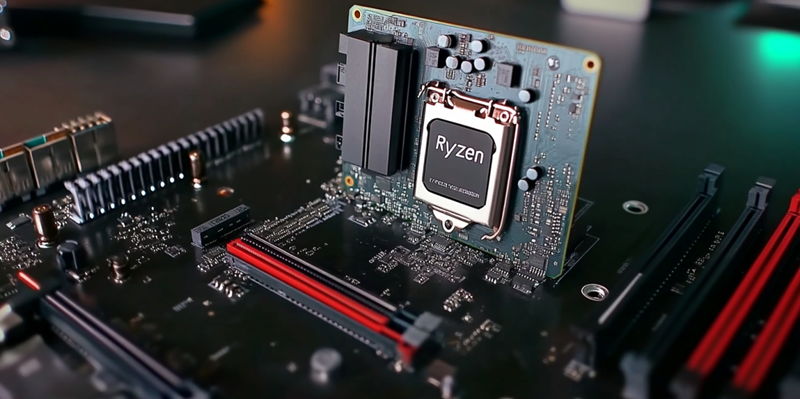
The world of PC hardware is constantly evolving, with each new generation of components pushing the boundaries of performance and efficiency. Among the latest advancements, AMD’s Ryzen 7 9800X3D 3D V-Cache CPU stands out, particularly when it comes to memory overclocking capabilities. When paired with the ASUS ROG Crosshair X870E motherboard, this next-generation chip showcases impressive advancements in gaming performance and memory speeds, establishing a new benchmark for hardware enthusiasts and gamers. As anticipation builds for its official launch, the tech community is abuzz with discussions about the potential implications of this powerful combination.
Unleashing Memory Overclocking Potential
The AMD Ryzen 7 9800X3D was put to the test with high-end G.Skill Trident Z5 memory modules rated at DDR5-8000. Leveraging the overclocking prowess of the Zen 5 CPUs and the ASUS ROG Crosshair X870E motherboard, memory speeds were successfully pushed to DDR5-8800 MT/s. This remarkable feat underscores the chip’s impressive overclocking potential, offering a glimpse into the future of memory performance. Enthusiasts and experts alike have been eager to see how far this technology can go and what benefits it can deliver in real-world applications.
Achieving these speeds required meticulous adjustments. The voltage was increased to 1.54V to maintain stability, and timings were adjusted to CL40 mode. Such changes ensured that the system performed reliably during stress tests, as confirmed by RunMemtestPro software, which indicated the good health of the memory modules even under these demanding conditions. These findings not only highlight the capabilities of the Ryzen 7 9800X3D but also showcase the importance of fine-tuning and optimization in achieving optimal performance.
Role of NitroPath Technology
A key component contributing to these overclocking results is the NitroPath technology featured in ASUS’s high-end motherboards. This technology optimizes memory signaling and routing, allowing for faster DIMM support and potential speed gains of up to 400 MT/s. The advanced memory signaling and routing layouts provided by NitroPath are crucial for pushing the limits of memory performance. By addressing common bottlenecks and inefficiencies, NitroPath technology enables users to unlock the full potential of their high-performance memory modules.
The collaboration between AMD and ASUS to integrate NitroPath technology signifies a pivotal development. It demonstrates how motherboard manufacturers and CPU developers can work together to achieve breakthroughs in performance. This synergy is essential for meeting the growing demands of gamers and hardware enthusiasts who seek the best possible performance from their systems. The combination of AMD’s cutting-edge CPU technology and ASUS’s innovative motherboard features sets the stage for a new era of high-performance computing.
Implications for Gaming Performance
The anticipated improvements in gaming performance with the Ryzen 7 9800X3D are noteworthy. The enhancements over existing Ryzen 9000 series and previous-gen Ryzen 7000X3D CPUs are expected to be significant. This performance upgrade makes the 9800X3D an attractive option for gamers aiming for the highest levels of computing power and responsiveness in their setups. The increased memory bandwidth and lower latencies provided by the new CPU are particularly beneficial for gaming, where every millisecond counts.
With the 9800X3D, games can leverage the increased memory bandwidth and lower latencies, resulting in smoother graphics, faster load times, and an overall more immersive gaming experience. As gaming continues to evolve, the need for high-performance hardware becomes increasingly critical, and the 9800X3D is poised to set a new standard in this regard. The expectations are high for this next-generation CPU, and the early reports suggest that it will not disappoint.
Stability and Performance Validation
Achieving stable performance at such high memory speeds is no simple task. The testing and validation processes are rigorous, involving extensive fine-tuning of voltages and timings to ensure reliable operation. The successful overclocking of the AMD Ryzen 7 9800X3D to DDR5-8800, combined with the verification from RunMemtestPro, highlights the stability and robustness of this next-generation CPU and the advanced ASUS motherboard. This level of stability is crucial for users who rely on their systems for demanding applications and gaming.
The Integrated Memory Controller (IMC) in the Zen 5 architecture remains consistent with the Zen 4 architecture. However, the concerted efforts between AMD and motherboard manufacturers to support faster memory speeds reflect a commitment to pushing the envelope of what’s possible in memory overclocking. The ability to achieve such high memory speeds without compromising stability speaks volumes about the quality and engineering behind these components.
Anticipation and Future Releases
The AMD Ryzen 7 9800X3D is set to be introduced on October 25th, with retail availability expected in early November. Additionally, AMD plans to host an event in Zhuhai, China, on October 23-24 to showcase this next-generation CPU. The excitement surrounding this release is palpable, with the hardware community eagerly awaiting to see how these innovations translate into real-world performance gains. The lead-up to the launch has been filled with speculation and predictions about the potential impact of the 9800X3D on the market.
Looking ahead, the higher-end Ryzen 9 9950X3D is also on the horizon, scheduled for a Q1 2025 launch. This upcoming release further fuels the anticipation among enthusiasts, hinting at even more impressive performance benchmarks that could redefine expectations for CPU and memory speeds. The future looks bright for AMD and its users, with the promise of continued innovation and advancement in the world of high-performance computing.
As the tech community counts down to the official release dates, the buzz surrounding these new CPUs continues to grow. The promise of groundbreaking performance and enhanced gaming experiences has captured the imagination of gamers and hardware enthusiasts alike. With the Ryzen 7 9800X3D and the upcoming Ryzen 9 9950X3D, AMD is poised to make a significant impact on the industry, setting new standards and raising the bar for what is possible with modern computing technology.
Conclusion
The PC hardware industry is in a state of perpetual evolution, with every new series of components breaking new ground in performance and efficiency. A notable recent development is AMD’s Ryzen 7 9800X3D 3D V-Cache CPU, especially recognized for its exceptional memory overclocking capabilities. When this cutting-edge processor is paired with the ASUS ROG Crosshair X870E motherboard, it demonstrates remarkable improvements in gaming performance and memory speeds, setting a new benchmark for both hardware enthusiasts and avid gamers. The anticipation surrounding its official launch is palpable, as the tech community fervently discusses the potential impact of this powerful combination.
Additional excitement stems from the possibilities that the Ryzen 7 9800X3D 3D V-Cache CPU brings to the market. With substantial gains in cache memory and processing power, this chip promises to enhance multitasking and streamline workflows, catering to both gamers and professional users alike. Its architecture is expected to deliver improved energy efficiency, which is increasingly important as users seek to balance performance with sustainability. As rumors and early benchmarks circulate, the buzz continues to grow, making it one of the most talked-about advancements in recent PC hardware history.