

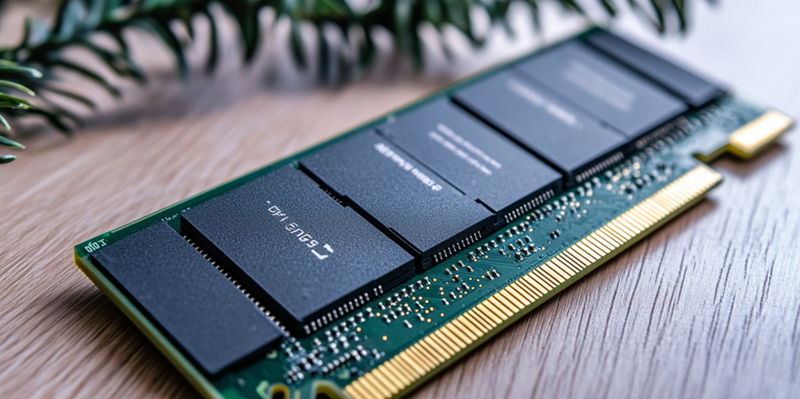
G.Skill has recently unveiled its latest high-speed Trident Z5 CK DDR5 CUDIMM memory modules, stirring considerable interest within the tech community. Presented at Computex 2024, these modules aim to set new standards for high-performance computing by integrating cutting-edge technology designed to meet the needs of both professionals and tech enthusiasts. The launch underscores significant advancements in memory technology and reinforces G.Skill’s position as a noteworthy contender in the increasingly competitive DDR5 market.
Entering the Competitive CUDIMM Market
G.Skill’s entry into the CUDIMM (Clock-Driver-On-DIMM) DDR5 memory space is a strategic move aimed at capitalizing on the growing demand for faster and more reliable memory solutions. The onboard Clock Driver technology in these modules not only enhances speed but also improves data accuracy with ECC (Error Correcting Code) support. This dual advantage of higher speed and boosted data integrity makes these modules particularly appealing for environments where data precision is crucial, such as servers and workstations, as well as for mainstream PCs looking to boost performance.
This market is already populated by memory heavyweights such as Crucial, ADATA, and Asgard, who have established a solid presence with their own CUDIMM memory solutions. G.Skill’s foray into this segment signifies an escalating competitive and innovative atmosphere within the DDR5 memory market. By introducing the Trident Z5 CK modules, G.Skill aims to raise the bar, offering advanced memory solutions capable of meeting the rigorous demands of today’s high-performance computing tasks.
Performance Specifications and Design Choices
One of the standout features of the G.Skill Trident Z5 CK DDR5 CUDIMM modules is their impressive technical specifications. These include a blazing 8200 MHz RAM speed and CL40-52-52-131 timing at 1.4V for 24 GB modules, resulting in a formidable 48 GB kit. In a deliberate design choice, these modules forgo RGB lighting, instead opting for medium-sized heatsinks to minimize clearance issues and enhance reliability. Such decisions reflect G.Skill’s commitment to prioritizing performance and functionality over aesthetic enhancements, ensuring users receive a product that excels in durability and efficiency.
CUDIMMs have an edge over traditional DIMMs due to the onboard Clock Driver, which helps achieve higher clock speeds straight out of the box. This technological advancement offers substantial benefits for both gaming and productivity tasks, providing smoother and more efficient computing experiences. Additionally, the scalability of CUDIMM modules makes them an attractive choice for users seeking a robust and future-proof upgrade pathway.
Industry-Wide Advancements and Compatibility
The landscape of DDR5 memory is witnessing rapid advancements, with key industry players continually developing high-speed solutions. One notable example is the ASUS ROG Maximus Z890 APEX motherboard, which supports 9200 MT/s DDR5 CUDIMM speeds in Gear 2 mode. This demonstrates the beneficial synergy between cutting-edge motherboards and high-speed memory modules, highlighting how such combinations can maximize performance. Other companies like Colorful and Crucial are not far behind, unveiling memory kits with speeds reaching up to 10,000 MT/s and 5600 MT/s, respectively.
Moreover, MSI’s X870E motherboards exhibit compatibility with CUDIMM memory, supporting AMD Ryzen 9000 and 8000 CPUs, albeit in "Clock Driver Bypass" mode. These industry-wide advancements underscore a broader trend towards integrating advanced error correction and clock-driving capabilities in memory modules, addressing the ever-growing demands of modern high-performance computing environments. The continual evolution within this sector points toward an overarching goal shared by manufacturers: to provide users with faster, more reliable, and scalable memory solutions.
Emphasizing Data Integrity and Raw Performance
CUDIMM technology represents a significant leap forward in memory performance, primarily due to its integration of ECC support and advanced Clock Driver capabilities. As computational tasks become more data-intensive and complex, the need for high-speed memory that also ensures robust error correction grows paramount. G.Skill’s Trident Z5 CK modules align perfectly with these increasing demands, promising not only impressive speed but also exceptional data integrity, which is crucial for applications in both gaming and professional environments.
The collective industry push towards faster and more reliable memory solutions indicates a consensus on the importance of marrying raw performance with data precision. This trend is particularly relevant for a diverse range of applications—from gaming to professional workloads—where every ounce of performance and accuracy can make a substantial difference. The G.Skill Trident Z5 CK modules exemplify this balance, delivering a product that meets the heightened expectations of today’s tech-savvy user base.
G.Skill’s Strategic Market Positioning
G.Skill has recently introduced its latest high-speed Trident Z5 CK DDR5 CUDIMM memory modules, generating substantial buzz in the tech community. These state-of-the-art modules were showcased at Computex 2024, an event that annually highlights the latest in technology. The Trident Z5 CK DDR5 modules are designed to push the boundaries of high-performance computing, catering to the rigorous demands of professionals and tech enthusiasts alike. They promise improved speed, efficiency, and reliability, making them an appealing choice for anyone looking to upgrade their systems. This launch signifies a substantial leap forward in memory technology, underscoring how G.Skill continues to uphold its reputation as a significant player in the highly competitive DDR5 market. By incorporating advanced technological innovations, G.Skill aims to offer products that not only meet but exceed current performance standards. This release reinforces G.Skill’s commitment to pushing the envelope and demonstrates their ongoing dedication to being at the forefront of technological advancements in memory solutions.