

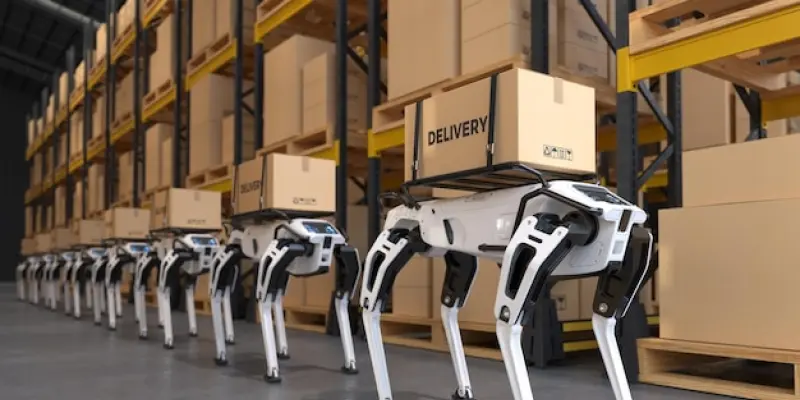
In the current landscape of warehousing and logistics, the integration of AI and robotics is transforming industry operations in unprecedented ways. This transformation is occurring amid mounting pressures from the e-commerce sector, which demands quicker and more efficient fulfillment processes. Traditional warehousing methods are increasingly inadequate in coping with these demands, prompting a shift toward sophisticated automated systems. As businesses strive to maintain competitiveness in this rapidly evolving environment, technologies like advanced autonomous mobile robots (AMRs) and automated storage and retrieval systems (AS/RS) are emerging as essential tools. These innovations are designed to enhance operational speed, optimize storage, and streamline labor management, signifying a significant evolution in warehouse management systems that could redefine logistics forever.
Adaptive Solutions for Rising E-commerce Demands
The strategic partnership between Honeywell and Teradyne exemplifies a commitment to meeting e-commerce challenges by integrating AI technology with robotics expertise. This collaboration aims to address inefficiencies inherent in traditional warehousing through comprehensive automation solutions. Honeywell’s Momentum warehouse execution system (WES), integrated with Teradyne’s robotics, offers a sophisticated platform for orchestrating labor management while minimizing latency. The WES features components like ‘Smart Routing’ and ‘Smart Release,’ which utilize Decision Intelligence to navigate orders efficiently, circumvent bottlenecks, and prioritize order fulfillment to adhere to service level agreements. This configuration aims to significantly reduce operational costs by streamlining processes with an emphasis on adaptability and efficiency. Such agile systems are heralded as reclaimers of speed and efficiency, enabling warehouses to thrive under the pressure of high throughput e-commerce operations.
Moreover, AI-driven automation solutions in warehousing lead a broader movement toward agile and efficient fulfillment processes. The expectations articulated within the e-commerce marketplace drive companies to explore options beyond traditional labor-intensive tasks, leveraging machine learning and robotics for better efficiency. Autonomous machinery and smart software manage inventory with precision, ensuring rapid and seamless processing of high turnover goods. By adopting these intelligent solutions, businesses can reduce travel and latency times, dramatically enhance workforce productivity, and elevate customer satisfaction levels. In doing so, they embrace an industry-wide pivot toward leveraging cutting-edge technologies to meet e-commerce demands in today’s digital market landscape.
Impact on Labor and Operational Efficiency
The joint venture between Honeywell and Teradyne represents a timely response to prevalent industry challenges. Their focus on intelligent automation addresses the inefficiencies in traditional warehouse operations, offering a tangible pathway to improved throughput, lowered operating costs, enhanced safety, and streamlined workforce operations. By incorporating machine learning into their processes, the partnership enables companies to harness data for greater productivity and maintain competitive standings. The collaboration serves as an industry benchmark for innovative solutions that aim to optimize warehouse operations for high-turnover goods.
Standard practices within warehousing are reimagined through AI and robotics integration, fostering environments where labor can be utilized more efficiently. A notable benefit of these automated solutions is the reduction in manual tasks, which historically consume significant resources and time. By decreasing arduous activities and travel periods within warehouses, the technology offers greater accuracy and speed in processing orders. Moreover, the synchronization of material handling networks ensures the up-to-date management of product visibility, inventory, and workflow, further enhancing operational efficiency. Consequently, businesses adopting these systems can expect increased customer satisfaction due to streamlined, consistent service delivery and quicker order fulfillment.
Strategic Focus and Corporate Realignment
On a broader scale, this partnership aligns with Honeywell’s strategy to reorganize its business into distinct public entities, including Honeywell Aerospace and Honeywell Automation. Honeywell Automation is set to advance AI-driven technologies to support industrial infrastructures globally, fostering digital transformation, energy security, and sustainability. Concurrently, Honeywell Aerospace aims to concentrate on aircraft systems, addressing rising demands in defense and commercial sectors, ensuring focused leadership and investment strategies. This realignment is a reflection of a broader trend among large industrial conglomerates to simplify organizational structures, optimizing capital efficiencies and supporting growth.
As Honeywell pursues strategic acquisitions, it strives to further strengthen its position in its respective fields, staying ahead of industry changes. The anticipated outcome of this restructuring is a more agile corporate framework, capable of maximizing growth potential and delivering long-term shareholder value. Such measures not only improve the concentration of resources but also facilitate the integration of transformative technologies, such as AI and robotics, essential for progressing in the modern warehousing domain. Honeywell’s focus on innovation and strategic partnerships embodies a forward-thinking approach, positioning the company to successfully navigate challenges and opportunities within the competitive landscape.
Future Implications of AI and Automation in Warehousing
The strategic alliance between Honeywell and Teradyne highlights a commitment to overcoming e-commerce hurdles by blending AI technology with robotics expertise. This joint effort targets traditional warehousing inefficiencies by offering full-scale automation solutions. Their collaboration features Honeywell’s Momentum warehouse execution system (WES), integrated with Teradyne robotics, enabling sophisticated labor management with minimal delay. The WES incorporates elements like ‘Smart Routing’ and ‘Smart Release,’ employing Decision Intelligence to streamline order processing, bypass obstructions, and prioritize order fulfillment according to service level agreements. This setup aims to significantly cut operational expenses by optimizing adaptable and efficient workflows. Such dynamic systems are celebrated for reclaiming speed and efficiency, empowering warehouses to excel despite the demands of high-volume e-commerce operations. Businesses are pivoting toward innovative technologies, embracing machine learning and robotics to drive efficiency, ensuring rapid inventory handling and boosting productivity, ultimately enhancing customer satisfaction in today’s digital world.