

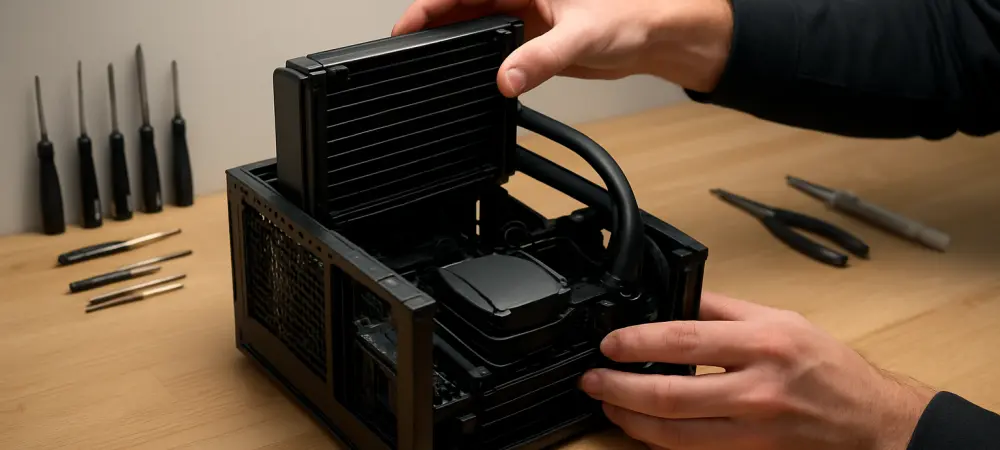
Beyond raw frame rates, the superior connectivity and potential for future hardware upgrades give custom-built small-form-factor PCs a distinct advantage over fixed-specification gaming machines. As the current gaming landscape continues to evolve in 2026, many enthusiasts find themselves at a crossroads between the seamless experience of a $1,050 boutique Steam Machine and the granular control of a personalized assembly. This specific price bracket serves as a battleground where convenience meets the raw efficiency of individual component selection. While pre-assembled systems offer a plug-and-play solution that mimics the console experience, they frequently sacrifice the ability to adapt to rapid shifts in graphical requirements or peripheral standards. The market has matured significantly, seeing a surge in specialized mini-ITX cases that accommodate triple-slot graphics cards without the excessive thermal penalties seen in previous generations. Value is a long-term metric.
Technical Selection: Hardware Value
Allocating a $1,050 budget toward a custom build allows for a meticulous selection of core components that often outperform the balanced but sometimes restricted configurations found in mass-produced units. In the current year, a strategic buyer can pair a high-efficiency processor with a mid-tier graphics card, such as an NVIDIA GeForce RTX 50-series model or an equivalent AMD Radeon variant, ensuring better 1440p performance than standard pre-builts. These retail components often feature superior clock speeds and more robust power delivery systems compared to the customized, often power-limited, silicon found in integrated gaming boxes. Furthermore, the ability to select high-speed DDR5 memory with lower latency profiles provides a measurable boost in minimum frame rates during complex scenes. By avoiding the markup typically associated with branding, builders can redirect roughly fifteen percent of their total budget back into higher-quality storage solutions.
The physical architecture of a custom small-form-factor PC provides significant thermal advantages that directly impact the sustained performance of the machine over long sessions. While boutique Steam Machines often rely on compact, proprietary blower-style fans or integrated heat sinks to maintain their slim profiles, a custom builder can utilize premium air coolers or even 240mm liquid cooling loops. This technical flexibility ensures that the CPU and GPU operate well below their thermal throttling limits, preventing the sudden performance dips that plague many ultra-compact commercial designs. Moreover, the modularity of modern chassis allows for optimized airflow paths, where cool air is drawn directly into the GPU intake rather than circulating within a cramped enclosure. This focus on thermal health not only extends the operational lifespan of the internal capacitors but also results in a significantly quieter environment for the user. Stability remains a priority.
Platform Stability: System Design
The software environment represents another critical area where the custom build frequently outshines the restricted ecosystems of specialized gaming consoles. While the latest iterations of SteamOS provide a fantastic, streamlined interface for handhelds and living room devices, a custom PC allows for a dual-boot configuration or a full Windows installation without voiding warranties. This versatility transforms the device from a dedicated gaming station into a powerful workstation capable of high-level video editing, 3D rendering, or complex software development. In 2026, the convergence of gaming and content creation means that many users require a machine that handles both tasks with equal proficiency. The custom-built approach ensures that there are no artificial barriers to installing third-party applications, specialized drivers, or alternative storefronts that may offer better regional pricing. This open-platform philosophy essentially future-proofs the investment.
The decision to build a custom system rather than purchasing a fixed-specification Steam Machine ultimately rested on the desire for long-term sustainability and performance precision. By selecting individual components, enthusiasts managed to bypass the limitations of non-upgradable motherboards and proprietary power connectors that historically turned high-end electronics into e-waste. Those who chose the custom route prioritized high-quality power supplies and expandable storage, ensuring their hardware remained relevant as demands for more VRAM and faster data throughput increased through 2027 and 2028. Moving forward, the most effective strategy for prospective buyers involved monitoring the mid-range component market for price corrections before committing to a full assembly. Utilizing modular cabling and standardized mounting brackets simplified the maintenance process and allowed for incremental upgrades. It was the freedom to adapt that defined the project’s true success.