

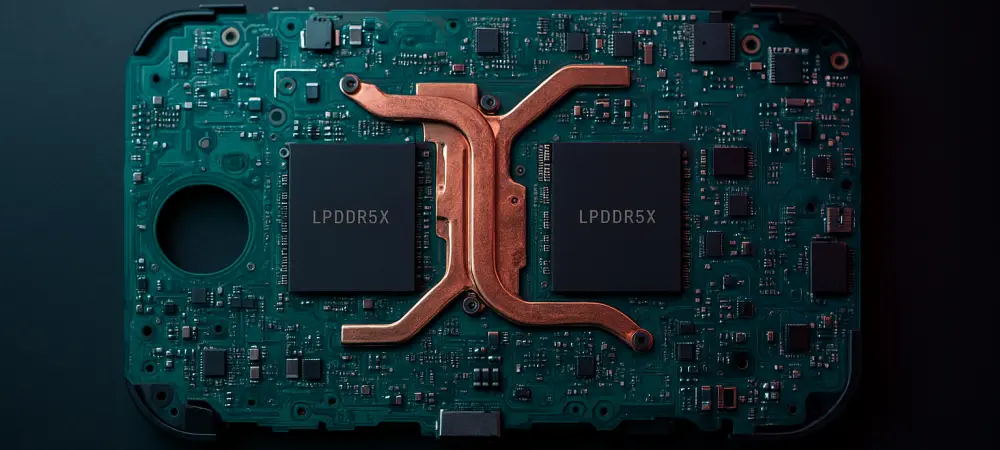
Current market trends reveal a discrepancy between hardware and software, as 24GB handheld configurations offer virtually no tangible performance benefits over 16GB models given the current state of Android-based emulation. This surplus of memory often stems from a competitive landscape where manufacturers utilize high-capacity specifications as primary marketing levers to attract enthusiasts. In the architecture of a handheld console, Random Access Memory (RAM) serves as the critical high-speed workspace that facilitates the rapid exchange of data between the central programming unit and the storage medium. When a game is launched, the system loads assets, textures, and executable code into this volatile memory to ensure that the processor can access them with near-zero latency. For handhelds, which often rely on unified memory architectures where the system RAM is shared with the integrated graphics chip, the pressure on this resource is even more pronounced. The current economic climate in the semiconductor industry, driven by the massive surge in artificial intelligence infrastructure, has kept memory prices relatively high, making the choice of RAM capacity a significant factor in the overall retail price of these portable devices.
The Linux Ecosystem: Efficiency in Budget Hardware
The landscape of budget-friendly handhelds remains dominated by lightweight Linux distributions designed to extract maximum performance from limited hardware resources. In this specific niche, memory configurations typically range from 1GB to 2GB, which might seem insufficient by modern smartphone standards but is remarkably effective for retro gaming. A Linux kernel optimized for gaming can operate with an incredibly small memory footprint, often leaving over eighty percent of the available RAM for the emulator and the game itself. This efficiency allows devices in this tier to handle classic 8-bit and 16-bit systems, as well as the majority of the 32-bit era, without experiencing the slowdowns associated with memory swapping. However, as the complexity of the emulated system increases, the limitations of the 1GB threshold become evident. While the processor is frequently cited as the primary bottleneck, a lack of memory can lead to instability when the system attempts to cache larger game files or run background scripts for custom user interfaces.
The utility of a 2GB memory configuration becomes significantly more apparent when exploring the expanding world of indie PC ports through tools like PortMaster. These tools allow native versions of modern indie titles to run on low-power ARM-based handhelds, but they often require more substantial memory buffers than older console emulators. Games that feature expansive environments or high-resolution 2D sprites frequently need to stream assets from the internal storage into the RAM dynamically. On a 1GB device, this process often results in micro-stutters or “hiccups” that break the immersion of the gameplay experience. Stepping up to 2GB provides a vital safety net that accommodates these modern software requirements while still maintaining the cost-effectiveness that defines the budget market. This tier represents a deliberate balance for the purist gamer who prioritizes a focused, distraction-free experience without the overhead of a complex mobile operating system or the need for excessive multitasking capabilities during their gaming sessions.
The Android Challenge: Managing High Resource Overhead
Moving into the mid-range market introduces the Android operating system, which presents a fundamentally different set of memory demands compared to its Linux-based counterparts. For an Android handheld to provide a modern, responsive user experience, a minimum of 4GB of RAM is generally considered the functional baseline. Unlike specialized gaming kernels, Android maintains a vast array of background services, including Google Play Services, notification listeners, and telemetry tasks, all of which consume a permanent slice of the memory pie. When a user attempts to run a demanding emulator like those for the PlayStation Portable or the Dreamcast on a 4GB device, the remaining “free” memory is often just barely enough to keep the application stable. This environment creates a precarious situation where a single background update or an incoming notification could trigger the system’s low-memory killer, potentially force-closing the game and causing the loss of unsaved progress.
The debate surrounding the 4GB and 6GB tiers often centers on the concept of “shader compilation stutter,” a common issue in modern mobile emulation. When an emulator translates the original console’s graphics code into a format the handheld’s GPU can understand, it generates shaders that must be stored in the RAM for immediate use. On a 4GB device, there is limited room to store a large cache of these shaders, forcing the system to constantly delete old ones to make room for new ones. This results in the game freezing for a fraction of a second every time a new visual effect appears on the screen. Transitioning to a 6GB or 8GB configuration provides the necessary headroom to store these caches persistently throughout a gaming session. Furthermore, this extra capacity allows for smoother multitasking, such as keeping a web browser open in the background with a game walkthrough or using a chat application without the system needing to reload the entire operating system interface when the user switches tasks.
The Performance Sweet Spot: Optimized Emulation Targets
In the current technological climate, 8GB of LPDDR5X memory has emerged as the definitive “sweet spot” for high-performance Android handhelds. This specific capacity aligns perfectly with the requirements of the most popular emulation projects, including those for the PlayStation 2 and the Nintendo 3DS. These systems were significantly more complex than their predecessors, utilizing sophisticated memory management and high-resolution textures that require substantial space when loaded into modern memory. An 8GB configuration ensures that the operating system never has to compete with the emulator for resources, allowing for a consistent framerate even in titles known for their high memory bandwidth demands. This level of hardware also supports the use of compressed texture packs, which can improve visual fidelity without exceeding the memory limits of the device, making it the most balanced choice for the vast majority of enthusiasts who want a premium experience.
While 8GB is sufficient for most, the 12GB tier represents a higher level of stability for users who engage with more experimental or demanding software. Projects involving the emulation of seventh-generation consoles, such as the Wii U, or the translation of Windows-based titles via ARM compatibility layers, demand an even larger memory pool to function correctly. These applications often require the system to act as a massive buffer for translated code and high-density assets that were never intended to run on a mobile architecture. At 12GB, the device gains a level of “breathing room” that prevents performance degradation during extended play sessions where memory fragmentation might otherwise become an issue. This tier is particularly valuable for those who utilize custom launchers and heavy visual themes, as it provides the capacity to run a feature-rich interface alongside the most resource-intensive games without any measurable impact on the system’s overall responsiveness or thermal profile.
High-End Configurations: Specialized Use and Future Proofing
The 16GB threshold marks the entry into the enthusiast and power-user territory, where the focus shifts from basic compatibility to extreme customization and high-end modding. This amount of memory is specifically beneficial for gamers who utilize 4K texture packs or high-definition UI mods to modernize the appearance of older titles. These mods can easily double or triple the memory footprint of a game, as the high-resolution assets must be pre-fetched and stored in the RAM to avoid visible “pop-in” during gameplay. For Nintendo Switch emulation on Android, 16GB has become the recommended standard for maintaining stability in open-world titles that are notorious for their aggressive memory usage. In these scenarios, the extra RAM acts as a buffer that prevents the system from having to access the slower internal storage during critical gameplay moments, ensuring that the experience remains as close to the original hardware as possible. Configurations reaching 24GB currently represent the pinnacle of the market, though they are often viewed as overkill for the existing software library. There are virtually no native Android games or specialized emulators that can fully saturate such a large memory pool under normal operating conditions. However, this tier appeals to consumers who wish to “future-proof” their investment against the upcoming wave of Windows-to-ARM translation technology. As these translation layers become more sophisticated, they will likely allow handhelds to run more complex PC games that were designed for systems with dedicated video memory. In a unified memory environment, having 24GB allows the system to allocate a significant portion—potentially 8GB or more—exclusively for VRAM tasks while still leaving a massive amount of memory for general system operations. This ensures that the device remains relevant as the boundaries between mobile and desktop gaming continue to blur over the next several years of software development.
Technical Demands: Shaders and Texture Allocation
A fundamental aspect of why RAM capacity matters so much in modern handhelds is the way integrated graphics processors handle memory allocation. Unlike a desktop computer with a dedicated graphics card that has its own high-speed VRAM, handheld consoles must share their system memory between the CPU and the GPU. This means that when a game requires 4GB of video memory for high-quality textures and another 4GB of system memory for game logic, an 8GB device is already at its theoretical limit. If the operating system is also using 2GB, the system must resort to “swapping” data to the internal storage, which is orders of magnitude slower than the RAM. This technical reality is why seemingly “excessive” amounts of memory, like 12GB or 16GB, provide such a tangible improvement in smoothness; they provide the necessary space for the GPU to breathe without starving the CPU of the data it needs to process the game’s physics and logic.
The ongoing trend in the industry suggests that software complexity will continue to rise, making higher RAM counts more of a necessity than a luxury in the coming years. Developers are increasingly targeting high-end mobile hardware, creating games with assets that are designed to take advantage of the faster LPDDR5 and LPDDR5X standards. This evolution is also visible in the emulation scene, where newer projects are focusing on systems that were originally designed with high-bandwidth unified memory architectures. While manufacturers will undoubtedly continue to use high RAM numbers as a primary selling point, the informed consumer must understand that the quality of the memory and the optimization of the software are just as important as the raw capacity. For most players, the decision should be based on the specific “heavy” titles they intend to play, ensuring that they have enough memory to accommodate both the game and the inevitable overhead of the platform’s operating system.
Strategic Decision: Aligning Hardware with Gaming Goals
The analysis of the handheld market demonstrated that for the majority of users, the 8GB threshold provided the most balanced experience between initial cost and actual performance gains. Observations of software behavior in the current cycle highlighted the importance of matching memory capacity to specific emulation targets rather than simply chasing the highest available number on a spec sheet. It was found that while 16GB offered a clear advantage for high-resolution modding and experimental translation layers, the jump to 24GB remained a speculative investment that provided little benefit for the vast majority of existing applications. The data suggested that buyers prioritized the stability of their gaming sessions, which was more heavily influenced by the presence of a sufficient memory buffer for shader caches and background system processes than by the peak theoretical bandwidth of the RAM.
Moving forward, the focus for prospective buyers should shift toward evaluating the long-term software support and the efficiency of the operating system provided by the manufacturer. The investigation established that a well-optimized system with 12GB of RAM often outperformed a poorly optimized one with 16GB, proving that hardware specifications do not exist in a vacuum. Future considerations for the 2026 to 2028 period indicated that as Windows-on-ARM projects matured, the demand for unified memory would likely increase, making the 16GB tier the safest bet for those looking to keep their devices for several years. For individuals primarily interested in the current library of Android titles and established emulators, sticking to the 8GB or 12GB range allowed for a more economical purchase without sacrificing the quality of the portable gaming experience. Ultimately, the successful acquisition of a handheld console required a clear understanding of one’s own gaming habits and a realistic assessment of the software landscape.