

Foundations, Context, and Scope
What “Camera Design” and “Cooling Design” Mean in Modern Flagships
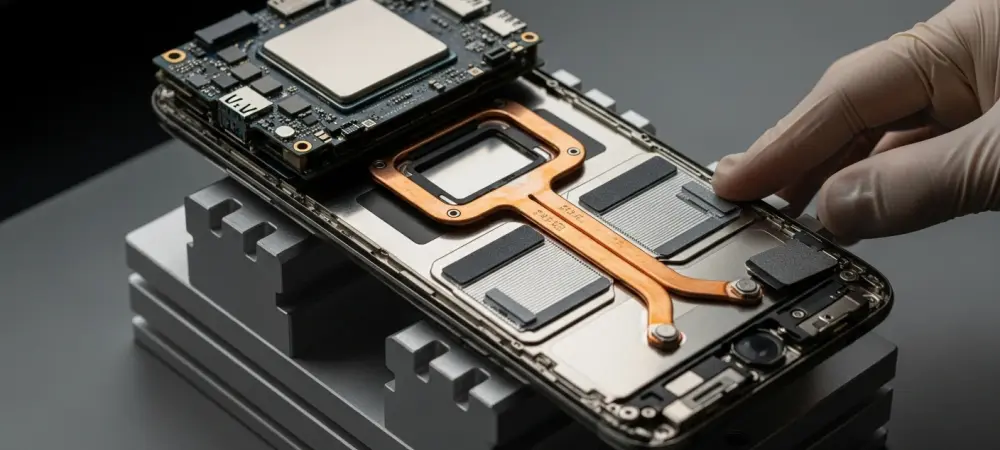
Smartphone engineering often hinges on a quiet duel: allocate volume to optics for better images, or give it to thermal hardware for steadier speed. Camera design spans sensor sizes, lens assemblies, and auxiliary sensors that shape color and focus fidelity. Cooling design, by contrast, orchestrates vapor chambers, graphite sheets, phase-change material, and thermal films into layered heat paths so the SoC, RAM, and storage hold peak performance longer.
Why the Oppo Find X9 Ultra Matters as a Case Study
Oppo’s Find X9 Ultra, as seen in WekiHome’s teardown, compresses both ambitions into one coherent interior. It uses a stacked motherboard with a central cutout to push a huge camera island closer to the frame while still reserving planar paths for heat. This approach clarifies trade-offs and synergies, revealing how imaging-first hardware can coexist with robust thermal architecture without sabotaging either aim.
Brands, Products, Standards, and Components Explicitly Named
The phone pairs Qualcomm’s Snapdragon 8 Elite Gen 5 with LPDDR5X RAM and UFS 4.1, signaling compute and I/O headroom for camera workloads. AAC Technologies supplies symmetrical full-cavity speakers that avoid thermal choke points. Optics include a main unit, an upgraded ultra-wide, 3x and 10x periscope modules, plus a Danxia secondary lens to bolster color processing; add a multispectral sensor, laser autofocus, and an IR transmitter for precision.
Purpose and Application
Camera design targets imaging reliability: optical alignment, sensor placement, and color and focus inputs that keep shots consistent in tough light. That stack demands bandwidth and sustained ISP throughput.
Cooling design focuses on longevity under load, using vapor chambers, graphite, phase-change pads, and films to move and buffer heat across the frame, battery, and board for stability.
Direct Comparison Across Key Engineering Dimensions
System Architecture and Spatial Prioritization
Oppo centers an oversized circular island and pulls it toward the frame via the board cutout, stiffening the mount and aiding alignment. The multi-layer board compacts compute while preserving mass centralization. The same cutout frees a contiguous plane for heat spreaders, and frame proximity increases conduction; thermal films bridge camera and battery zones to flatten spikes.
Performance Sustainability and Throughput Under Load
Large sensors, long optical stacks, and burst capture push the ISP and memory fabric hard, and the multispectral unit plus laser AF raise short, dense heat loads. Imaging wins when clocks stay high without stutter. A big vapor chamber, graphite, and phase-change pads near the chipset, LPDDR5X, and UFS 4.1 stretch peak windows for 4K/8K capture and gaming; buffered spikes preserve frame rates and AF lock speed.
Power, Durability, and I/O Resilience Trade-Offs
Heavier glass and periscopes add leverage, so Oppo reinforces the frame and gaskets moving parts without fogging optics. Waterproof membranes shield motion components while keeping response crisp.
Thermal layers add area and complexity, and the battery behaves as a steady thermal mass; design must tame soak without throttling under prolonged capture.
Practical Challenges, Limitations, and Buyer Considerations
Packaging Density, Repairability, and Tolerance Control
Tight stacking and frame-coupled mounts narrow tolerances, complicating module swaps and post-service recalibration. Small misalignments can skew focus planes.
Thermal films and phase-change pads demand precise placement; rework risks bubbles or gaps that degrade spread and raise hotspots.
Thermal Aging, Throttling Edges, and Worst-Case Workloads
Hot climates, cases, and back-to-back bursts can push the Snapdragon 8 Elite Gen 5 and ISP past steady-state, even with layered cooling. AI post-processing compounds heat density.
Battery heat soak during charging narrows headroom, so long shoots benefit from discharge-only sessions and sane screen brightness.
Durability vs. Complexity
IP66, IP68, and IP69 sealing requires membranes and rubber gaskets that age and must be reseated perfectly after repairs. Service quality becomes a performance variable.
A reinforced, sealed, corrosion-resistant USB-C and four mics raise resilience but add parts cost; upside is fewer failures under liquid and particulate exposure.
Synthesis, Recommendations, and Selection Guidance
Key Takeaways Tied to Named Solutions
Find X9 Ultra centers imaging yet layers cooling around the Snapdragon 8 Elite Gen 5, LPDDR5X, and UFS 4.1 via a vapor chamber, graphite, and phase-change pads. The stacked board with a central cutout balances optics and heat flow.
A 7,050mAh silicon-carbon battery with dual connectors, a wireless charging coil, and robust sealing support long sessions without abrupt throttling.
Which Emphasis Fits Which Use Case
Choose camera-first designs like this when pro-grade modules, fast AF, and consistent color via Danxia and multispectral sensing matter more than grams or thickness. Travel, events, and low light all benefit.
Prioritize cooling-first tuning when gaming, sustained AI tasks, and long-form 4K/8K require unwavering clocks; smooth thermals keep frame pacing stable.
How to Decide Among Products With Similar Claims
Scrutinize vapor chamber size, graphite coverage, and presence of phase-change materials, then note battery chemistry, capacity, and IP ratings. These shape real uptime.
Verify sensor sizes, lens diversity, and assists like laser AF, IR, and multispectral units, and check port reinforcement plus AAC full-cavity speaker layout for durability and clear thermal paths. The comparison pointed to imaging-led architecture that still honored thermal discipline, and the practical guidance favored matching optical ambition or compute endurance to real workloads.