

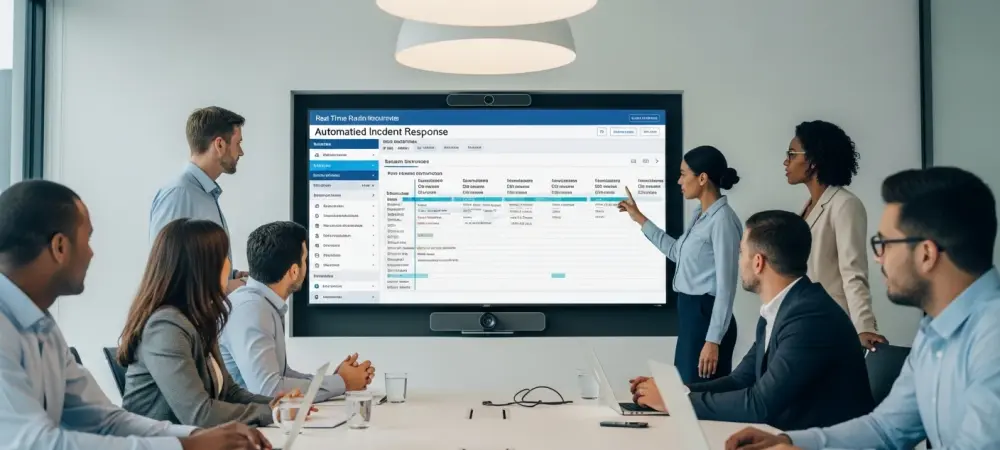
The silence of a darkened bedroom is shattered by the insistent, rhythmic pulse of a high-priority alert that demands an immediate leap into the digital fray. For the on-call engineer, the challenge is rarely a lack of information, but rather an overwhelming flood of it that requires near-superhuman synthesis under extreme pressure. Telemetery is scattered across CloudWatch logs, deployment pipelines are buried in version control histories, and microservice dependencies often reside only in the tribal knowledge of fragmented teams. This manual correlation of disconnected data is an arduous process of hypothesis testing that frequently pushes Mean Time to Resolution into the span of agonizing hours. As modern cloud workloads grow in complexity, the gap between the speed of system failure and the cognitive capacity of traditional Site Reliability Engineering teams is widening, making manual intervention a primary bottleneck for digital reliability.
The stakes for maintaining system uptime have never been higher, yet the tools traditionally used to manage these environments have struggled to keep pace with the sheer volume of ephemeral infrastructure. When a service degrades, the cost of every minute spent digging through logs translates directly into lost revenue and diminished user trust. The industry is reaching a tipping point where human-centric operations can no longer scale alongside the automated deployments they are meant to oversee. Consequently, a fundamental transformation is required—one that shifts the burden of investigation from the weary eyes of an engineer to an intelligent system capable of navigating the labyrinth of the cloud at machine speed.
Beyond Chatbots: Why Generic AI Falls Short in Production
The industry’s initial response to this rising operational complexity involved the adoption of “do-it-yourself” AI tools and thin large language model wrappers. While these tools excel at explaining isolated code snippets or generating boilerplate scripts, they hit a hard ceiling when tasked with managing production-grade architectures. The most glaring issue is the context gap; generic models lack an inherent understanding of a specific organization’s cloud topology and service interdependencies. Without this foundational knowledge, an AI cannot distinguish between a routine background task and a critical failure in a primary database cluster, leading to suggestions that are often irrelevant or even dangerous.
Furthermore, engineers are frequently forced to manually feed logs and metrics into these basic AI interfaces, creating a “manual data tax” that fails to provide the speed required for a truly autonomous response. Beyond the latency of human input, governance and security risks loom large, as individual coding agents often lack centralized access control. This creates audit nightmares and potential security vulnerabilities when sensitive telemetry is processed outside of controlled environments. Perhaps most importantly, most basic AI tools do not retain knowledge across different incidents, resulting in fragmented institutional memory where teams find themselves troubleshooting the same recurring patterns from scratch every single time.
The AWS DevOps Agent: A Managed Paradigm Shift in SRE
The introduction of the AWS DevOps Agent represents the emergence of “Agentic AI”—a system capable of acting as an autonomous operational teammate rather than a passive digital assistant. By integrating deeply with the expansive AWS ecosystem, the agent shifts the workflow from reactive firefighting to proactive, automated investigation through a structured framework. It does not simply wait for a prompt; it observes the environment, recognizes anomalies, and initiates the diagnostic process the moment a threshold is breached. This evolution marks a transition from a tool that answers questions to a colleague that solves problems. Control is maintained through a sophisticated architecture known as Agent Spaces, which are isolated logical containers that grant the agent access to cross-account resources and code repositories. Within these spaces, the agent builds an inferred map of the infrastructure, allowing it to correlate a latency spike in a Lambda function directly with a specific code commit or a database throttling event without any human guidance. By operating within the existing security perimeter, the agent ensures that all investigations occur under the umbrella of granular permissions, maintaining the delicate balance between autonomous power and organizational safety.
Centralized Governance and Immutable Audit Journals
Trust is the most valuable currency in production environments, and the AWS DevOps Agent secures this by providing total transparency into its reasoning process. Every tool invocation, data query, and logical step the agent takes is recorded in an immutable log, providing a transparent audit trail for security and compliance teams. This level of oversight ensures that even as the system acts autonomously, its path to a conclusion is never a “black box” that engineers must take on faith. If the agent decides to query a specific deployment log, the rationale for that action is documented and available for review in real-time.
This centralized governance model also solves the problem of zero-setup collaboration. Once an administrator configures an Agent Space, the entire team can interact with the agent via familiar platforms like Slack or a dedicated web application. This removes the “onboarding tax” typically associated with new operational tools, ensuring that even a new hire has immediate access to the collective operational knowledge of the application. This democratization of expertise means that the resolution of a complex outage is no longer dependent on the availability of a single senior developer who happens to know where the bodies are buried in the codebase.
The Three-Tier Skill Hierarchy for Continuous Learning
The intelligence of the agent is not static; it evolves through a sophisticated three-layer hierarchy designed for continuous improvement. At the foundation are AWS-provided skills, which represent the distilled best practices of cloud experts across millions of successful deployments. Above this layer are user-defined skills, allowing organizations to upload their own internal runbooks and specialized instructions. This ensures that the agent follows the specific procedural requirements of the company, such as notifying particular stakeholders or adhering to unique deployment constraints that generic models would ignore. The most transformative layer is the “learned skills” component, where background sub-agents analyze past investigations to recognize patterns and optimize future responses. For example, if the agent identifies that a specific type of memory leak is always preceded by a certain sequence of container restarts, it learns to skip exploratory diagnostic steps and move directly to the root cause in subsequent occurrences. This compounding knowledge base creates a flywheel effect, where the system becomes more efficient and accurate with every incident it handles, effectively building a digital library of institutional memory that stays with the organization forever.
Real-World Impact and the Case for Autonomous Resolution
The theoretical benefits of agentic incident response are validated by dramatic improvements in operational metrics across various sectors. By moving from detection to actionable root cause analysis in minutes, the technology is redefining the standards of system uptime and engineer quality of life. In a typical serverless environment involving CloudFront and API Gateway, a latency spike could have dozens of potential causes. In practice, the agent can detect the alarm, query the relationship graph, identify a throttling event, and trace it back to a specific batch-write commit in a repository—all within four minutes.
Evidence from early adopters confirms this massive reduction in investigation time. Organizations such as Western Governor’s University have integrated the agent with monitoring platforms to achieve a 77% reduction in Mean Time to Resolution, surfacing configuration details that were previously hidden deep within technical documentation. Similarly, the platform Zenchef utilized the agent during a high-stakes scenario where it autonomously identified a code regression in 20 minutes—a task that would typically have required two hours of senior engineer time. These results demonstrate that the technology is no longer a futuristic concept but a practical necessity for modern digital enterprises.
Strategies for Implementing Agentic Incident Response
Transitioning to an autonomous model required a strategic approach to ensure the AI aligned with organizational goals and safety standards. Teams began by defining clear Agent Spaces, organizing resources into logical containers based on team ownership or application boundaries to ensure the agent had the right scope of data. By integrating the agent directly into existing incident workflows via PagerDuty or ServiceNow, companies allowed for event-driven investigations that began the moment an alarm triggered, effectively eliminating the “human-in-the-middle” delay that often characterizes the start of an outage.
Furthermore, forward-thinking organizations leveraged the agent’s proactive recommendation features to identify infrastructure resilience improvements and code optimizations before they could lead to failures. Regular audits of the agent’s reasoning logs allowed SRE leads to refine custom instructions, ensuring that the “learned skills” remained in lockstep with evolving internal operational standards. This move toward agentic operations did not replace the human engineer; instead, it elevated them to the role of a supervisor who managed a fleet of intelligent investigators, ultimately resulting in a more resilient and scalable digital ecosystem.