

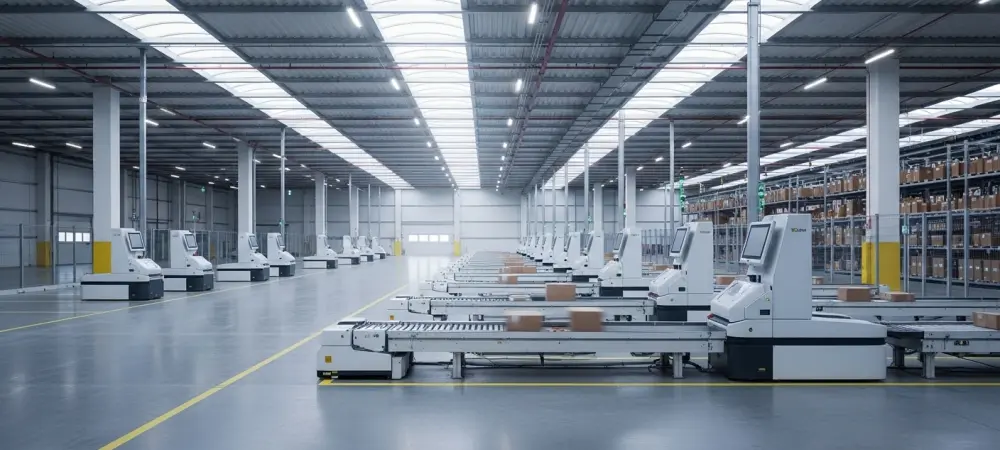
The traditional logistics center has long struggled with the physical chaos of the unloading dock, where misshapen boxes and damaged goods create bottlenecks that defy standard automation. To address these persistent challenges, Coupang has undertaken a massive strategic investment initiative totaling over $84 million since 2026, funneling capital into a curated portfolio of global artificial intelligence and robotics startups. This aggressive financial move is designed to solidify the company’s logistics supremacy by solving the most complex puzzles in the supply chain, particularly the “unloading” stage. By partnering with innovators like Texas-based Contoro Robotics, the e-commerce giant is moving beyond basic conveyor belts toward a future where machines handle unpredictable cargo with the same dexterity as a human worker. This investment strategy does not merely aim for incremental speed but seeks to fundamentally transform the infrastructure of global commerce through high-tech integration and strategic hardware deployment.
Bridging the Gap Between Autonomy and Human Oversight
Integrating Human Intelligence and Autonomous Systems
The implementation of a Human-in-the-Loop system marks a departure from the “all-or-nothing” approach to warehouse automation that has frequently led to costly failures in the past. By blending AI-driven autonomy with remote human oversight, the partnership with Contoro Robotics achieved a remarkable 99% success rate in handling high-complexity tasks that previously required manual intervention. This hybrid model allows a single human operator to supervise multiple robotic units simultaneously, stepping in only when the AI encounters a scenario it cannot resolve independently, such as a severely crushed box or a shifted load. Consequently, the system maintains the relentless pace of a machine while retaining the critical problem-solving capabilities of a human mind. This synergy ensures that the flow of goods remains uninterrupted, effectively eliminating the dockside bottlenecks that have historically plagued even the most advanced fulfillment centers across the globe.
The Evolution of Cognitive Robotics Through Large Language Models
Beyond physical dexterity, the current technological shift involves the integration of Large Language Models directly into robotic hardware to create what industry experts call “thinking robots.” These robotic arms are no longer confined to rigid, pre-programmed routines but can now interpret natural language commands and perform autonomous self-diagnostics in real-time. This move away from restrictive “black box” models toward more democratized and open-source industrial artificial intelligence allows for a more flexible and transparent operation. When a machine encounters an error, it can explain the issue in plain language and suggest corrective measures, significantly reducing the time required for maintenance and troubleshooting. This advancement represents a leap from simple mechanical execution to cognitive processing, where the hardware adapts to the environment rather than requiring the environment to be perfectly tailored to the machine’s limitations.
Cultivating a Global Ecosystem for Intelligent Supply Chains
Cultivating Regional Innovation and Sovereign Technology
Coupang’s broader $84 million ecosystem actively supports a strategy known as Sovereign AI, which focuses on developing localized technological capabilities that can compete on a global scale. A significant portion of this funding, including a $50 million pledge, was directed toward the SBVA Korea Sovereign Artificial Intelligence Fund to foster a homegrown landscape for advanced computing. By supporting niche investments in AI vision through companies like CMES and blockchain-based payment infrastructure via Tempo, the organization is building a multifaceted technological foundation. This approach ensures that the digital tools powering the logistics network are not just imported but are deeply integrated with the specific cultural and linguistic needs of the region. This regional focus creates a resilient technological moat, allowing the company to maintain control over its core infrastructure while benefiting from the rapid pace of international innovation and decentralized development.
Establishing the Texas-Korea Logistics Corridor
The establishment of a specialized corridor between Texas-based innovation and South Korean fulfillment centers provided a massive real-world sandbox for testing the next generation of automated shipping. These pilot programs in South Korea functioned as a blueprint for a faster global deployment of shipping infrastructure, demonstrating how American software could be scaled within one of the world’s most dense e-commerce markets. Looking forward, the focus shifted toward ensuring these integrated systems remained adaptable to various international regulations and consumer behaviors. Decision-makers recognized that the true value of these investments lay in their ability to be exported as a turnkey solution for global logistics. By synthesizing advanced hardware with cognitive AI and remote intervention, the industry moved toward a model where efficiency was no longer tied to labor availability but to the seamless orchestration of intelligent machines across a highly interconnected and autonomous global network.