

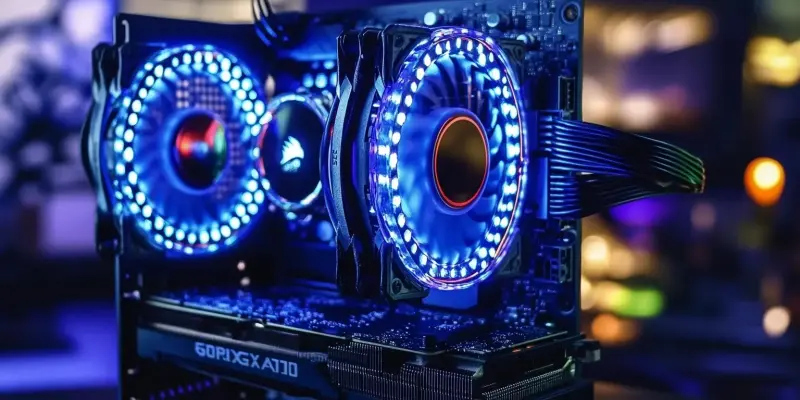
In the rapidly evolving world of PC components, customization and aesthetic appeal have become as critical as performance. The upcoming release of the Asus ROG Ryuo IV SLC 360 AIO liquid cooler exemplifies this trend, offering an innovative design that is likely to captivate PC enthusiasts. This cooler is distinguished by its 6.67-inch curved AMOLED display, poised to be a central feature for custom PC builds. Beyond its visual allure, the screen’s 60Hz refresh rate enables it to play videos and display customizable system information or animations. Set to launch soon, this cooler is already generating buzz for its potential to blend functionality with flair seamlessly.
Asus’s Advanced Design Features
Although Asus has been relatively tight-lipped about some details of the ROG Ryuo IV SLC 360, what has been revealed so far is promising. The cooler comes with pre-mounted, daisy-chained ARGB fans, which boast comprehensive front and side lighting. These fans can produce up to 71.44 CFM airflow, ensuring robust cooling performance. This power is complemented by the cooler’s support for various sockets, including LGA 1851, 1700, AM5, and AM4, making it a versatile choice for a broad range of users. Additionally, the cooler features a sizable radiator measuring 394 by 140 by 32 mm.
The curved AMOLED display on the Asus ROG Ryuo IV SLC 360 is not just for show. With a 60Hz refresh rate and the ability to play videos, it adds a new dimension to CPU coolers, serving both aesthetic and functional purposes. Users can display customized system statistics or animations, turning the cooler into a dynamic element of their PC setup. The introduction of such technology marks a significant leap forward in the integration of visual appeal and utility in PC components.
Market Trends and Competition
Asus is not the only player in this space; the Tryx Panorama series has already paved the way with its 6.5-inch AMOLED screen. This cooler can display one large image or two separate images on different parts of the cooler. Like the Asus ROG Ryuo IV, the Tryx Panorama offers a high-resolution screen with a 60Hz refresh rate. Moreover, it allows users to display critical PC statistics, such as internal temperatures and CPU frequency, providing both form and function. Priced at around $300, it offers a competitive alternative.
The trend of incorporating AMOLED screens into CPU coolers extends beyond Asus and Tryx. Thermaltake presented its MAGCurve AIO liquid cooler, featuring a 6.67-inch AMOLED screen with a 2,400 by 1,080 resolution, at CES earlier this year. This display can be managed via a dedicated app developed by Thermaltake, adding an extra layer of customization and control. These products reflect a broader shift toward merging technology and design, responding to the demands of a market increasingly focused on both aesthetics and performance.
Thermaltake’s entry into this market with the MAGCurve AIO further underscores the shifting landscape of PC components. Its innovative features and user-friendly app are designed to provide an enhanced user experience. This competition is beneficial, as it drives companies to push the boundaries of what CPU coolers can offer, integrating advanced technology and design to meet the growing expectations of the PC building community.
Future Implications and Industry Evolution
The adoption of curved AMOLED displays in CPU coolers signifies a broader trend within the industry toward more visually dynamic and interactive components. PC enthusiasts are no longer satisfied with mere performance; they seek components that also offer visual appeal and customization options. By integrating screens capable of displaying custom video content or system stats, companies like Asus, Tryx, and Thermaltake enhance the user experience and provide new ways for users to personalize and monitor their setups.
The innovations introduced by Asus, Tryx, and Thermaltake mark a significant step forward in the customization and functionality of CPU coolers. These advancements align with the broader industry trend that values both visual appeal and enhanced user interaction. The integration of curved AMOLED displays allows users to create setups that are not only high-performing but also highly personalized and visually engaging. This evolution reflects the changing priorities of the PC building community, pushing companies to continually innovate and offer products that meet the ever-increasing demands for customization and functionality.
As this trend continues to grow, it is expected that more companies will enter the market with their own unique solutions, further driving innovation and setting new standards for CPU coolers. The intersection of aesthetics and performance will likely continue to be a key focus, shaping the future of PC components in ways that enhance both user experience and system capability.
Conclusion: Actionable Insights and Future Directions
In the ever-changing landscape of PC components, customization and looks have become as important as actual performance. The soon-to-be-released Asus ROG Ryuo IV SLC 360 AIO liquid cooler is a prime example of this shift, showcasing an innovative design that is sure to attract PC enthusiasts. What sets this cooler apart is its impressive 6.67-inch curved AMOLED display, which is expected to be a standout feature for custom PC setups. In addition to its striking visual element, the screen boasts a 60Hz refresh rate, allowing it to play videos and display customizable system information or animations. With its imminent launch on the horizon, this cooler is already generating considerable excitement due to its potential to perfectly merge functionality with visual appeal. As more PC builders seek components that offer both performance and style, the Asus ROG Ryuo IV SLC 360 AIO liquid cooler is poised to become a popular choice, illustrating the trend toward more personalized and aesthetically pleasing computer builds.