

Introduction
Industrial environments have long served as the final frontier for reliable digital communication, where thick steel walls and subterranean tunnels create nearly impenetrable barriers for standard wireless signals. In these complex settings, equipment failure often results in staggering financial losses, necessitating immediate intervention from specialized experts who may be located thousands of miles away. The traditional reliance on standard video conferencing tools frequently falls short in these locations, as unstable network connections lead to pixelated feeds and frustrating communication lags.
This article explores the transformative partnership between TeamViewer and Microsoft, aimed at overcoming these persistent connectivity hurdles. By integrating advanced artificial intelligence and augmented reality directly into the digital workplace, these organizations provide a specialized solution for frontline workers. Readers can expect to learn how on-device AI processing minimizes the impact of poor signals and how this technological shift toward edge computing enhances efficiency and precision in various industrial sectors.
Key Questions or Key Topics Section
Why Does Poor Network Connectivity Limit the Effectiveness of Remote Assistance?
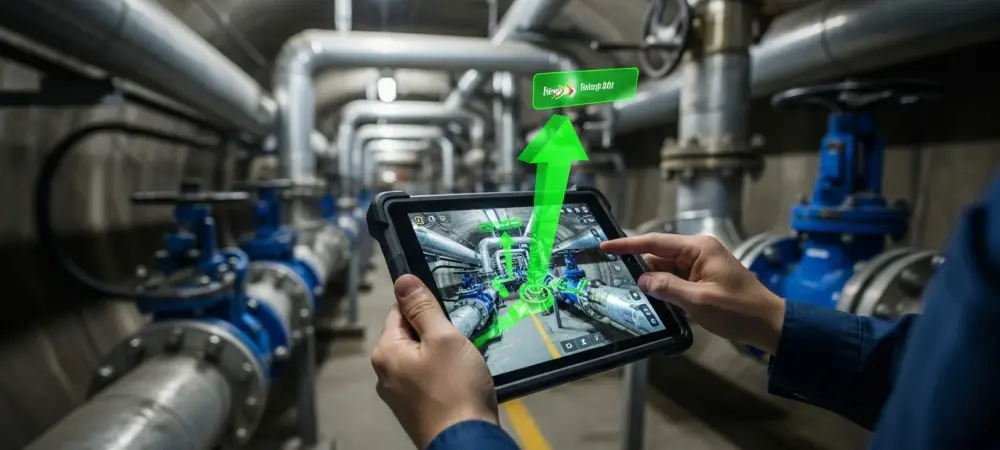
Field engineers and industrial technicians frequently operate in areas where mobile coverage is either patchy or entirely absent, such as deep within factory floors or at remote utility sites. When a critical machine breaks down, the technician needs high-definition visual guidance to perform complex repairs under the direction of a remote expert. When the signal strength drops, standard video feeds typically respond by reducing resolution or freezing frames, making it impossible for an expert to see fine details like wiring colors or small mechanical components. This lack of visual fidelity leads to miscommunication, extended downtime, and potential safety risks if a repair is performed incorrectly. Consequently, many organizations have struggled to adopt digital support tools because the technology often fails exactly when and where it is needed most.
How Does Video Super Resolution Technology Circumvent Bandwidth Constraints?
The introduction of Video Super Resolution represents a fundamental shift in how visual data is handled during remote support sessions. Instead of relying on the network to deliver every single pixel in high definition, this technology utilizes artificial intelligence models that run locally on the receiving device. By leveraging the Windows AI application programming interface, the system can take a low-resolution, incoming video stream and intelligently reconstruct it into a sharp, clear image in real time.
This approach significantly reduces the amount of data that needs to travel over the air, allowing high-quality visual communication to persist even on weak connections. Modern hardware, specifically the new generation of AI-optimized PCs, provides the necessary processing power to execute these complex algorithms without causing latency. This creates a more resilient support environment where the visual quality is decoupled from the immediate fluctuations of the local cellular or Wi-Fi signal.
What Practical Benefits Does This Integration Offer to Industrial Organizations?
Implementing AI-enhanced augmented reality tools provides immediate tangible advantages by reducing the duration of operational downtime through faster problem resolution. Organizations in manufacturing and utilities no longer need to fly experts to remote sites for every technical hiccup, which dramatically lowers travel expenses and reduces the carbon footprint of field operations. The ability to provide precise, step-by-step overlays on top of physical machinery ensures that even junior technicians can perform high-level tasks with confidence.
In high-stakes environments like professional racing or medical facilities, the accuracy provided by these tools is indispensable. For instance, teams that replaced static assembly drawings with real-time AR instructions reported significant improvements in assembly speed and a reduction in manual errors. This level of precision, maintained even in areas with suboptimal connectivity, ensures that the digital transformation of the workforce extends to the most difficult-to-reach areas of the global economy.
Summary or Recap
The strategic collaboration between TeamViewer and Microsoft addresses a critical bottleneck in industrial digitalization by prioritizing on-device intelligence. This partnership moves the heavy lifting of image processing away from the cloud and toward the local hardware used by frontline workers. By doing so, it ensures that high-quality assistance remains available in “dead zones” where traditional communication methods typically fail. This shift not only protects against connectivity-related delays but also sets a new standard for how augmented reality assists in complex technical tasks.
Current developments show that these AI-driven features are moving from specialized beta testing to broader availability across diverse product portfolios. The integration of Video Super Resolution signifies a broader trend of worker augmentation, where sophisticated technology serves as a reliable partner rather than a fragile dependency. As organizations continue to adopt these tools, the gap between office-based expertise and field-based execution continues to narrow, creating a more cohesive and efficient global industrial network.
Conclusion or Final Thoughts
The convergence of AI and augmented reality marked a pivotal moment for industrial field services by resolving the age-old conflict between digital needs and physical limitations. This technological leap demonstrated that high-performance computing could thrive even in the most isolated environments when the focus shifted to edge processing. Companies that embraced these advancements gained a significant edge in operational resilience and resource management.
Looking ahead, the success of these initiatives suggested that the future of the digital workplace depended on decentralized intelligence. Organizations that evaluated their current connectivity challenges found that investing in AI-capable hardware was no longer a luxury but a fundamental requirement for maintaining a competitive workforce. The era of the “dead zone” effectively ended as the tools of the trade became smarter and more independent of the infrastructure surrounding them.