

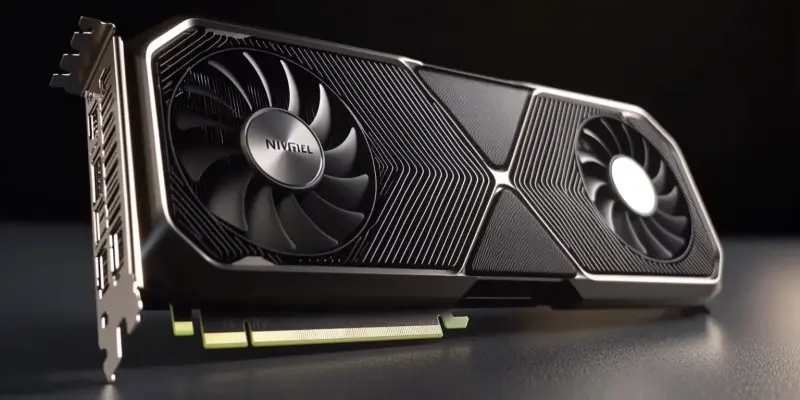
The excitement surrounding the launch of NVIDIA’s latest RTX 50 series GPUs has been marred by a surprising and troubling production anomaly. This glitch, affecting a small batch of GPUs, sees some units missing crucial ROP (Raster Operation Processor) units, leading to a noticeable, albeit small, dip in graphical performance. TechPowerUP was the first to bring this issue to light when they reviewed a ZOTAC RTX 5090 that exhibited slower performance due to having only 168 ROPs instead of the full 176. The problem, though limited to just 0.5% of the production run, has sent ripples of concern through the tech community.
The Anomaly Uncovered
Performance Impact and Initial Discovery
During their review, TechPowerUP noted that a particular ZOTAC RTX 5090 card was underperforming by about 4-5% in gaming applications. This discrepancy led to a deeper investigation, revealing that the card had 168 ROP units instead of the expected 176. The missing ROP units adversely affected gaming performance, but AI and compute workloads remained largely unaffected. The precision and efficiency of ROPs in rendering and processing graphical data make their absence noticeable in gaming scenarios where peak performance is crucial.
The revelation prompted other tech reviewers and enthusiasts to test their GPUs, using tools like GPU-Z to verify the ROP count. The situation highlighted the importance of meticulous quality checks and the potential consequences of even minor deviations in the manufacturing process. The issue of missing ROP units sparked a broader conversation about the reliability of high-end graphics cards and the expectations consumers hold for premium products.
Affected Models and User Verification
NVIDIA’s confirmation that the problem wasn’t isolated to the RTX 5090 but also extended to the RTX 5090D and RTX 5070 Ti broadened the scope of concern. For the RTX 5090 and 5090D models, the specified ROP count should be 176, while for the RTX 5070 Ti, it should be 96. Users were advised to check their GPU specifications using GPU-Z to determine if their hardware was impacted. If a discrepancy in the ROP count was found, it indicated a defective GPU that would likely require replacement.
The scarcity of these high-demand GPUs complicates the replacement process. Despite NVIDIA’s quick acknowledgment and correction of the manufacturing error, acquiring a replacement card might take time given the global supply constraints. This situation has underscored the broader challenges of hardware manufacturing, where even a small percentage of defective units can lead to significant user dissatisfaction and logistical headaches.
NVIDIA’s Response and Concerns
Corrective Measures and Guidance
In response to the anomaly, NVIDIA identified the root cause as a rare production glitch and promptly mentioned that their manufacturing process has been corrected. The company urged affected users to contact the board manufacturers for a replacement GPU to ensure they get the full performance specifications they paid for. This prompt guidance was aimed at maintaining customer trust and satisfaction, emphasizing NVIDIA’s commitment to quality and performance.
However, the logistical realities of replacing GPUs during a time of scarcity added a layer of frustration for affected users. While NVIDIA’s transparent communication and willingness to address the issue were commendable, the waiting period for replacements due to ongoing supply chain issues posed a challenge. This scenario has prompted a call for even stricter quality assurance practices to avoid such issues in the future, particularly for flagship products with high consumer expectations.
Speculations and Future Implications
The production anomaly raised questions about the possible reasons behind the oversight. Some industry analysts speculated that NVIDIA may have rushed the launch of the Blackwell RTX 50 series, eager to capture market share and meet consumer demand. The presence of multiple issues with the newly launched GPUs lent some weight to this theory, suggesting that the rush to market may have led to insufficient final checks.
Looking forward, this incident could lead to more rigorous quality control measures within NVIDIA and other manufacturers. Consumers’ expectations for flawless performance and reliability from high-end products will likely drive the industry towards even stricter standards. The incident serves as a reminder of the complexities involved in cutting-edge technology manufacturing and the critical importance of ensuring every detail is meticulously checked before bringing a product to market.
Navigating the Aftermath
Replacement Challenges and User Experiences
For consumers who found their GPUs to be part of the affected batch, the journey of seeking a replacement has been challenging. Many have shared their experiences on various forums, detailing the steps they took to verify the ROP count and the subsequent process of contacting manufacturers for replacements. With a global shortage of GPUs due to high demand and supply chain issues, the waiting period for replacements has been a significant point of frustration.
Manufacturers are working closely with retailers and customers to streamline the replacement process, but the reality of limited stock means that not all affected users can get immediate replacements. This scenario has led some consumers to explore interim solutions, such as using backup GPUs or limiting their gaming activities until a replacement is procured. Despite these hurdles, the proactive stance taken by NVIDIA and board manufacturers has been reassuring for many, demonstrating a commitment to resolving the issue.
Reflecting on Consumer Expectations
The buzz surrounding the launch of NVIDIA’s new RTX 50 series GPUs has been dampened by an unforeseen and troubling production issue. An anomaly in manufacturing has caused a small batch of GPUs to miss critical ROP (Raster Operation Processor) units, resulting in slightly reduced graphical performance. TechPowerUP was the first to uncover this problem during their review of a ZOTAC RTX 5090, which showed slower performance due to having only 168 ROPs instead of the expected 176. Although this defect affects just 0.5% of the production run, it has raised significant concern within the tech community. This has sparked a wave of worry among potential buyers and industry experts. The implication of even a minor drop in performance in products from a major player like NVIDIA can reverberate widely, influencing brand trust and sales. The company is now under pressure to address this hiccup promptly to reassure the market and maintain its reputation for excellence in the highly competitive GPU landscape.