

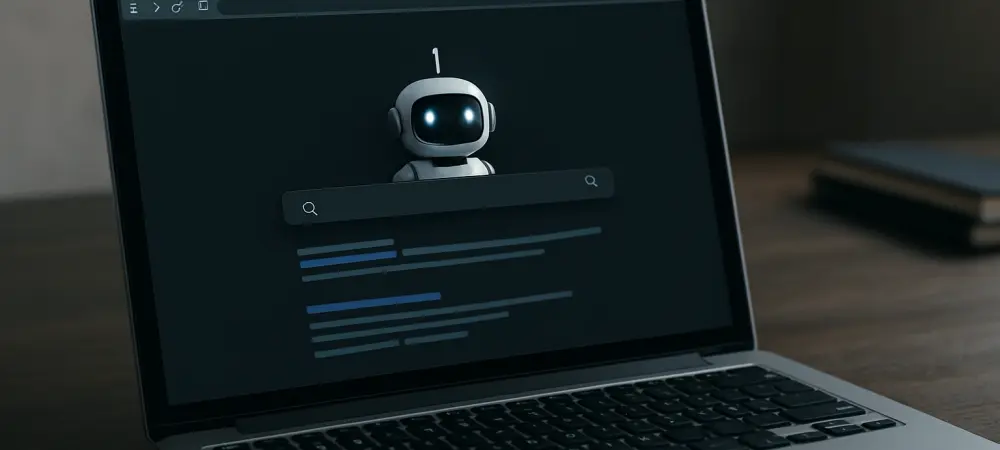
Imagine a world where the web browser, a tool most people use daily for work, research, and leisure, evolves into something far more powerful—a central hub for autonomous AI agents that handle complex tasks with minimal human input. This isn’t just a distant possibility but a vision being actively pursued by forward-thinking companies in the tech industry. The concept of an “agentic AI future” is gaining traction, where AI systems embedded in browsers act on behalf of users, transforming the internet from a user-driven space to one where intelligent agents anticipate needs and execute multi-step processes. Companies like Opera and Perplexity are at the forefront of this shift, exploring how browsers could become the primary platform for such innovation. This emerging paradigm raises intriguing questions about how people interact with technology and whether browsers, already integral to daily digital life, are poised to redefine efficiency and personalization through AI.
Redefining the Browser’s Role in an AI-Driven World
The traditional role of a web browser as a gateway to information is undergoing a profound transformation with the integration of agentic AI. Unlike the current internet experience, where users manually search for content or complete tasks, the future could see browsers acting as personal assistants. Picture a scenario where a browser remembers past purchases, scours the web for similar products, compares prices across platforms, and finalizes transactions—all without the user lifting a finger. This shift from manual interaction to automated delegation represents a fundamental change in how digital tools serve humanity. The browser, already a workspace for writing, researching, and creating, offers a unique environment rich with contextual data like search history and logged-in services. This positions it as an ideal candidate to host AI agents capable of delivering highly personalized and efficient experiences, potentially outpacing standalone apps or other platforms in effectiveness.
Beyond mere convenience, the integration of AI agents into browsers could redefine productivity on a massive scale. Consider the implications for professionals who spend hours juggling multiple tabs, tools, and services to complete projects. An AI-powered browser could streamline these workflows by anticipating needs based on past behavior, pulling relevant data from open tabs, and even drafting content or scheduling tasks autonomously. This isn’t just about saving time; it’s about amplifying human capability through technology. The contextual advantage of browsers—where users are already immersed in their digital ecosystem—makes them a compelling hub for such innovation. However, this transformation also brings challenges, including ensuring that these agents prioritize user intent over external influences. As companies explore this potential, the browser’s evolution into a proactive tool signals a broader trend toward an agent-driven internet with far-reaching implications for daily life.
Opera and Perplexity: Pioneering Agentic AI in Browsers
Opera, a browser with a 30-year legacy and a user base of 300 million, is actively shaping this agentic AI future through its innovative Opera Neon project. Launched a couple of years ago, Opera Neon incorporates AI under the ARIA initiative, focusing on three key components: Neon Chat for contextual conversations during browsing, Neon Do for executing tasks like shopping directly within the browser, and Neon Make for building web apps using cloud-based AI agents. What sets Opera apart is its emphasis on privacy, hosting AI agents locally on user devices to ensure they serve the individual rather than external parties. This approach addresses growing concerns about data security in an era of pervasive AI. Henrik Lexow, a senior product leader at Opera, highlights the synergy of AI memory and browser context, enabling agents to not only understand requests but also customize task execution based on personal preferences, creating a seamless user experience.
Meanwhile, Perplexity, an AI-powered conversational search engine, is making bold moves to secure a foothold in the browser space as a strategic entry point for agentic AI. The company has pursued high-profile acquisitions, offering substantial sums to acquire major browsers, though none have come to fruition. This aggressive strategy reflects a belief that controlling a browser provides unparalleled access to user data—such as browsing history and active sessions—which can fuel highly tailored AI interactions. Perplexity’s vision underscores a growing industry consensus that browsers are not just tools for navigation but potential platforms for embedding AI agents where users already spend significant time. While Opera focuses on building from within, Perplexity’s acquisition attempts reveal a different approach to achieving the same goal: positioning browsers as the epicenter of an AI-driven internet. Together, their efforts illustrate the competitive landscape shaping this transformative vision.
Competing Visions and the Uncertain Path Ahead
While browsers present a strong case for hosting agentic AI, they are not the only contenders in this evolving landscape. Tech giants like Apple with Siri, Google with Gemini on Android, Microsoft with Copilot, and OpenAI with ChatGPT offer alternative platforms for AI integration, each with distinct strengths. For instance, mobile apps and voice assistants provide immediacy and accessibility that browsers may struggle to match in certain contexts. These competing visions suggest that the agentic internet might not be confined to a single interface but could manifest across multiple touchpoints, depending on user habits and technological advancements. The diversity of approaches highlights a lack of consensus on where AI agents will ultimately take root, with each platform vying to become the primary gateway for autonomous interactions. This uncertainty adds a layer of complexity to predicting the future of digital engagement.
Furthermore, the contextual advantages of browsers must be weighed against the unique capabilities of other systems. Smartphones, for example, offer location data and constant connectivity, enabling AI agents to deliver real-time, location-specific assistance that browsers cannot replicate in the same way. Similarly, dedicated AI tools integrated into operating systems could provide deeper access to device functions, creating a more seamless experience than browser-based agents. Despite these alternatives, the browser’s role as a central workspace for many users—where they manage personal and professional tasks—remains a compelling argument for its potential as an AI hub. As the industry experiments with different models, the ultimate shape of the agentic AI future remains fluid, with browsers as a prominent but not guaranteed focal point. The ongoing competition among platforms promises to drive innovation, ensuring that users benefit from increasingly sophisticated tools.
Reflecting on the Journey to an Agent-Driven Internet
Looking back, the strides made by companies like Opera and Perplexity paint a vivid picture of ambition and possibility in the realm of agentic AI within browsers. Their efforts, from Opera’s privacy-focused Neon project to Perplexity’s strategic acquisition pursuits, underscore a belief that browsers hold untapped potential as hubs for autonomous AI agents. The industry grapples with competing visions, as tech giants push alternative platforms, revealing a landscape rich with experimentation. Now, as this narrative unfolds, the focus shifts to actionable steps: stakeholders must prioritize user trust by addressing privacy concerns and ensuring AI agents remain transparent in their operations. Collaboration between browser developers and AI innovators could accelerate the creation of standardized protocols for agentic interactions. Ultimately, the path forward lies in balancing technological advancement with ethical considerations, paving the way for a digital future where efficiency and personalization harmonize to redefine human interaction with technology.