

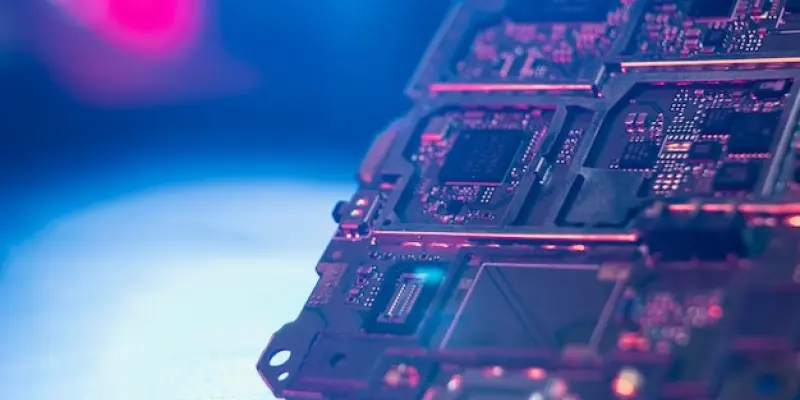
The rapid pace of technological innovation continues to reshape the capabilities of personal computing, with AI-enhanced GPUs at the forefront of this transformation. Once the domain of bulky servers and massive data centers, the power of artificial intelligence is now being harnessed in the compact form of desktop GPUs. This innovation promises to revolutionize the way individuals engage with AI technologies, shifting workloads from cloud-based reliance to local execution. At recent technology expos like Computex, major players such as Nvidia, Intel, and AMD showcased their latest advancements in GPU technology, emphasizing AI’s integration into personal workstations. The standout among these reveals is Nvidia’s DGX Spark, a personal AI cloud device featuring the cutting-edge Blackwell GPU, which delivers remarkable 1 petaflop performance. Such advancements are not merely about increasing performance metrics; they symbolize a pivotal transition towards empowering users with more autonomy and efficiency in handling AI tasks directly from their desks. This evolution reveals both the potential and challenges of adapting high-performance AI capabilities for wider accessibility and local use.
Transformational AI Capabilities in Modern GPUs
Nvidia’s strategic focus on AI-oriented hardware represents a significant leap forward, reinforcing how AI capabilities are becoming increasingly decentralized. Echoing this trend, Intel and AMD introduced their own GPU innovations, blending traditional graphics performance with sophisticated AI enhancements. AMD’s Radeon 9700 AI Pro GPU, for example, incorporates 128 AI accelerators capable of managing reasoning models with up to 32 billion parameters. This technology fosters a considerable leap in how sizable AI applications can be handled locally, making the desktop not just a tool for productivity but a robust AI workstation. Similarly, Intel has introduced the Arc Pro B50, priced competitively at $299. Designed with workstations in mind, the Arc Pro B50 integrates 128 AI engines that, while not as robust as AMD’s offering, still provide substantial capabilities for AI development tasks. These developments suggest a clear industry direction: AI-enhanced GPUs are becoming integral to the desktop computing experience, catering to both power users and developers looking for affordable yet effective alternatives to cloud computing.
This industry-wide embrace of AI in desktop GPUs brings forth several implications. Foremost among them is the increasing shift toward personal computing, allowing for reduced dependency on prohibitive cloud service costs. By facilitating local execution of AI workloads, these GPUs offer not only cost savings but also increased speed, responsiveness, and control over projects. Developers and researchers benefit from immediate results without the latency of remote processing, opening doors to faster innovation cycles. Despite these benefits, some challenges do persist, particularly concerning power consumption and memory constraints. Nonetheless, such issues are eclipsed by the broader potential these technologies offer to transform both personal and professional computing landscapes.
The Implications for the Future of Personal Computing
The move to integrate AI capabilities into desktop systems signifies more than just a hardware upgrade; it crystallizes a broader strategic vision for the future of personal computing. Experts such as Jack Gold and Anshel Sag anticipate substantial growth in AI-oriented PCs, far outstripping the demand for traditional desktop and laptop configurations. This shift underscores a pivotal transition, where the desktop becomes an essential hub in AI development and implementation, facilitating unprecedented opportunities for innovation. The efficiency and control provided by high-end desktop hardware resonate deeply with the needs of developers, whose reliance on cloud resources for production is balanced by increasingly powerful local execution capabilities made possible by these GPU advancements.
In an industry where terms like “GenAI models” and “DeepSeek” reflect cutting-edge, leaner model architectures, AI-enhanced GPUs are driving changes in how users interact with intelligent systems. These innovations enable more robust computational tasks, effectively bridging the gap between complex server farms and localized personal computing. The broader industry consensus highlights this integration as a crucial growth area for PC market suppliers, revealing both the challenges and transformative potential of AI-enhanced hardware. As technology continues advancing, the drive to decentralize AI resources will likely yield further advancements, empowering end-users and heralding new paradigms in computing.
Looking Ahead: Challenges and Opportunities
The rapid pace of technological innovation continually transforms personal computing, with AI-enhanced GPUs leading this change. Previously confined to large servers and vast data centers, artificial intelligence power is now packed into desktop GPUs. This shift promises to revolutionize how people interact with AI, moving tasks from the cloud to local execution. At recent expos like Computex, giants like Nvidia, Intel, and AMD showcased new GPU technologies, stressing AI’s role in personal systems. Nvidia’s DGX Spark stands out, a personal AI cloud device featuring the advanced Blackwell GPU capable of 1 petaflop performance. Such progress isn’t just about boosting performance metrics; it marks a crucial transition toward granting users greater control and efficiency in managing AI tasks right from their desks. This evolution highlights both opportunities and challenges in making high-performance AI accessible for local use. This move toward decentralization and increased autonomy reflects a broader trend in tech innovation.