

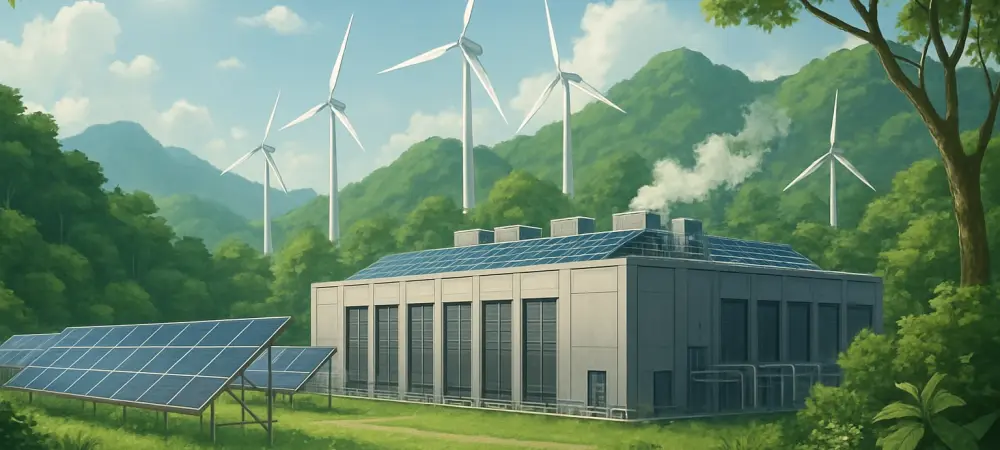
In the heart of the Asia-Pacific (APAC) region, a digital revolution is unfolding, marked by an unprecedented boom in data center construction. Leading the conversation on this transformative growth and its sustainability challenges is Dominic Jainy, an IT professional with deep expertise in artificial intelligence, machine learning, and blockchain. With a keen interest in the intersection of technology and industry applications, Dominic offers unique insights into how APAC’s data center expansion—projected to reach $800 billion in spending—can align with environmental goals. In this engaging interview, we explore the driving forces behind the region’s digital infrastructure surge, the critical hurdles in adopting renewable energy, innovative policy frameworks, and the varying sustainability landscapes across APAC subregions.
What’s fueling the incredible data center boom in the APAC region right now?
The APAC region is riding a wave of digital transformation. Key drivers include rapid urbanization, a growing middle class, and the explosion of cloud computing, e-commerce, and mobile connectivity. Businesses and governments are prioritizing digital infrastructure to support everything from 5G networks to AI-driven applications. Add to that the region’s massive population—over half the world’s internet users are here—and you’ve got a perfect storm of demand. It’s not just about building more servers; it’s about enabling entire economies to leap into the future.
How does this projected $800 billion investment highlight the scale of digital growth in APAC?
That figure is staggering because it reflects how central digital infrastructure has become to APAC’s economic ambitions. It’s not just about keeping up; the region is poised to redefine global tech leadership. This investment signals a doubling of capacity in just five years, driven by both local tech giants and international players setting up hyperscale facilities. It’s a clear sign that APAC isn’t just participating in the digital economy—it’s shaping it, with the potential to hold 40% of the world’s data center capacity soon.
Which countries or areas within APAC are spearheading this expansion, and what gives them an edge?
You’ve got hotspots like Singapore, which is a financial and tech hub with robust connectivity and stable policies. Then there’s Malaysia, where power demand for data centers is expected to skyrocket sevenfold by 2030 due to low costs and strategic location. China and India are also major players, with massive domestic demand and government-backed digital initiatives. These areas stand out because of a mix of infrastructure readiness, investment incentives, and proximity to key markets, making them magnets for data center growth.
What are the toughest challenges APAC faces in balancing this growth with sustainability?
The biggest issue is the region’s heavy reliance on fossil fuels—coal alone accounts for 49% of the energy mix. Data centers are power-hungry, and with electricity demand set to double by 2030, meeting that need without spiking carbon emissions is a real struggle. There’s also a lack of uniform policy across countries, which complicates efforts to scale renewable energy. Plus, the sheer speed of expansion often outpaces the development of green infrastructure, so sustainability can feel like an afterthought.
Given the dominance of coal in the energy supply, how feasible is a shift to cleaner energy sources anytime soon?
It’s a tough road. Coal isn’t just dominant; it’s deeply embedded in the region’s energy systems, especially in major economies like China and India. Transitioning to renewables requires not just investment but also time to build infrastructure and stabilize grids. While there’s hope—think tank reports suggest solar and wind could power a third of Southeast Asia’s data centers by 2030—the near-term reality is that coal will likely remain a crutch unless aggressive policies and incentives change the game.
How does the current energy mix impact APAC’s ability to achieve net-zero goals?
The energy mix—49% coal, 23% oil, 13% gas, and only 12% renewables—puts APAC at a disadvantage. Net-zero ambitions require a drastic cut in emissions, but data center growth is driving energy demand through the roof. Without a rapid scale-up of renewables like wind and solar, or innovations like battery storage, the gap between ambition and reality widens. It’s a balancing act: supporting digital growth while decarbonizing an energy system that’s still heavily tied to fossil fuels.
Can you break down why increasing renewable energy for data centers is such a complex issue in this region?
It’s a mix of structural and economic barriers. First, the grid infrastructure in many APAC countries isn’t flexible enough to integrate large-scale renewables—think intermittent solar or wind power. Second, the upfront costs of transitioning are huge, and not all markets have the capital or political will to prioritize this over cheaper fossil fuels. With data center electricity needs doubling by 2030, the pressure is on, but building renewable capacity and storage solutions like batteries takes time and coordination across borders, which isn’t always smooth.
What role does the Asia-Pacific Data Centre Association play in tackling sustainability for the industry?
The Association is a critical voice in bridging the gap between industry needs and environmental goals. They’ve put out a white paper that acts as a roadmap, focusing on best practices and policy frameworks. Their work pushes for accelerating renewable energy access, improving grid resilience, and fostering collaboration between governments and private players. Essentially, they’re trying to steer the industry toward sustainable growth by offering actionable strategies and advocating for alignment across the region.
How can building stronger grid infrastructure help data centers lower their carbon footprint?
A robust grid is a game-changer. Many APAC grids struggle with reliability and can’t handle the variability of renewables like solar or wind. Upgrading to a flexible, smart grid means better integration of clean energy sources, reducing reliance on coal or gas for backup. It also cuts transmission losses and supports innovations like energy storage systems. For data centers, which need constant power, a stronger grid ensures they can tap into renewables without risking downtime, directly shrinking their carbon footprint.
What are Power Purchase Agreements, and how can they boost renewable energy access for data centers in APAC?
Power Purchase Agreements, or PPAs, are contracts where data center operators commit to buying electricity directly from renewable energy producers, like solar or wind farms, often at a fixed rate over a long term. This setup guarantees demand for green energy, encouraging investment in new projects. In APAC, where renewable capacity is still growing, PPAs can help data centers secure a steady supply of clean power, even if the local grid isn’t fully green yet. It’s a practical way to drive decarbonization while supporting renewable development.
How important is it to get stakeholders on board when setting energy efficiency standards for data centers?
It’s absolutely crucial. Stakeholders—operators, tech companies, regulators, even local communities—bring real-world perspectives to the table. Without their input, standards risk being impractical or ignored. For instance, a one-size-fits-all efficiency rule might work in Singapore but flop in rural India due to infrastructure differences. Engaging everyone ensures that guidelines are grounded in reality, balance cost with impact, and actually get adopted across diverse markets in APAC.
Why is aligning energy efficiency regulations across APAC markets so critical, and what obstacles might stand in the way?
Alignment creates a level playing field and simplifies compliance for companies operating in multiple countries. Right now, fragmented regulations mean a data center in Japan might face different efficiency rules than one in Indonesia, driving up costs and slowing green innovation. Harmonizing policies could speed up adoption of best practices. But the challenge lies in the region’s diversity—economies, energy mixes, and political priorities vary wildly. Getting consensus on shared standards requires compromise and strong regional cooperation, which isn’t always easy.
How do sustainability challenges differ between the broader APAC region and the ASEAN subregion?
APAC as a whole includes heavyweights like China and Japan, where renewable projects are advancing alongside coal expansion, creating a mixed bag of progress and setbacks. ASEAN, on the other hand, is more uniformly tied to fossil fuels, with less mature renewable infrastructure. Countries like Malaysia and Vietnam are seeing huge data center growth, but their grids are coal-heavy, making green transitions trickier. ASEAN’s challenge is often starting from a lower baseline, while broader APAC wrestles with scaling renewables amid existing industrial demands.
What’s driving Malaysia’s expected sharp rise in data center power demand within ASEAN?
Malaysia is becoming a sweet spot for data centers due to its relatively low operational costs, strategic location near major submarine cable routes, and supportive government policies. It’s attracting hyperscale facilities from global tech firms looking for cost-effective expansion in Southeast Asia. Forecasts show a sevenfold increase in power demand by 2030, which reflects not just new builds but also the scale of operations. The catch is ensuring this growth doesn’t lock the country into a fossil fuel-dependent future.
With ASEAN’s heavy reliance on fossil fuels, how can tech companies meet their renewable energy targets there?
It’s tough but doable with the right strategies. Tech companies can lean on Power Purchase Agreements to directly source renewables, even if the local grid isn’t green. They can also invest in on-site solutions like solar panels or partner with governments to pilot energy storage systems. Advocacy for policy changes—such as incentives for wind or solar—can shift the needle over time. It’s about blending immediate workarounds with long-term collaboration to push the region toward cleaner energy.
What’s your forecast for the future of sustainable data center growth in APAC over the next decade?
I’m cautiously optimistic. The next ten years will likely see a patchwork of progress—some countries will surge ahead with renewables, driven by policy and tech like battery storage, while others lag due to economic or infrastructure constraints. I expect solar and wind to play a bigger role, potentially meeting a significant chunk of data center demand in places like Southeast Asia. But without coordinated action on grids and regulations, the risk of falling short on net-zero goals remains high. It’ll come down to how well public and private sectors can align on a shared vision for green digital growth.