

Dominic Jainy is a seasoned IT professional with a deep mastery of artificial intelligence, machine learning, and high-performance hardware architectures. Having spent years analyzing the intersection of semiconductor design and software optimization, he provides a unique perspective on the shifting power dynamics between industry giants. In this discussion, he explores the implications of the latest power-hungry desktop refreshes, the aggressive push for high core counts in the budget sector, and how upcoming cache technologies will redefine the competitive landscape for enthusiasts.
Recent trends show a shift toward doubling TDP envelopes from 65W to 120W to achieve higher clock speeds. How does this power increase impact cooling requirements for standard mid-range builds, and what specific performance gains should users expect in multithreaded tasks compared to previous lower-wattage versions?
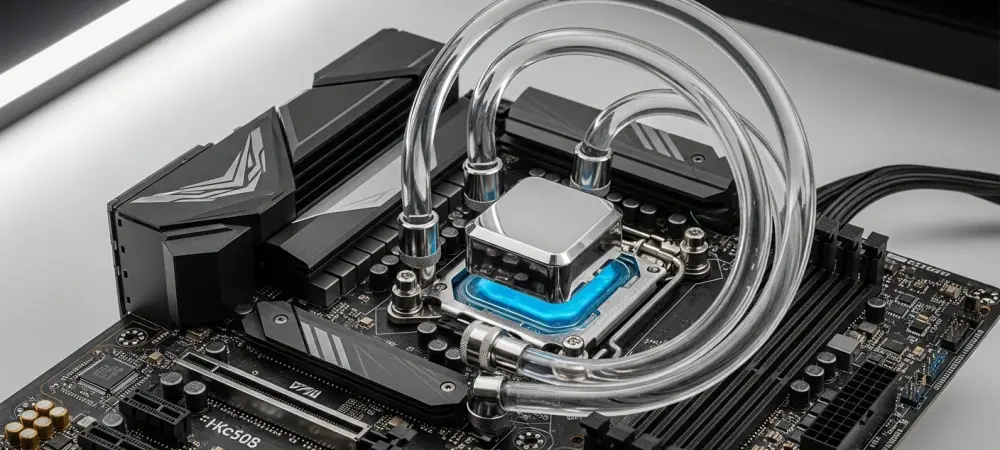
The jump from a 65W to a 120W TDP is a significant pivot that moves mid-range processors out of the realm of modest air coolers and into the territory of high-performance thermal solutions. For a standard build, this means users can no longer rely on stock or low-profile coolers if they want to maintain the advertised 5.5GHz or 5.6GHz boost clocks without thermal throttling. By nearly doubling the power envelope, manufacturers are effectively uncapping the silicon, allowing it to sustain higher voltages for longer periods during heavy workloads. In terms of tangible results, these refreshed chips, such as the rumored 9750X, are designed to claw back the lead in multithreaded performance where lower-wattage parts previously struggled. While clock speed increases of a few hundred MHz help, the real win is in the sustained power delivery, which allows all cores to run closer to their peak frequencies simultaneously rather than downclocking to stay within a 65W limit.
New hardware is bringing 24-core counts to the $300 price point and 18-core options to the $200 bracket. How does this aggressive core density change the value calculation for budget-conscious workstations, and what practical impact do these high thread counts have on real-world productivity benchmarks?
We are seeing a massive democratization of compute power where a $300 investment now nets you a 24-core, 24-thread monster like the Core Ultra 7 270K Plus. This completely disrupts the value calculation for budget-conscious professionals who previously had to choose between high clock speeds for gaming or high core counts for rendering and compilation. With 18-core options hitting the $200 mark, the entry-level workstation market is being flooded with chips that can handle complex multitasking and multithreaded exports without breaking a sweat. In real-world productivity benchmarks, these high thread counts provide a massive leap; for example, Intel’s efficiency cores are helping their mid-range chips reach 103% of the multicore performance of rival offerings. It essentially means that “budget” builds can now perform tasks that were reserved for flagship workstations just a couple of generations ago, drastically shortening project timelines for creators.
High-end mobile processors are incorporating specialized binary optimization tools and translation layers to boost gaming performance. How do these software-level optimizations function alongside the hardware, and what specific steps must developers take to ensure their applications see measurable frame-rate improvements on these new architectures?
The introduction of features like the Binary Optimization Tool on the Core Ultra 200HX Plus series represents a shift toward software-assisted hardware performance. These translation layers work by intercepting code at runtime and reorganizing instructions to better utilize the specific execution units of the new architecture, which is vital for maximizing single-threaded and gaming efficiency. For developers, this means the hardware is doing more of the heavy lifting, but they still need to ensure their software is optimized to play nice with these specialized optimization layers. Specifically, developers should focus on streamlining their code to minimize latency between the CPU and the translation layer, ensuring that the Binary Optimization Tool can effectively predict and accelerate the most demanding game loops. When implemented correctly, this synergy allows high-end laptops to push frame rates higher than raw hardware specs alone would suggest.
Upcoming flagship designs are expected to feature massive L3 cache pools and significantly higher core counts to push performance boundaries. What engineering hurdles do designers face when scaling cache sizes so aggressively, and how will these hardware shifts influence the competitive landscape for enthusiast-grade gaming systems?
Scaling L3 cache pools aggressively, as we expect with the upcoming Nova Lake series, presents a nightmare for engineers regarding both physical die space and manufacturing yields. Large caches occupy a significant portion of the processor’s footprint, which increases the cost of production and complicates the thermal management of the chip. Furthermore, managing the latency of these massive cache pools is critical; if the CPU takes too long to find data in a “monstrous” L3 cache, the performance benefits in gaming could be negated. However, when successful, these shifts will fundamentally change the enthusiast landscape by providing a massive buffer that reduces the need to fetch data from slower system RAM. This is particularly impactful for gaming, where the ability to store more game data directly on the die leads to smoother frame times and higher overall throughput, setting the stage for a fierce battle between AMD’s 3D V-Cache and Intel’s new high-capacity designs.
What is your forecast for the desktop CPU market over the next two years?
I predict a period of intense “tit-for-tat” competition where the traditional boundaries between mid-range and high-end performance completely vanish. By late 2026, with the arrival of Zen 6 and Nova Lake, we will likely see core counts reach heights we once thought unnecessary for consumers, driven by the need to handle increasingly complex AI and local processing tasks. Power consumption will remain a controversial focal point, as both companies push TDPs to the limit to claim the performance crown, forcing a shift in the PC building community toward more robust cooling and power delivery standards. Ultimately, the consumer is the winner here, as the aggressive pricing we see now—like 24 cores for $300—will become the new baseline, making high-performance computing more accessible than it has ever been in the history of the industry.