

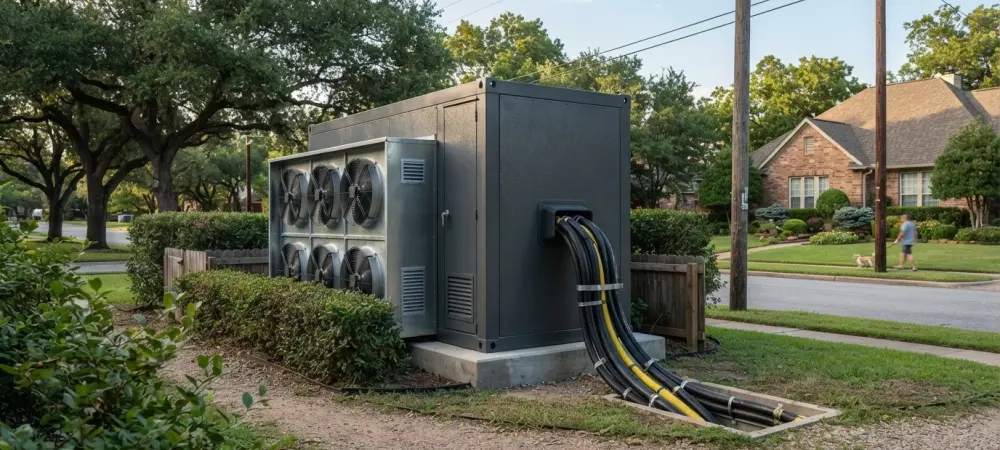
While massive training clusters favor centralization, the latency requirements of inference are driving a strategic shift toward regional and edge-based hardware deployments. The explosive growth of generative models has officially entered its most transformative phase, moving from the laboratory to the production floor where real-world utility is the ultimate measure of success. This evolution marks a departure from the singular focus on high-end compute clusters toward a more distributed and heterogeneous infrastructure model. As enterprises integrate artificial intelligence into their core customer-facing applications, the physical and logical constraints of the traditional data center are being pushed to their limits. The industry is witnessing a transition where the priority is no longer just raw computational power, but the ability to deliver rapid, reliable responses to millions of concurrent users regardless of their geographic location. This shift necessitates a complete overhaul of how we think about facility layout and power distribution.
Strategic Hardware Diversification
Balancing Processing Power: The CPU and GPU Mix
The industry is moving beyond a generic reliance on high-end GPUs as the primary solution for all artificial intelligence tasks, opting instead for a more strategic mix of silicon. While massive language models still rely on the parallel processing capabilities of top-tier accelerators, many common enterprise tasks and data preprocessing functions are increasingly handled by traditional CPUs. This movement toward hardware heterogeneity is largely driven by the economics of scale and the realization that not every inference request justifies the cost and power consumption of a specialized GPU. For instance, the recent agreement between Akamai and Anthropic highlights a growing trend where billions are committed to CPU-based cloud capacity specifically to manage application orchestration and less intensive inference workloads. By diversifying the hardware stack, operators can ensure that each task is matched with the most efficient processor available, reducing the overall carbon footprint of the entire ecosystem.
Capacity Planning: Matching Hardware to Traffic
Effective capacity planning in this environment requires infrastructure teams to deeply analyze the specific traffic patterns and response-time requirements of their AI applications. High-density GPU clusters are now being carefully reserved for low-latency, high-complexity tasks, while standard server racks handle the orchestration and routine queries that do not require massive floating-point performance. This nuanced approach prevents the common pitfall of over-provisioning facilities with expensive, power-hungry hardware that remains underutilized during off-peak hours. Infrastructure designers are now implementing specialized zones within data centers, where specific rows are optimized for different types of compute profiles. This zoning allows for a more granular application of power and cooling resources, ensuring that the facility remains agile enough to pivot as the underlying AI models evolve. By aligning computing resources with actual workload profiles, data center operators can maintain a competitive edge where efficiency is as vital as speed.
Managing Extreme Power and Thermal Demands
Density Evolution: Preparing for the 120 kW Rack
The surge in inference demands has resulted in a dramatic and rapid increase in rack power density, forcing a move away from the traditional design standards of the past decade. Where typical data centers once planned for average densities in the single-digit kilowatt range, current installations are seeing peaks that exceed 30 kW as a standard, with high-performance clusters reaching as high as 120 kW per rack. This shift creates a significant thermal and electrical gap in legacy facilities, which were simply not designed to deliver such concentrated amounts of energy or to dissipate the resulting heat. Consequently, operators are moving away from facility-wide average metrics and adopting highly granular, rack-level power management strategies. This involves a rigorous analysis of electrical distribution boards and a significant increase in the electrical headroom required to handle the sudden, unpredictable spikes in demand that characterize inference traffic. Failure to account for these surges can lead to catastrophic circuit failures.
Liquid Cooling: The New Thermal Standard
As power consumption continues its upward trajectory, traditional air-cooling methods are proving insufficient for the thermal loads generated by modern AI accelerators and dense server configurations. Direct-to-chip liquid cooling has transitioned from a specialized niche technology to the definitive industry standard for high-density environments. This transition necessitates a complete rethink of the mechanical systems within the data center, as cooling capacity must now be integrated directly with the power supply and rack architecture. Experts emphasize that simply increasing the volume of chilled air is no longer a viable solution; instead, the entire hardware stack must be treated as a single, integrated thermal unit. By circulating coolant directly over the hottest components, operators can maintain stable temperatures even during periods of intense computational activity. This approach not only protects the hardware from heat-related damage but also significantly improves the overall energy efficiency of the facility by reducing power waste.
Performance Metrics and Geographic Strategy
Performance Benchmarks: Beyond Server Utilization
In the context of production-level AI, the traditional focus on server utilization and uptime is being replaced by performance indicators that more accurately reflect the end-user experience. Metrics such as Time to First Token and overall token throughput have become the primary benchmarks for success, as they directly measure the responsiveness and utility of the AI system. For a customer interacting with a chatbot or a real-time assistant, a delay of even a few hundred milliseconds can be the difference between a seamless interaction and a frustrating failure. This shift in focus forces data center operators to rethink their capacity management, often maintaining a higher level of spare capacity than was previously standard to handle sudden concurrency spikes. Efficiency is also being recalculated as the total energy consumed per completed request, rather than just keeping the processors busy. This outcome-oriented approach ensures that the infrastructure is truly serving the needs of the business and the consumer alike.
Geographic Placement: The Rise of the AI Edge
The physical location of infrastructure is another area where strategic divergence is occurring as companies look to minimize network latency for global users. While centralized mega-hubs offer incredible economies of scale for model training, regional edge deployments are becoming essential for latency-sensitive applications like autonomous systems and real-time translation. By placing inference hardware closer to the end-user, companies can significantly reduce the network hop delays that often plague cloud-based services. This geographic strategy also addresses growing concerns regarding data sovereignty and local regulations, which often require that personal information be processed within specific national borders. However, managing a distributed network of smaller facilities introduces its own set of challenges, including infrastructure duplication and the need for more complex remote monitoring and management tools. The emerging consensus is a hybrid infrastructure model, where centralized facilities handle model updates, while localized edge nodes handle delivery.
Revitalizing Legacy Infrastructure
Retrofitting Assets: Opportunities for Older Facilities
One of the most encouraging trends for the broader industry is the realization that the rise of inference provides a viable upgrade path for traditional data centers. While many older facilities lack the extreme power and cooling infrastructure required for massive GPU training clusters, they are often well-positioned to support lower-density inference workloads. Colocation providers are beginning to evaluate their existing assets based on proximity to major metropolitan areas and the availability of stable electrical connections rather than just raw square footage. By retrofitting specific sections of these facilities with upgraded power feeds and specialized cooling loops, operators can create AI-ready zones without the massive capital expenditure required to build a new facility from the ground up. This allows legacy operators to remain competitive in the AI era by carving out a niche as the preferred local providers for enterprise-level applications. This targeted investment strategy ensures that existing infrastructure continues to provide value for years.
Future Implementation: A Strategic Path Forward
The transition to an inference-centered landscape demanded a fundamental pivot in how organizations approached their long-term digital strategies. Leaders who succeeded in this era moved quickly to replace generic capacity targets with a specialized model that prioritized workload performance and cost efficiency. It became clear that the most effective next step for any operator involved conducting a comprehensive audit of their current thermal and electrical capabilities to identify specific bottlenecks in inference delivery. These organizations invested in hybrid cooling solutions and strategically diversified their hardware stacks to balance the high costs of accelerators with the reliability of traditional processors. By shifting the focus toward user-centric metrics like latency and throughput, infrastructure teams were able to provide more tangible business value than those who simply chased the highest possible GPU counts. Ultimately, the industry learned that the future of the data center resided in building smarter, more responsive environments that could adapt easily.