

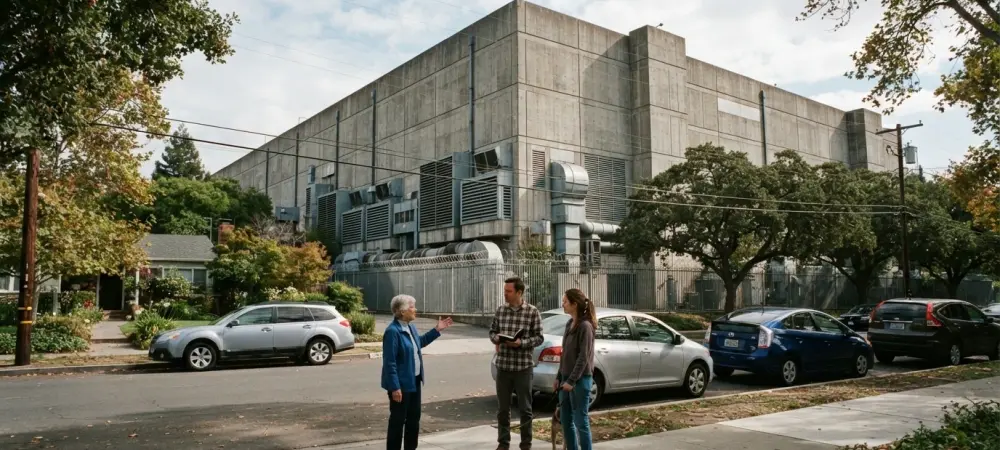
Community activists in Hazelmere and Lane Cove have successfully forced global technology firms to withdraw hyperscale data center proposals by challenging state-significant infrastructure designations. This surge of resistance marks a turning point in Australia’s digital expansion, where the unchecked “data center mania” is meeting significant social pushback. As the digital economy accelerates, these massive, windowless structures are appearing with increasing frequency across urban and regional landscapes, fueled by an estimated $150 billion in investment projected by 2030. What was once seen as an invisible backbone for the internet has become a source of conflict, pitting multinational corporations against the lived reality of residents. The rapid deployment of these facilities has outpaced regulatory frameworks, leaving communities as the primary defenders of their neighborhoods. This “David versus Goliath” struggle highlights the friction between technological progress and the rights of citizens to maintain their quality of life.
The Rising Tide of Community Resistance
Analyzing Success: Local Case Studies
Community activism has proven to be a formidable barrier to unchecked industrial expansion, with several high-profile cases demonstrating the power of local voices. In Hazelmere and Lane Cove, strategic campaigns forced developers to scrap their proposals entirely after failing to secure a social license. These victories suggest that when residents organize effectively, they can challenge the narrative that such projects are universally beneficial. The success of these groups was largely attributed to their ability to dissect complex planning applications and highlight the discrepancies between corporate promises and local impacts.
By engaging with legal experts and environmental scientists, these groups presented a coherent alternative to the “state-significant” designation that had previously allowed firms to bypass municipal oversight. This organized opposition effectively demonstrated that the presence of multi-billion-dollar investments does not automatically equate to public acceptance or local benefit. Furthermore, these case studies have empowered other communities to scrutinize similar proposals, creating a network of shared tactics. This movement signaled to the government that the public demands a more inclusive decision-making process.
The High Cost: Corporate Friction
The conflict in West Footscray serves as a reminder of the financial and reputational risks facing tech firms today. Opposition to a facility extension moved beyond legal challenges to physical blockades against the installation of 22-meter power poles, which residents argued would permanently scar their environment. This direct action had immediate consequences, contributing to a 40% drop in the developer’s share value and the eventual resignation of senior executives. The incident highlighted how physical resistance can translate into economic volatility, alerting investors to the risks of ignoring local opposition.
Meanwhile, in the Southern Highlands, the fight against a massive data center complex has escalated to a Federal Senate Inquiry. The proposed site in Moss Vale, which would be powered by a large reciprocating gas power plant, drew fire for its potential to alter the rural character of the region. By elevating the issue to a national level, residents shifted the conversation from local zoning disputes to a broader debate on ethics and the future of the energy grid. This inquiry provided a platform to discuss whether the regulatory system is equipped to handle the demands of hyperscale infrastructure.
Evaluating Infrastructure and Health Concerns
Safety First: Health and Acoustic Disturbance
The opposition to data centers is rooted in practical concerns regarding public health and safety. Residents fear the cumulative impact of diesel emissions from the massive backup generators required for redundancy. These systems are essential for maintaining uptime during power outages, but their proximity to residential zones introduces pollutants that are often overlooked in initial planning phases. There are also significant anxieties regarding fire risks associated with storing millions of liters of diesel fuel alongside large-scale lithium-ion battery banks, which are known for their difficult-to-extinguish thermal runaways.
Beyond chemical and fire hazards, the constant “interminable humming” of cooling systems creates a permanent auditory disturbance. For those living in proximity to these sites, this noise represents a significant decline in the quality of life, often leading to sleep deprivation and increased stress levels. Unlike traditional industrial noise that may cease at night, data center cooling is a 24/7 requirement to protect sensitive servers from overheating. These acoustic impacts have become a central pillar of community resistance, as residents fight to preserve the tranquility of their homes and the value of their properties.
Environmental Degradation: Land Use and Ecology
The physical presence of data centers poses risks to local ecosystems through the “heat island” effect and potential chemical runoff into waterways. These massive concrete structures absorb and radiate heat, which can negatively impact local flora and fauna. There is also the threat of chemical pollution, including PFAS, entering local drainage systems from fire suppression or cooling equipment. Communities are increasingly worried that the rapid pace of construction is occurring without sufficient environmental safeguards to protect fragile local watersheds and the biodiversity that relies on them. There is also a growing critique regarding the displacement of socially beneficial land use. These facilities occupy vast tracts of land that could otherwise be used for housing during a severe national shortage. Because data centers provide very few long-term jobs once construction is finished, many argue they offer little ongoing economic value to the communities they displace. This creates a scenario where valuable urban land is locked away in windowless vaults that contribute nothing to the local social fabric or the housing market, further alienating the residents who live in their shadows.
Resource Management and Policy Deficits
Resource Allocation: The Question of Utility
A critical gap exists in the public discourse regarding how finite resources like land, water, and energy are allocated. The rush to build infrastructure for generative AI often occurs without a rigorous assessment of whether the digital output justifies the massive consumption required. Stakeholders are beginning to call for “responsible demand management,” questioning which AI workloads are truly essential. There is a need to evaluate if the energy used to power a 24/7 redundant server is more important than the energy needed to power local homes or support essential public services during a peak demand event.
This transition toward accountability involves asking whether simpler, low-impact digital tools might suffice for many tasks currently being offloaded to energy-intensive hyperscale centers. If the public and government do not interrogate which digital tasks should be prioritized, the nation risks depleting its resources for marginal technological gains. This debate is not an outright rejection of technology but a call for a more sophisticated understanding of the opportunity costs involved. Every megawatt consumed by a data center is a megawatt that must be generated and managed by a grid already under pressure.
Grid Pressure: The Climate Contradiction
The data center boom presents a profound paradox for national climate goals, as electricity demand by 2030 could rival that of an entire nation like Japan. This surge in demand threatens to extend the life of aging coal and gas plants, directly contradicting the targets of the Paris Agreement. While some argue that data centers can fund renewable projects, the sheer scale of their energy needs often outpaces new green capacity. This can lead to a net increase in carbon emissions as the grid relies on fossil fuels to provide the consistent, baseload power that data centers require to maintain their uptime.
Furthermore, the pressure on the grid can lead to higher electricity prices for residential consumers and increased instability during extreme weather events. The demand for 24/7 reliability creates a unique challenge for a grid transitioning to variable renewable energy sources. Unless the expansion of data centers is strictly coupled with the development of new, dedicated storage and generation, the industry risks undermining the very transition it claims to support. This misalignment highlights the need for a national strategy that integrates digital infrastructure planning with energy security and decarbonization.
Accountability: Transparency and Siting Rules
Current governance structures are struggling to keep pace with the technological shift, leading to a systemic lack of corporate transparency regarding the material impacts of “Big Tech.” Without strict siting regulations and full disclosure on water and energy usage, there is a high risk of creating “sacrifice zones” in vulnerable communities. These areas, often lacking the political capital to resist, may become the default locations for industrial developments that more affluent neighborhoods have successfully rejected. This deepening social inequality is a direct consequence of a planning system that lacks national oversight.
To prevent this, the burden of proof must shift from volunteer community groups to the corporations themselves. Regulations should require full transparency regarding what happens behind the walls of these facilities, including reporting on water consumption, energy sources, and the nature of the workloads being processed. If the industry is to coexist with civil society, it must operate within a framework that prioritizes the public interest over rapid industrial expansion. Only through transparency and rigorous resource management can the digital era avoid becoming a period of ecological and social sacrifice.
Charting A Sustainable Path Forward
The Australian data center sector reached a critical juncture where the previous model of rapid, unregulated growth no longer remained viable without a clear social license. Policymakers discovered that simply labeling projects as state-significant did not mitigate the genuine fears of local populations or the ecological realities of resource depletion. To move forward, stakeholders implemented a more transparent framework that required developers to justify the societal utility of specific AI workloads before breaking ground. This transition shifted the burden of proof from volunteer groups to the corporations, ensuring that environmental and social impacts were disclosed upfront. Legislators also prioritized strict zoning laws that protected residential areas while incentivizing the reuse of existing industrial sites. By integrating these developments with national climate targets, the industry began to align its energy consumption with the reality of a finite grid. This evolved approach proved that technological progress only thrived when it respected the rights and well-being of the citizens it was meant to serve. Future projects now undergo rigorous scrutiny to ensure they do not divert essential resources away from housing and health, setting a global standard for responsible digital infrastructure management in a resource-constrained world.