

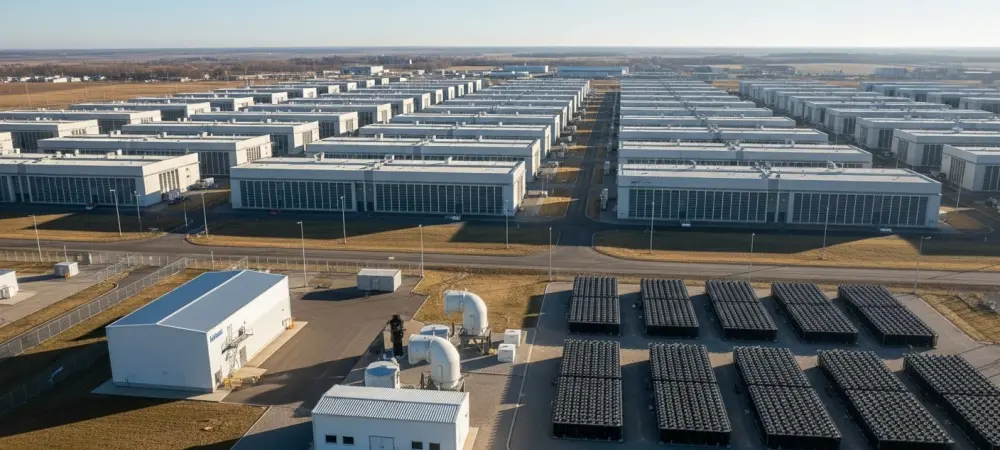
The rapid acceleration of generative modeling and complex neural networks has created a seismic shift in global energy requirements that traditional utility networks were never designed to accommodate. This transformation has sparked an intense rivalry between the reliable but rigid centralized grid and the agile, modern decentralized power landscape. As the International Energy Agency (IEA) monitors these developments, the industry faces a crossroads where the choice of power foundation determines the very survival of massive computing facilities.
Evolution of the Global Power Infrastructure for Data Centers
Historically, the data center sector relied almost exclusively on the centralized utility grid, a model that prioritized stability through shared resources. However, as Artificial Intelligence (AI) transitioned from a niche technology to a ubiquitous industrial force, this reliance became a liability. The sheer scale of AI processing requires a continuous, high-density energy flow that aging transmission lines in many developed nations struggle to provide without risking local infrastructure failure.
Regional dynamics illustrate this shift clearly, with the American market serving as a bellwether for global trends. In states like California and Oregon, the saturation of the grid has slowed development, prompting a migration toward the power-rich landscape of Texas. Similarly, the European market has begun to mirror these structural changes, typically following the North American lead by three to five years as they grapple with their own aging utility foundations and the urgent need for independent energy sovereignty.
Key Performance Indicators: Centralized Utility vs. Onsite Solutions
Scalability and Energy Consumption Projections
When examining how these models handle growth, the centralized grid often falls short due to bureaucratic and physical constraints. Following a significant 17% increase in sector electricity consumption, the IEA suggests that specialized AI facilities could triple their power requirements by 2030. While traditional utilities must balance this demand against the needs of electric vehicles and residential renewable transitions, decentralized systems focus solely on the specific load of the facility they serve. The scalability of onsite solutions allows for modular growth that tracks directly with compute capacity. Instead of waiting for a utility to upgrade a regional substation, operators can install additional power modules as they scale their server racks. This creates a tight coupling between energy supply and demand, ensuring that the facility never outpaces its own foundation while avoiding the inefficiencies of over-provisioning that often plague large-scale utility contracts.
Deployment Timelines and Connection Efficiency
Deployment speed has become a primary differentiator in the race for AI dominance. Centralized grids are currently hampered by massive connection queues, with some projects facing multi-year waits for a hookup. In contrast, decentralized sites can become operational in a fraction of the time. For instance, a major project in Dublin successfully bypassed a two-year grid delay by implementing next-generation gas generators and Battery Energy Storage Systems (BESS), showcasing how onsite power can act as a bridge to immediate revenue generation.
This efficiency is driving a geographic realignment of the industry. Developers are increasingly abandoning grid-constrained hubs in favor of locations where they can build their own microgrids. This strategic shift ensures that project start dates are dictated by construction schedules rather than utility company backlogs, providing a significant competitive advantage to firms that can stand up capacity in months rather than years.
Load Stability and Technological Integration
Technical performance varies significantly between the two models, particularly regarding the volatile power swings of AI training workloads. Standard utility delivery provides a steady baseline but lacks the responsiveness required for the rapid energy surges inherent in deep learning. Decentralized configurations, however, utilize BESS to act as a high-speed buffer. These systems smooth out fluctuations, protecting sensitive hardware and maintaining high power quality that centralized grids cannot always guarantee.
Furthermore, the integration of BESS with modern gas turbines offers a superior emission profile compared to many coal-heavy centralized grids. By managing the load locally, these independent setups achieve a level of resilience that is immune to external grid failures. This dual-layered approach not only provides the necessary wattage but also ensures that the power is clean and consistent, which is a prerequisite for the next generation of high-performance computing clusters.
Practical Obstacles and Technical Considerations in Power Transition
Transitioning away from the grid is not without its hurdles, as the physical limitations of utility infrastructure are difficult to overcome. Massive delays in substation upgrades and the scarcity of high-voltage components have made the centralized model increasingly untenable for rapid expansion. Additionally, the technological lag in European markets means that many operators there are still struggling with legacy systems while their American counterparts have already pivoted toward onsite independence.
Technically, relying on gas turbines alone often proved insufficient for the extreme variability of AI workloads. Engineers discovered that without the stabilizing influence of a BESS, the rapid energy swings could lead to mechanical wear or system instability. Therefore, the successful decentralized model required a sophisticated orchestration of multiple technologies working in harmony, a complexity that demands specialized expertise and significant upfront planning to execute correctly.
Strategic Recommendations for Future-Proofing Energy Needs
The shift from centralized reliance toward decentralized independence established a new benchmark for operational success in the digital age. It was determined that moving toward an off-grid model—expected to encompass one-third of all US data centers by 2030—was the most effective way to circumvent persistent utility bottlenecks. This move prioritized long-term autonomy over the convenience of traditional connections, allowing facilities to maintain peak performance regardless of the surrounding grid’s health.
Strategic success ultimately depended on early planning and the integration of tailored energy foundations like BESS and onsite generation. Developers who adopted these localized solutions ensured they remained competitive in an AI-driven market where power was no longer a utility but a strategic asset. By securing their own energy future, these organizations managed to insulate themselves from the volatility of global energy markets and the structural weaknesses of public infrastructure, setting a new standard for industrial resilience.