

Setting the Stage for Transformation
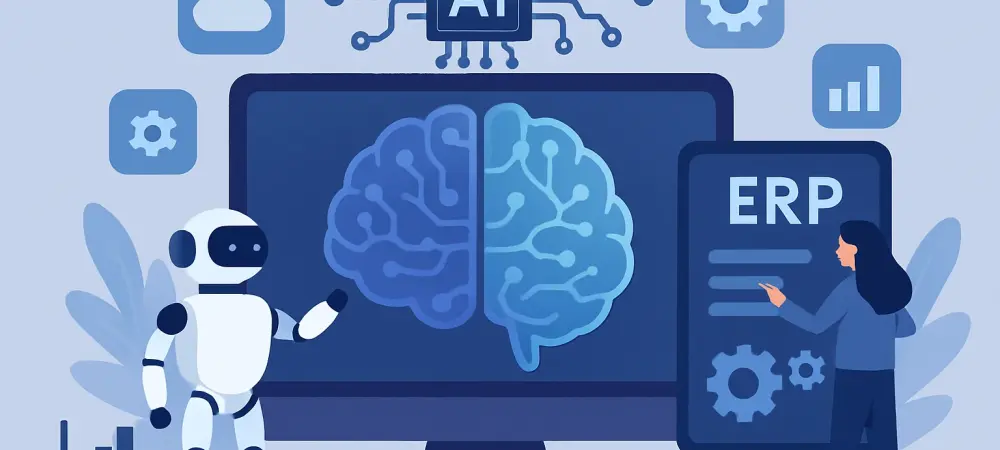
In 2025, US enterprises are grappling with unprecedented operational demands as global supply chains falter and cost pressures mount, creating a challenging environment for businesses. Imagine a manufacturing giant unable to predict inventory shortages or a retailer struggling with delayed financial reconciliations—issues that erode competitive edges overnight. This is where AI agents integrated into Enterprise Resource Planning (ERP) systems emerge as a lifeline, promising not just automation but intelligent, adaptive solutions. These autonomous software entities are redefining how businesses manage workflows, analyze data, and make decisions, positioning themselves as indispensable tools for technology leaders navigating today’s volatile market.
The relevance of AI agents in ERP cannot be overstated. With research indicating that 72% of US companies prioritize AI integration for cost reduction and operational agility, the technology is no longer a luxury but a strategic necessity. This review delves into the core functionalities, real-world impacts, and challenges of AI agents within ERP platforms, offering a comprehensive look at their transformative potential for CTOs and IT leaders.
Diving into Features and Performance
Understanding the Core Mechanics
AI agents stand apart from traditional ERP automation by their ability to learn from data patterns and adapt to changing conditions. Unlike static scripts that require human intervention for updates, these intelligent entities perform contextual decision-making, enabling real-time responses to complex business scenarios. For instance, in financial modules, they can detect anomalies in transactions and suggest corrective actions without manual oversight, a leap forward in operational autonomy.
Their functionality extends to proactive problem-solving, where AI agents analyze vast datasets to predict risks before they escalate. This capability is particularly evident in supply chain management, where they forecast demand fluctuations and optimize inventory levels. Such features reduce downtime and ensure that ERP systems evolve from mere record-keeping tools to dynamic decision hubs, aligning closely with the fast-paced needs of modern enterprises.
Seamless Integration with ERP Modules
A critical strength of AI agents lies in their compatibility with core ERP components like finance, human resources, and logistics. They streamline workflows by processing data across these modules, ensuring consistency and reducing silos. For example, in HR, AI agents automate candidate screening and onboarding, while in finance, they handle accounts payable with precision, cutting down processing times significantly.
Technical integration, however, demands robust data architectures to avoid bottlenecks. Compatibility with existing ERP frameworks is essential, as mismatches can disrupt operations. Leading vendors have prioritized cloud-native designs to facilitate smoother incorporation of AI agents, ensuring that businesses can leverage these tools without overhauling entire systems, a factor that boosts their appeal among IT decision-makers.
Driving Trends and Adoption Metrics
The adoption of AI agents in ERP is accelerating, fueled by trends like agentic AI, which focuses on fully autonomous workflows, and composable ERP architectures that allow modular AI integration. Cloud-native systems are also gaining traction, offering scalability that aligns with the growth ambitions of US firms. Statistics reveal a strong push among enterprises, with many citing operational efficiency as the primary driver for investment in these technologies. Analyst predictions underscore the momentum, estimating that by 2028, 15% of daily business decisions will be made autonomously by AI agents. This shift signals a profound change for IT leaders, who must now prepare for environments where human oversight diminishes in routine tasks. The trend toward sector-specific AI solutions—tailored for industries like healthcare and retail—further amplifies the technology’s relevance across diverse markets.
Real-World Impact and Applications
Industry-Specific Success Stories
Across the US, AI agents are delivering measurable results in various sectors. In manufacturing, companies utilize these tools to schedule logistics autonomously, slashing delays by optimizing routes in real time. Retailers, on the other hand, employ AI-driven order management to enhance customer experiences, ensuring timely deliveries and personalized recommendations that boost loyalty.
Healthcare organizations benefit from AI agents in ERP by streamlining administrative tasks such as billing and compliance tracking, allowing staff to focus on patient care. These applications highlight a common theme: operational efficiency gains that translate into competitive advantages. Mid-to-large enterprises adopting these solutions report significant improvements in workflow speed and error reduction, cementing the technology’s practical value.
Quantifiable Outcomes for Enterprises
The impact of AI agents extends beyond anecdotal success, with data showing cost reductions of 20-40% in operational areas like invoice processing and inventory management. Such savings are critical for businesses under financial strain, offering a direct boost to profitability. Additionally, scalability emerges as a key benefit, as AI-enabled ERP systems handle increased workloads without proportional staff increases.
Customer-facing outcomes are equally compelling, with AI agents enhancing service delivery through real-time insights. For instance, in distribution, predictive analytics prevent stockouts during peak seasons, maintaining client satisfaction. These tangible results underscore why technology leaders view AI agents as strategic investments rather than experimental add-ons, driving broader adoption across industries.
Challenges Hindering Broader Implementation
Regulatory and Privacy Concerns
Despite their promise, AI agents face significant hurdles in the realm of data privacy and compliance. US regulations such as SOX, HIPAA, and CCPA impose strict guidelines on data handling, requiring ERP systems to embed robust security measures. Failure to comply can result in hefty penalties, making it imperative for organizations to select vendors with proven adherence to legal standards.
The complexity of safeguarding sensitive information while leveraging AI for decision-making adds another layer of difficulty. Enterprises must balance innovation with accountability, ensuring that autonomous processes do not compromise data integrity. This challenge often slows deployment timelines, as thorough vetting of systems becomes a prerequisite for implementation.
Technical and Organizational Barriers
Integration with legacy ERP platforms poses a persistent obstacle, as outdated infrastructures may lack the flexibility to support AI agents effectively. Modernization or upgrades are frequently necessary, entailing additional costs and downtime that can deter smaller firms. IT leaders must weigh these investments against long-term benefits, a decision that requires careful planning.
Beyond technical issues, cultural resistance within organizations can impede progress. Employees accustomed to manual processes may distrust AI-driven workflows, necessitating comprehensive change management and training programs. Addressing these human factors is as critical as resolving system incompatibilities, highlighting the multifaceted nature of adoption challenges.
Reflecting on the Journey and Looking Ahead
The exploration of AI agents in ERP systems reveals a technology that has already reshaped operational landscapes by 2025, delivering efficiency, scalability, and cost savings to US enterprises. Their ability to adapt, predict, and integrate has proven transformative across industries, from manufacturing to healthcare, while also exposing hurdles in compliance and legacy system integration that demand attention. Looking forward, technology leaders should prioritize strategic roadmaps that start with pilot projects in high-impact areas like finance or supply chain, measuring outcomes before scaling. Partnering with ERP vendors offering robust AI capabilities and compliance frameworks will be crucial to navigate regulatory landscapes. As the trajectory of autonomous workflows continues to ascend, investing in employee upskilling and system modernization will ensure that businesses not only keep pace but also set benchmarks in innovation and resilience.