

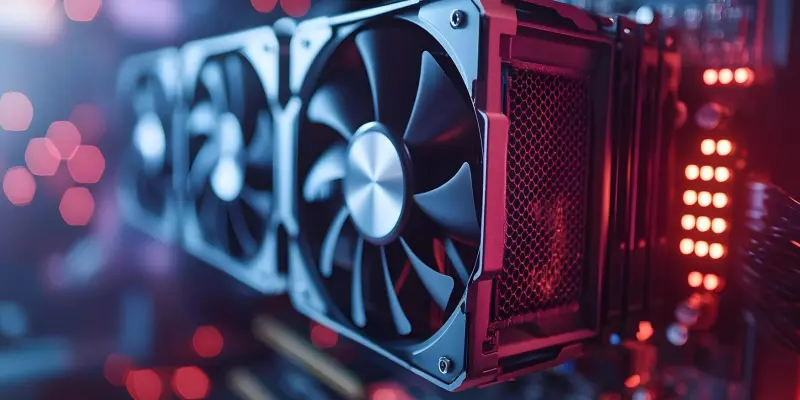
In a significant development at Computex, Acer has introduced the AMD Radeon RX 9060 XT GPU, marking a new era in graphics processing. Set within Acer’s renowned Nitro series, the RX 9060 XT is designed to provide an effective challenge to NVIDIA’s offerings, particularly appealing to users seeking robust performance at a competitive price. This graphics card is constructed around the technologically advanced NAVI 44 die, a part of AMD’s strategic efforts to outmaneuver NVIDIA’s RTX 5060 Ti. Featuring a dual-fan cooling system encompassed by a sleek grey shroud, the GPU ensures efficient cooling even during intense usage. The anticipated thermal design power of 200W might be an appealing factor for users seeking efficiency without compromising on power. Connectivity options are diverse, with two DisplayPort interfaces and one HDMI outlet, highlighting AMD’s commitment to adaptability and user convenience. With these attributes, the RX 9060 XT is poised to make a compelling case in the competitive GPU market.
Advanced Capabilities and Configuration
The AMD Radeon RX 9060 XT stands out with its sizeable processing capabilities, offering 2048 Stream Processors. This capacity is further enhanced by its memory configurations, available in both 8 GB and 16 GB versions. Currently, AMD is primarily focusing on the 16 GB variant, potentially to capitalize on the increasing demand for higher memory capacities driven by the limitations seen in NVIDIA’s 8 GB RTX models. It is noteworthy that this strategic emphasis on enhanced VRAM is evident in the consumer market’s anticipation for models that can more effectively handle demanding applications and gaming experiences. In alignment with AMD’s strategy to attract a broader user base, the RX 9060 XT not only promises performance but also aims to provide users with a cost-effective option. This is crucial considering AMD’s objective to outpace NVIDIA by addressing consumer demand with a powerful product that remains within reach of mainstream consumers who require high-performance graphics solutions.
Market Position and Pricing Strategy
The pricing strategy of the AMD Radeon RX 9060 XT plays a crucial role in capturing the interest of potential buyers. Targeting a consumer-friendly approach, AMD plans to set the price around $400 for the 16 GB model and between $300-$350 for the 8 GB version, aiming to stand out in a competitive market. This tactic casts a challenge to NVIDIA’s comparable offerings, especially since AMD is appealing to users frustrated by limited VRAM capacities in other models. Market insights indicate that the 16 GB variant may gain more traction, naturally aligning with the growing trend among consumers who increasingly seek models that support demanding graphical workloads. By delivering a product with impressive features at a competitive price, AMD positions itself strongly against rivals, addressing user expectations effectively. Acer’s launch of the RX 9060 XT could potentially influence consumer preferences, particularly among tech enthusiasts and the gaming community, reshaping perceptions in favor of AMD’s offerings.