

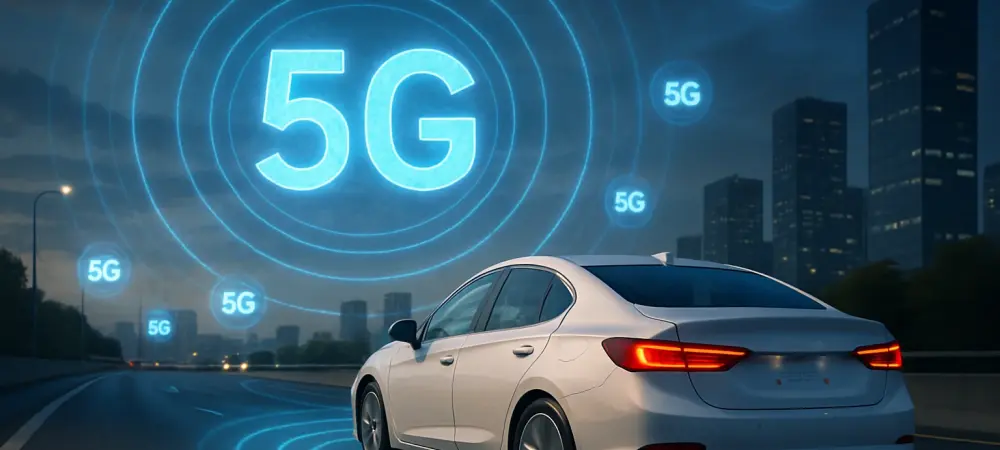
Unveiling the Connectivity Powerhouse
The automotive industry is undergoing a seismic shift, propelled by 5G technology, which is redefining how vehicles interact with their environment and each other. Consider this striking statistic: the 5G automotive market, already valued at billions, is projected to grow at a compound annual rate of 19% from 2025 to 2032, driven by demand for smarter, safer, and more connected transportation solutions. This market analysis delves into the profound impact of 5G on automotive operations, examining current trends, data-driven insights, and future projections. It aims to provide a comprehensive understanding of how this technology is reshaping vehicle connectivity, autonomous systems, and manufacturing processes, while identifying strategic opportunities for stakeholders in a rapidly evolving landscape.
Dissecting Market Dynamics and Key Trends
Explosive Growth in Connectivity Solutions
The integration of 5G into the automotive sector is fueling robust market expansion, as vehicles transform into data-centric platforms requiring high-speed, low-latency networks. Market research indicates that the sector’s valuation is climbing steadily, driven by innovations in vehicle-to-everything (V2X) communication, which enables real-time interaction between vehicles, infrastructure, and pedestrians. This connectivity is critical for enhancing road safety and traffic efficiency, with urban areas seeing early adoption due to denser network coverage. However, disparities in infrastructure deployment mean rural regions lag behind, posing a challenge to uniform market growth.
Another pivotal trend is the rising consumer expectation for seamless in-vehicle experiences, such as real-time navigation and advanced infotainment systems. Automotive manufacturers are partnering with telecom providers to embed 5G capabilities into new models, creating a competitive edge in a crowded market. This synergy not only boosts sales potential but also accelerates the rollout of smart transportation ecosystems, though it hinges on overcoming barriers like high implementation costs and inconsistent global standards.
Autonomous Driving as a Market Catalyst
Autonomous driving technology stands as a cornerstone of 5G’s market influence, with self-driving vehicles relying on near-instantaneous data transfer for navigation and decision-making. The ultra-low latency of 5G—often below one millisecond—enables split-second responses to dynamic road conditions, a feat unattainable with previous network generations. Pilot programs by leading companies demonstrate tangible progress, with test zones in major cities showcasing improved obstacle detection and path optimization, driving investor confidence in this segment.
Despite the promise, market penetration remains constrained by cybersecurity risks and the need for extensive cloud computing support, as vehicles often offload complex calculations to remote servers. Edge computing, paired with 5G, emerges as a potential solution, balancing onboard and external processing to enhance scalability. As regulatory frameworks evolve to mandate safety standards for autonomous systems, the market is poised for a surge, provided these technological and policy challenges are addressed.
Smart Manufacturing Redefining Production Metrics
Beyond consumer-facing applications, 5G is carving a niche in automotive manufacturing, where private networks power smart factories with real-time analytics and AI-driven automation. Digital twins—virtual models of physical systems—allow manufacturers to simulate production processes and predict equipment failures, slashing downtime and costs. Countries with advanced industrial bases, such as Germany and China, lead in adoption, leveraging robust infrastructure to gain a competitive advantage in production efficiency.
However, the high capital investment required for 5G-enabled factory upgrades creates a market divide, with smaller players struggling to keep pace. Additionally, the technology’s full potential is unlocked only when paired with complementary tools like IoT sensors, underscoring the need for integrated solutions. As more manufacturers recognize 5G as a driver of operational agility, market forecasts predict a steady uptick in adoption, reshaping supply chains and quality control benchmarks across the industry.
Forecasting the Future: Projections and Emerging Opportunities
Looking ahead, the 5G automotive market is set to witness transformative shifts, with projections pointing to widespread urban deployment within the next five years. Innovations like platooning—where commercial trucks travel in synchronized formations to reduce fuel consumption—are expected to gain traction, supported by 5G’s high data throughput. Fleet management systems will also evolve, leveraging centralized tracking for logistics optimization, which could redefine cost structures for transportation companies.
Regulatory mandates, particularly in regions like the European Union, are likely to accelerate 5G integration by enforcing connected vehicle standards, creating a ripple effect across global markets. Economic factors, such as carrier investments in network expansion, will play a crucial role in determining accessibility, especially in underserved areas. Emerging applications, yet to be fully conceptualized, may further expand the market scope, as 5G’s capabilities unlock new possibilities in vehicle functionality and user engagement.
The interplay of 5G with adjacent technologies, including AI and cloud computing, is anticipated to amplify market growth, fostering holistic solutions for transportation challenges. While discussions of next-generation networks loom on the horizon, the current focus remains on maximizing 5G’s potential, with industry stakeholders prioritizing infrastructure buildout and application refinement. This strategic emphasis suggests a market trajectory of sustained expansion, contingent on collaborative efforts to bridge coverage gaps and standardize protocols.
Reflecting on Insights and Strategic Pathways
This analysis of 5G’s role in the automotive industry uncovers a market brimming with potential, marked by rapid growth in connectivity, autonomous driving, and smart manufacturing. The data paints a picture of a sector on the cusp of transformation, with significant strides made in urban connectivity and production efficiency, though tempered by regional disparities and technological hurdles. Key implications emerge, highlighting the need for targeted investments to close infrastructure gaps and bolster cybersecurity in connected systems.
Moving forward, stakeholders are encouraged to pursue strategic partnerships with telecom providers to ensure robust network access, while advocating for policies that incentivize 5G rollout in less-served regions. Manufacturers and fleet operators can gain an edge by adopting predictive maintenance and real-time tracking tools, optimizing operational costs. As the market evolves, a focus on integrating complementary technologies proves essential to unlocking 5G’s full value, setting the stage for a connected, efficient automotive future.