

The modern professional landscape is currently saturated with a dizzying array of wellness programs that often leave employees feeling more exhausted than rejuvenated by the sheer volume of choices. Many organizations have traditionally operated under the assumption that more is better, offering everything from mindfulness apps and yoga sessions to complex nutritional workshops and competitive step challenges. However, the sheer density of these offerings frequently leads to decision fatigue, where individuals are so overwhelmed by conflicting health advice that they eventually choose to engage with nothing at all. Instead of providing a sanctuary from stress, a cluttered wellness calendar can become another source of pressure for a workforce already struggling to balance professional deadlines with personal responsibilities. Effective support requires a strategic shift away from quantity toward a curated, high-quality approach that emphasizes clarity over complexity. By stripping away the noise and focusing on a few essential pillars of health, leadership can foster a culture where wellbeing is an integrated part of the workday rather than an additional chore on an overflowing to-do list.
This saturation of information is particularly evident in the realm of nutrition and physical activity, where conflicting trends create significant confusion. One day, employees are told to focus on high-protein diets, while the next, they are encouraged to explore plant-based fasting or specific supplement regimens that may have little scientific backing for the average person. This constant flux of “expert” advice makes it difficult for a busy manager or a frontline worker to discern what actually contributes to their long-term vitality. When health initiatives are too broad, they lose their impact because they do not address the foundational habits that drive the most significant results. The most successful organizations in 2026 are those that recognize the value of simplification. They understand that a single, clear message delivered consistently is far more powerful than a rotating door of wellness trends. By reducing the cognitive load associated with health decisions, employers can empower their teams to make sustainable changes that actually stick, leading to better focus, improved mood, and higher levels of engagement across the board.
1. Streamline the Core Advice: Focusing on High-Impact Habits
Rather than inundating the workforce with a multitude of conflicting viewpoints from various health influencers, organizations should prioritize selecting one trusted expert for each primary health topic. This approach eliminates the “noise” that often accompanies wellness programming and provides a single, authoritative voice that employees can rely on for accurate information. When a company partners with a dedicated professional who understands the specific stressors of their industry, the advice becomes far more relevant and actionable. Instead of discussing niche supplements or extreme dietary restrictions, these experts should focus exclusively on the “big rocks”—the foundational habits that move the needle most significantly for the majority of people. These include fundamental concepts such as increasing daily fiber intake, optimizing protein consumption, and ensuring consistent hydration. By narrowing the focus to these high-impact areas, the advice remains accessible to everyone, regardless of their current fitness level or personal background, fostering a more inclusive environment.
Clarity serves as the primary antidote to the paralysis that often follows information overload in the corporate setting. When employees are given a simple, evidence-based roadmap, the barrier to entry for healthy behavior is significantly lowered. For instance, a clear directive on how to structure a balanced lunch to avoid the mid-afternoon energy crash is infinitely more useful than a deep dive into the biochemistry of intermittent fasting. This streamlined communication style ensures that every member of the team, from senior leadership to entry-level associates, understands exactly which actions will yield the best return on their time and effort. By removing the guesswork, the organization demonstrates that it respects the limited time and mental energy of its staff. Furthermore, focusing on universal health truths rather than fleeting trends helps to build long-term trust between the employer and the workforce. This strategy moves the conversation away from “what is the latest fad” toward “how can we consistently support the biological needs of our people” for sustained professional performance.
2. Prioritize Consistency Over One-Time Events: Moving Toward Habit Shifts
The traditional model of the one-off wellness workshop is rapidly becoming obsolete because it fails to address the complexities of long-term behavior change. While an engaging seminar might provide a temporary boost in motivation, the effects often vanish as soon as employees return to their desks and are greeted by a pile of urgent emails. Real health transformations occur through the power of repetition and the gradual reinforcement of simple messages over an extended period. Instead of hosting isolated events, forward-thinking companies are now integrating health education into the regular cadence of their operations. This might involve short, consistent “micro-learnings” delivered through internal communication channels or brief check-ins during team meetings. By keeping the core health messages top of mind without requiring a significant time commitment, the organization helps to normalize healthy behaviors. This shift from “event-based” wellness to “culture-integrated” wellness ensures that health is seen as a continuous journey rather than a box to be checked once a quarter.
To truly bridge the gap between knowing what to do and actually doing it, follow-up strategies such as group coaching or individual check-ins are essential components of a modern strategy. These interactions allow employees to navigate the inevitable obstacles that arise when trying to implement new habits in a fast-paced environment. Whether it is a parent trying to find time for a morning walk or a frequent traveler struggling to maintain a decent diet on the road, personalized support provides the troubleshooting necessary for success. Group sessions also foster a sense of community and shared accountability, making the process of habit formation less isolating and more enjoyable. When health goals are kept at the front of the mind through these supportive structures, the likelihood of long-term success increases dramatically. This approach acknowledges that behavior change is a non-linear process that requires ongoing encouragement and adjustment. By investing in these continuous touchpoints, employers demonstrate a genuine commitment to the long-term prosperity of their people, which pays dividends in retention.
3. Modify the Workplace Surroundings: Making the Healthy Choice the Easy Choice
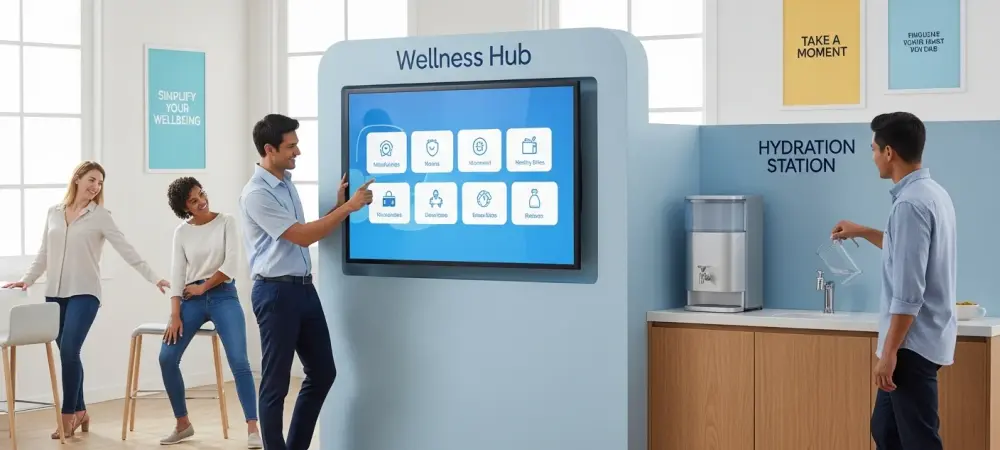
The physical environment of an office and the surrounding company culture play a disproportionate role in determining the daily choices an employee makes. If the only available snacks in the breakroom are processed sugary treats, even the most disciplined individual will eventually succumb to temptation during a stressful afternoon. Consequently, evaluating and modifying the workplace surroundings is a critical step in simplifying wellness. This involves auditing the kitchen and vending machines to ensure that nutritious options, such as fresh fruit, nuts, and high-quality protein snacks, are the most visible and accessible choices. When the healthy option is the path of least resistance, employees are naturally guided toward better habits without having to exert significant willpower. This environmental design extends to hydration as well, with the placement of high-quality water filtration systems in high-traffic areas. By making wellness a “passive” part of the office layout, the organization removes the friction that often prevents people from taking care of themselves during the day.
Cultural norms regarding time and social gatherings must also be adjusted to align with a simplified wellbeing strategy. One of the most effective changes an organization can implement is the protection of lunch hours from scheduled meetings, ensuring that staff have the opportunity to refuel and disconnect. Moreover, leadership should reconsider the tradition of centering every celebration or team-building event around alcohol or unhealthy catering. Transitioning to events that offer diverse food options or focus on non-sedentary activities can significantly shift the internal perception of what it means to be a “well” company. When management leads by example—taking their own breaks and prioritizing nutritious meals—it gives the rest of the team permission to do the same. This alignment between corporate values and physical environment creates a cohesive experience where the office supports, rather than hinders, personal health goals. Ultimately, the goal is to create a setting where wellbeing is the default state, allowing employees to focus their energy on their work while their environment takes care of their basic biological needs.
Establishing a sustainable culture of wellbeing required a fundamental shift in how leadership perceived the relationship between productivity and health. In the recent past, the most successful organizations moved away from complex, fragmented wellness programs and instead embraced a philosophy of radical simplicity. They recognized that providing a clear, authoritative voice on health matters helped to eliminate the confusion that often plagued the modern workforce. By prioritizing consistent, small-scale reinforcements over large, one-time workshops, these companies ensured that healthy habits became deeply ingrained in the daily lives of their staff. Furthermore, by intentionally designing the physical and cultural environment to support nutritious choices and mental breaks, they made wellness an effortless part of the professional experience. These actions collectively demonstrated that the most effective way to support a team was not to add more to their plates, but to simplify the paths toward better health. Moving forward, the focus remained on refining these core strategies and ensuring that wellness initiatives evolved alongside the changing needs of the workforce for long-term organizational resilience.