

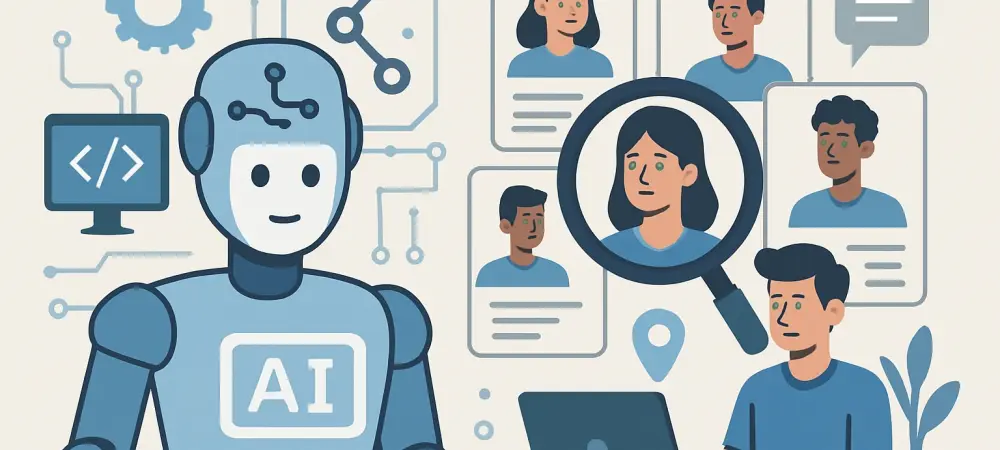
In an era where the competition for top talent has never been fiercer, artificial intelligence is emerging as a game-changer in the recruitment landscape, promising to transform how companies identify and hire candidates with unprecedented efficiency. The integration of AI into hiring processes is no longer a distant vision but a tangible reality, with industry giants stepping up to redefine precision in talent acquisition. Two major players, LinkedIn and OpenAI, have recently unveiled innovative tools that aim to streamline everything from candidate sourcing to screening, setting a new standard for the industry. Their advancements signal a broader shift toward automation, where repetitive tasks are handled by intelligent systems, freeing recruiters to focus on strategic decision-making. Yet, as these technologies gain traction, they also spark debates about trust, bias, and the human element in hiring. This evolving dynamic offers a glimpse into a future where AI could reshape the very nature of work connections, balancing unprecedented opportunities with notable challenges.
Pioneering Tools for Modern Hiring
The latest stride in AI-driven recruitment comes from LinkedIn, which has expanded its Hiring Assistant tool to a global audience, making it accessible in English by the end of this month. This AI agent represents a significant leap forward, designed to interact conversationally with recruiters by asking clarifying questions, providing tailored recommendations, and adapting to specific contexts. By analyzing LinkedIn profiles, resumes, and responses to screening queries, the tool evaluates candidates with remarkable depth. It also integrates seamlessly with external applicant tracking systems, ensuring a smooth workflow. Built on user feedback, the Hiring Assistant has evolved into a highly responsive solution, embodying an “agentic” approach that empowers recruiters with actionable insights. This development underscores a growing reliance on AI to handle intricate recruitment tasks, potentially reducing time-to-hire and improving match quality between candidates and roles, while setting a benchmark for personalized support in the hiring process.
Meanwhile, OpenAI has entered the fray with its recently announced Jobs Platform, a strategic move to address the surging demand for AI talent across industries. Although specifics remain limited, early indications suggest that this platform leverages advanced algorithms to align employers’ needs with candidates’ specialized skills, focusing particularly on roles within the AI sector. This initiative reflects OpenAI’s broader ambition to not only innovate within technology but also shape how talent is sourced for cutting-edge fields. By automating the matching process, the platform could minimize the guesswork often associated with hiring for niche positions, offering a precision that traditional methods struggle to achieve. As companies increasingly seek professionals with expertise in artificial intelligence, such tools may become indispensable, positioning OpenAI as a key influencer in a market hungry for specialized recruitment solutions, while hinting at the broader potential for AI to redefine talent ecosystems.
Industry Trends and Adoption Challenges
A notable trend shaping the recruitment landscape is the persistent popularity of job boards, which remain a primary hiring channel for nearly 70% of employers, according to recent industry data. Many anticipate an even greater reliance on these platforms over the next year, expecting them to evolve by incorporating advanced features such as messaging, prescreening questions, skills assessments, and interview scheduling. AI tools, like those developed by LinkedIn and OpenAI, are uniquely positioned to enhance these functionalities, offering seamless integration and automation that can elevate the efficiency of job boards. This convergence of traditional methods with cutting-edge technology highlights a pivotal shift, where digital platforms are no longer just repositories of listings but dynamic ecosystems designed to facilitate every stage of the hiring journey. The push for such innovation reflects a broader industry demand for solutions that save time while delivering better outcomes in talent acquisition.
Despite the enthusiasm surrounding AI in recruitment, a significant hurdle lies in the skepticism expressed by job seekers, which could temper widespread adoption. Recent surveys reveal that a striking 73% of candidates believe the risks of generative AI in hiring outweigh its benefits, with many opting to avoid companies that heavily rely on such technologies. Concerns often center around the perceived loss of human interaction and the potential for biases embedded in AI systems to influence decisions unfairly. This apprehension creates a complex tension between technological advancement and trust, challenging employers to balance efficiency gains with transparency and fairness. As AI tools become more prevalent, addressing these concerns will be critical to ensuring that candidates feel valued and fairly assessed, rather than reduced to mere data points in an automated process. Bridging this gap may determine the long-term success of AI-driven recruitment strategies.
Balancing Innovation with Human Trust
Looking back, the strides made by LinkedIn and OpenAI in AI-driven recruitment marked a defining moment in how talent was sourced and matched within a rapidly digitizing job market. Their tools, unveiled with a focus on automation and precision, offered a glimpse into a streamlined hiring process that prioritized efficiency without sacrificing depth. Yet, the journey was not without its hurdles, as candidate skepticism underscored the need for transparency to maintain trust. Moving forward, the industry must focus on integrating AI in ways that complement human judgment, ensuring that technology serves as a supportive tool rather than a replacement for personal connection. Stakeholders should prioritize developing frameworks that address bias and enhance fairness, while actively engaging job seekers to understand their concerns. By fostering dialogue and refining these systems over time, the recruitment sector can harness the full potential of AI, creating a future where innovation and empathy coexist harmoniously in the quest for talent.