

Setting the Stage for Remote Leadership Challenges
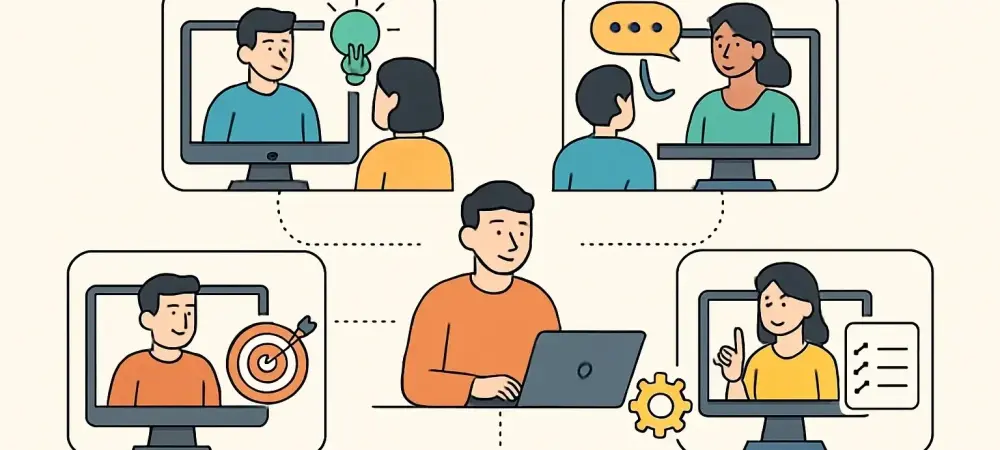
Imagine a team spread across continents, connected only by screens and sporadic messages, yet expected to collaborate seamlessly on complex projects. In today’s work landscape, this scenario is not a rarity but a common reality for millions of employees and their leaders. Remote and hybrid work models have reshaped organizational dynamics, presenting unique hurdles like physical separation, diminished spontaneous communication, and a persistent risk of disengagement. These challenges raise a critical question: how can leaders adapt to nurture trust and growth in distributed teams? The shift from traditional oversight to a mentoring mindset offers a promising path forward, emphasizing the need for coaching skills tailored to virtual environments.
The significance of this transformation cannot be overstated. As remote work continues to dominate, with many organizations adopting permanent hybrid structures, leaders face mounting pressure to maintain team cohesion without the benefit of in-person interaction. Reports from leading research bodies underscore a stark reality: a significant portion of remote workers feel disconnected or undervalued due to limited feedback and interaction. This gap highlights why adopting a coaching approach is not just beneficial but essential for fostering engagement and productivity in a digital-first world.
Why Coaching Matters in Virtual Workspaces
The rise of remote work post-pandemic has fundamentally altered leadership demands, pushing the boundaries of how connection and guidance are delivered. Unlike traditional office settings where casual check-ins and hallway conversations build rapport, virtual environments often leave employees feeling isolated or misaligned. Research from Gallup indicates that only a small fraction of remote workers receive meaningful feedback, contributing to a pervasive engagement gap. This statistic points to a pressing need for leaders to step beyond task management into a role that prioritizes personal connection and support.
Coaching emerges as a vital tool to address these issues, tackling miscommunication and feelings of exclusion head-on. Studies from Microsoft WorkLab reveal that over half of hybrid employees experience a reduced sense of belonging, a challenge that coaching can mitigate by fostering open dialogue and trust. When leaders adopt a mentoring stance, they create opportunities for employees to voice concerns and aspirations, bridging the emotional distance that technology often exacerbates.
Beyond individual well-being, coaching plays a broader role in cultivating high-performing virtual teams. By focusing on empowerment and long-term development, leaders can inspire loyalty and resilience, even across time zones. This approach not only addresses immediate concerns but also builds a foundation for sustainable success, ensuring that distributed teams remain aligned with organizational goals despite physical barriers.
Core Skills for Effective Remote Coaching
Active Listening with Empathy
In remote settings, active listening takes on a nuanced form, requiring leaders to discern emotions and unspoken issues through digital channels. Without the benefit of body language or tone often lost in text or brief video calls, understanding a team member’s true state of mind demands intentional effort. Leaders must focus on capturing subtle cues, such as hesitation in responses or patterns of disengagement, to address underlying concerns effectively.
Practical strategies can enhance this skill significantly. Paraphrasing what an employee shares during virtual meetings ensures clarity and shows genuine attention, while asking open-ended, clarifying questions invites deeper conversation. Scheduling regular one-on-one sessions, with an emphasis on personal growth rather than project updates, further reinforces a leader’s commitment to understanding each individual’s unique needs and perspectives in a remote context.
Creating Psychological Safety
Psychological safety, defined as an environment where team members feel secure to express ideas or admit errors without fear of reprisal, is a cornerstone of trust in remote teams. The absence of casual, face-to-face reassurance in virtual workspaces can heighten anxieties about judgment, stifling creativity and collaboration. Research from McKinsey highlights that a significant number of hybrid workers report feeling less connected, underscoring the urgency of fostering a safe space for open communication.
Leaders can cultivate this environment through deliberate actions tailored to digital interactions. Conducting personal check-ins to gauge individual well-being, publicly recognizing contributions during team calls, and modeling vulnerability by sharing personal challenges all encourage openness. Such practices signal to employees that their voices matter, paving the way for innovation and honest dialogue despite the constraints of remote work.
Delivering Growth-Oriented Feedback
One of the stark challenges in remote settings is the lack of informal feedback that naturally occurs in office environments through quick desk chats or impromptu discussions. This gap necessitates a structured, intentional approach to guidance that not only addresses current performance but also charts a path for future development. Without such clarity, employees may struggle to understand expectations or identify areas for improvement.
To counter this, leaders should focus on delivering feedback that is specific, timely, and forward-looking. Coupling this with suggestions for skill-building opportunities or future roles transforms feedback into a developmental roadmap, empowering remote workers to grow with clear direction and purpose.
Reflecting on Coaching in Action
Challenges and Triumphs in Remote Mentoring
Adopting coaching skills in a remote context is not without obstacles, as leaders must navigate complexities like interpreting digital cues or managing asynchronous communication across time zones. Misunderstandings can easily arise from text-based exchanges, and the lack of physical presence often complicates efforts to gauge team morale. These hurdles can test even the most seasoned leaders, requiring patience and adaptability to overcome.
Yet, the potential successes are profound when these skills are mastered. Enhanced team cohesion emerges as individuals feel valued and supported, even from a distance. Personal growth among employees becomes evident as they engage more deeply with their roles, driven by a sense of trust and encouragement from their leaders. These outcomes illustrate the transformative power of a coaching mindset in virtual workspaces.
Implementing Coaching Practices
Integrating coaching into daily leadership routines demands consistent effort and strategic planning. Scheduling regular check-ins, whether through video calls or dedicated messaging threads, ensures ongoing dialogue and connection with team members. Leveraging digital tools like collaborative platforms or engagement surveys can also facilitate interaction, making it easier to monitor team dynamics and respond to emerging needs.
Measuring the impact of these efforts is equally crucial for sustained improvement. Leaders can track changes in team engagement through feedback mechanisms or performance metrics, adjusting their approach as necessary. This continuous evaluation helps refine coaching practices, ensuring they remain relevant and effective in addressing the evolving challenges of remote work.
Final Thoughts on Nurturing Remote Teams
Looking back, the journey of integrating coaching skills into remote leadership revealed that active listening, psychological safety, and growth-oriented feedback were indispensable in overcoming the inherent barriers of virtual work. These elements proved effective in building trust and engagement among distributed teams, countering the isolation and miscommunication that often plagued such environments. Their application marked a significant shift from conventional management to a more human-centered approach.
Moving forward, leaders are encouraged to embed these skills into their regular interactions, treating coaching as an ongoing commitment rather than a one-time initiative. Exploring additional training in empathetic communication or investing in technology that enhances virtual collaboration offers practical next steps. By prioritizing talent development over mere task completion, remote leaders can continue to foster inspired, connected workplaces where employees not only adapt but thrive.