

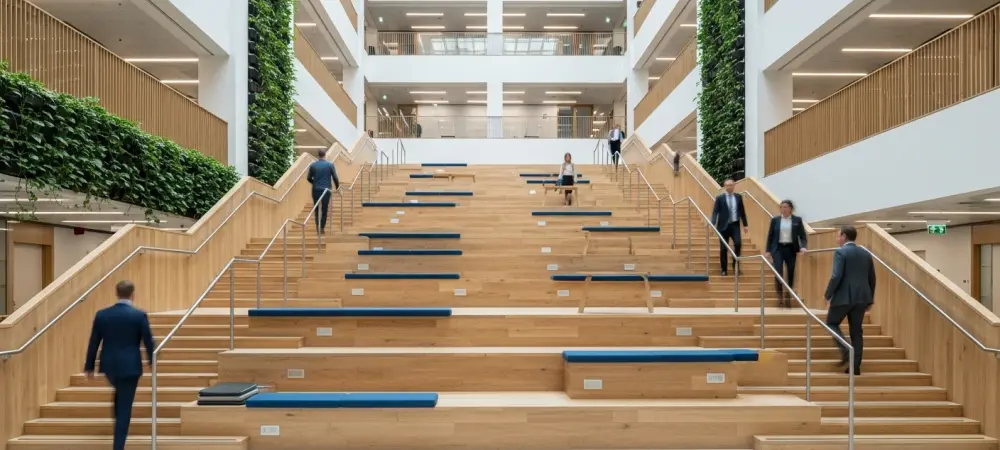
A corporate headquarters often reveals more about its inner workings through its architectural choices than through any polished mission statement published on an internal portal. Every square foot of an office functions as a persistent, silent broadcast that informs employees about their true place within the organizational hierarchy. When a company championing radical transparency hides its leadership behind frosted glass and mahogany doors, the resulting dissonance creates a quiet but pervasive sense of cynicism. This misalignment between the stated mission and the physical reality of the floor plan can quietly erode trust and engagement long before any formal policy is ever challenged.
The office serves as a constant reminder of what an organization actually prizes, acting as a form of “free advertising” that shapes internal perception. Every hallway, partition, and common area communicates a specific message about trust, value, and equality. If a brand claims to prize innovation yet houses its staff in rigid, uninspiring cubicles, it inadvertently signals that routine and conformity are more important than creative breakthroughs. This environmental messaging is absorbed daily, forming the bedrock of the employee experience.
The Silent Narrative of the Physical Workspace
Modern office design is far more than a collection of utilitarian furniture; it is a physical manifestation of a company’s soul. When staff members walk through the doors, they are immediately greeted by spatial cues that dictate how they should feel and act. A layout that prioritizes open, accessible common areas over executive isolation suggests that every voice matters, whereas a maze of high-walled cubicles reinforces a culture of silos and information hoarding. These structural choices act as an invisible hand, guiding behavior and defining the boundaries of professional relationships.
Furthermore, the physical environment serves as the primary stage for a company’s cultural performance. It is where values are either validated or exposed as hollow marketing. An organization that emphasizes wellness but offers no natural light or quiet spaces for reflection is sending a clear message about its true priorities. By aligning the physical landscape with corporate ideals, leaders can reinforce a sense of purpose that transcends basic job descriptions and fosters a more authentic connection to the workplace.
Why Environment Dictates Professional Performance
In the contemporary professional landscape, management often fixates on digital tools and productivity metrics while ignoring the physical container where work actually happens. This oversight is costly because space directly influences how people relate to one another and their specific tasks. A poorly considered layout can inadvertently signal a lack of respect for the workforce, leading to emotional exhaustion and interpersonal friction. When the environment fails to provide the necessary support for high-level thinking, productivity naturally suffers.
The strategic impact of office design is most visible in the way it handles social density and noise. Environments that are too cramped or loud prevent deep focus, forcing employees to spend significant mental energy just to block out distractions. Conversely, spaces designed with an understanding of human ergonomics and psychological comfort allow for smoother transitions between different modes of work. As organizations grapple with retention and cohesion, the physical environment has emerged as a primary lever for signaling employee worth and fostering high performance.
Redefining Design Through the Lens of Employee Agency
The most effective modern workplaces treat design not as a static choice of furniture styles, but as a dynamic commitment to employee autonomy. True agency is the ability of a staff member to choose an environment that matches the cognitive requirements of their current task. Creative work, such as writing or complex problem-solving, often thrives in secluded, unconventional settings that minimize interruptions. In contrast, collaborative editing or brainstorming sessions require open, social zones that encourage spontaneous interaction. By providing a variety of spatial options, organizations empower employees to regulate their own productivity and manage the emotional toll of workplace distractions. This shift toward “activity-based working” recognizes that a single desk is rarely suitable for every professional requirement. When individuals have the freedom to move from a quiet library-style zone to a bustling café-like area, they feel a greater sense of control over their professional lives. This empowerment directly translates into higher job satisfaction and a more resilient organizational culture.
Expert Perspectives on the Psychology of Space
Research highlighted in Leidy Klotz’s book, In A Good Place, suggests that the concept of a “neutral” office is entirely a myth. Every design choice either supports or undermines the psychological well-being of the workforce. Klotz emphasizes that spatial design is a powerful tool for emotional regulation; environments that lack privacy or fail to mitigate noise often lead to burnout. Expert analysis reveals that when leaders prioritize status-driven layouts, they inadvertently damage the social fabric of the company by creating unnecessary barriers between teams.
Workplace psychologists generally agree that a space reflecting a mission of equality and respect creates a more cohesive and empowered organization. Environments that integrate biophilic elements, such as plants and natural light, have been shown to reduce stress levels and improve cognitive function. These psychological considerations are not merely “nice to have” features; they are essential components of a healthy workspace. When design honors the human need for both connection and solitude, it creates a foundation for long-term professional success.
Strategies for Aligning Workspace with Organizational Mission
To bridge the gap between corporate culture and physical space, leaders must move beyond aesthetic upgrades toward functional transformations. A thorough audit of the current environment served as the first step for many forward-thinking firms to identify where their layout signaled the wrong message. Organizations focused on repurposing underutilized common areas to foster a sense of collective ownership rather than top-down control. This approach transformed the office from a place where people were required to be into a resource they actually wanted to use.
Implementing a task-based design framework became a cornerstone for boosting job satisfaction across diverse industries. By creating dedicated “deep work” zones, companies ensured that privacy was treated as a fundamental right rather than a luxury reserved for the executive suite. These zones directly supported the emotional and professional health of the workforce by reducing the constant drain of environmental distractions. Leaders ultimately realized that when the physical workspace was treated as a tool for empowerment, the entire organization became more adaptable and mission-driven.