

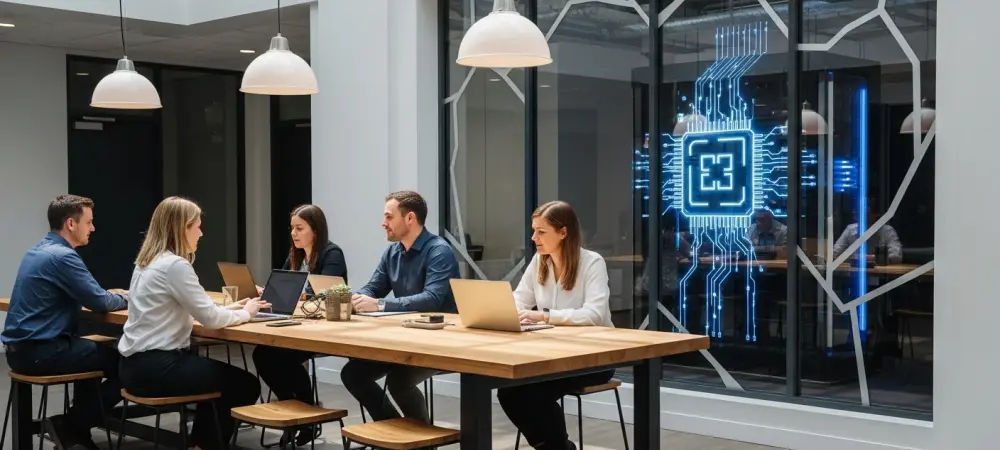
The silent frustration of wandering through a glass-walled maze searching for an available desk represents a significant yet often ignored drain on the modern professional’s psychological bandwidth. For many years, companies treated wellbeing as a secondary cultural initiative rather than a primary structural requirement. However, as the boundaries between remote and in-office work continue to blur, the physical environment has emerged as a critical factor in employee satisfaction. The objective of this analysis is to explore how infrastructure—both physical and digital—serves as the backbone of a healthy workplace. By examining common logistical challenges and technological solutions, this article provides a roadmap for transforming the office from a source of stress into a supportive tool for productivity. Readers can expect to learn why traditional management methods are failing and how data-driven systems are becoming the new standard for corporate health.
Key Questions: Understanding the Digital Foundation of Wellness
Does Workspace Management Directly Influence Mental Health?
The psychological state of a workforce is intrinsically linked to the ease with which individuals can navigate their surroundings. When an employee arrives at the office only to find their reserved space occupied or a meeting room double-booked, the resulting micro-stresses accumulate into significant burnout. This friction erodes the sense of psychological safety, as the environment feels unpredictable and unsupportive. Professional stability is built on the foundation of reliability; without it, the office becomes a site of logistical anxiety rather than a hub for innovation. Recent observations indicate that the simple act of providing visibility into space availability can drastically lower cortisol levels among staff. By removing the guesswork from the workday, organizations empower their teams to focus on high-value tasks rather than administrative hurdles. For instance, when a digital interface allows someone to see which colleagues are nearby or where the quiet zones are located, the mental load associated with planning is minimized. This proactive approach to infrastructure shifts the burden of organization from the individual to the system, fostering a calmer and more intentional work culture.
Why Do Legacy Tools Fail in a Hybrid Work Environment?
Manual systems like static spreadsheets and basic digital calendars were designed for an era when attendance was binary and predictable. In the current landscape, where team members fluctuate between locations based on project needs, these legacy tools lack the agility required to manage real-time changes. Roughly a quarter of businesses still cling to these outdated methods, which creates a significant visibility gap. This lack of transparency leads to phantom bookings and overcrowded common areas, making it nearly impossible for management to understand how the building is actually being used. The operational cost of staying tethered to old technology is staggering, with many companies losing up to twenty-four hours of productive time every week due to scheduling conflicts. This inefficiency is not just a logistical problem; it is a financial drain that impacts the bottom line through wasted rent and utility expenses. As we move from 2026 toward 2028, the reliance on automated, AI-integrated systems will become the only viable way to manage the complexity of a fluid workforce. Without a sophisticated digital backbone, even the most beautifully designed office will eventually become a chaotic and underutilized asset.
How Does Inefficient Infrastructure Impact the Return-to-Office Mandate?
For any return-to-office strategy to succeed, the experience of being in the physical workspace must demonstrably outweigh the convenience of working from home. If the commute ends in a struggle to find a functional desk or a quiet corner for a video call, the perceived value of the office plummets. This disconnect creates a commute regret that fuels disengagement and prompts employees to question the necessity of in-person collaboration. Infrastructure must therefore be viewed as a service that earns the employee’s presence by providing a seamless, high-performance environment.
When technology facilitates meaningful interactions—such as ensuring a finance team is seated near the project managers they need to consult—the office justifies its existence. Conversely, when the infrastructure is rigid, flexibility becomes a burden that weighs heavily on the employee experience. Smart systems that allow for easy booking of parking spots, lockers, and desks create a sense of belonging and preparedness. By removing the physical barriers to entry, organizations can rebuild the trust that is often lost during poorly executed hybrid transitions.
Can Technology Predict and Prevent Operational Waste?
Managing a modern real estate portfolio requires a granular understanding of occupancy patterns that human observation alone cannot provide. Sensors and smart booking platforms offer a constant stream of data that identifies which areas are over-utilized and which are consistently empty. This information allows facilities managers to right-size their space, potentially reducing the square footage required while improving the quality of the remaining areas. In an era of rising energy costs and strict environmental goals, the ability to power down unused floors based on real-time demand is an essential capability.
Furthermore, these systems enable a more strategic allocation of resources that extends beyond simple desk counting. By analyzing how different departments interact with the space, businesses can design more effective layouts that support specific behaviors like deep work or spontaneous brainstorming. This data-driven approach ensures that the office remains a dynamic asset that evolves alongside the company’s needs. Ultimately, the integration of intelligent infrastructure allows for a more sustainable and cost-effective operation that benefits both the organization and the individual.
Summary: The Pillars of a Modern Functional Workspace
The transition from traditional office management to a smart, infrastructure-led approach highlights three critical pillars: visibility, predictability, and intentionality. Visibility ensures that every team member has access to real-time information, reducing the stress of the unknown. Predictability guarantees that the resources promised are the resources delivered, reinforcing a culture of reliability. Intentionality ensures that the time spent in the office is purposeful, driven by data that maximizes the benefits of face-to-face collaboration. Together, these elements form a foundation for wellbeing that is far more durable than any temporary perk or cultural program. By prioritizing the user experience of the office itself, companies can create a environment that actively contributes to health. The reduction of operational friction serves as a direct investment in the cognitive capacity and emotional stability of the workforce. As organizational structures continue to adapt to a fluid future, these pillars will remain the benchmark for a successful and supportive professional environment.
Conclusion: Moving Beyond Traditional Office Management
The realization that workplace wellbeing was a structural challenge redirected corporate focus away from superficial solutions and toward the implementation of functional excellence. Organizations that prioritized the digital backbone of their offices successfully reduced employee burnout and stabilized their hybrid models during the mid-2020s. This shift proved that a well-managed environment acted as a silent partner in mental health, allowing professionals to dedicate their energy to innovation rather than logistics.
Moving forward, the most resilient companies will be those that continue to view their physical spaces as dynamic services tailored to human needs. Investing in seamless, data-informed infrastructure became the definitive strategy for fostering a high-performance culture that prioritized the person as much as the output. The transition from static locations to flexible hubs was not merely a change in policy, but a complete reimagining of the office as a tool for collective health and efficiency. Any leader looking to future-proof their organization should begin by auditing the friction points in their current workspace technology.