

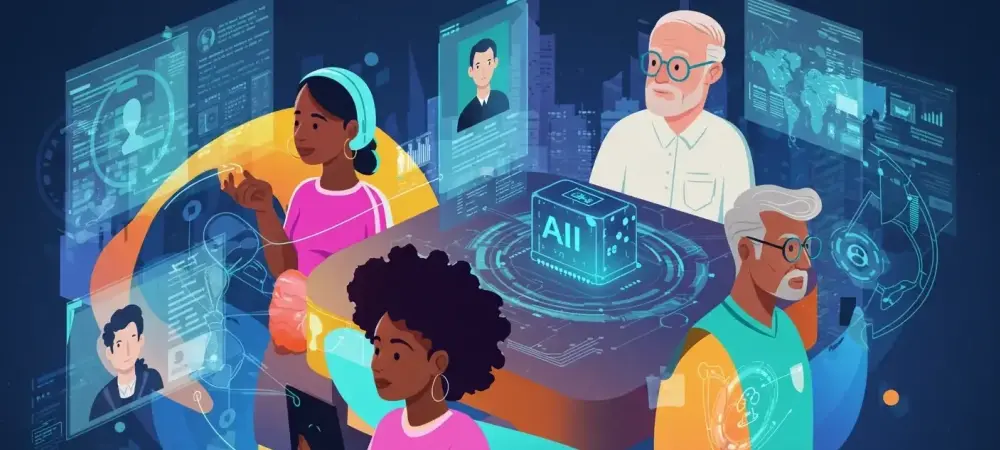
As businesses continually seek cutting-edge solutions for enhanced productivity and decision-making, the adoption of artificial intelligence (AI) in human resource management has become a pivotal trend. With the majority of managers now relying on AI tools for key personnel decisions, ranging from promotions to layoffs, the shift underscores a significant transformation in workforce management strategies. This evolution raises essential questions about ethical implementation and the potential reshaping of organizational dynamics.
The Rise of AI in Human Resource Management
Adoption and Growth Trends
Data from recent years illustrates substantial growth in the utilization of AI for personnel decisions across various sectors. Statistics show that six in ten managers incorporate AI tools, with a noteworthy 94% employing these technologies for decision-making regarding staff management. These figures highlight a fast-evolving trend where AI’s role is increasingly central to day-to-day human resource functions. Reports suggest that the advancement and deployment of AI in HR are accelerating, driven by organizations seeking to enhance decision accuracy and ensure efficient processes.
Real-World Applications
In practical terms, AI’s influence manifests in numerous real-world applications. Big organizations such as major tech firms have implemented AI-driven systems to analyze employee performance data objectively, aiding in reward distribution and career development opportunities. These systems also endeavor to mitigate human bias, aiming to improve fairness and inclusivity in workplaces. Case studies from industry leaders demonstrate how AI is redefining traditional HR operations by optimizing tasks like candidate screening and workforce planning, which historically required substantial human effort and resources.
Expert Insights and Opinions
AI’s integration into personnel decisions has not gone unnoticed by industry experts and thought leaders. Many professionals emphasize the need for transparent and ethical AI deployment to prevent potential misuse or biases inherent in the datasets used for training these systems. Additionally, experts highlight the dual role AI can play—it might both propagate existing biases if not properly monitored and serve as a catalyst for identifying and correcting disparities in decision-making. The commentary from knowledgeable figures underscores the importance of balancing technological capabilities with human oversight to harness AI’s full potential responsibly.
Future Outlook and Implications
Looking ahead, the future of AI in personnel decisions presents a complex yet promising landscape. Organizations can anticipate potential benefits, such as heightened efficiency and improved accuracy in decision-making, allowing for more informed decisions about human capital. However, challenges loom on the horizon, particularly concerning ethical considerations and the risk of over-reliance on AI systems. The broader implications suggest a need for robust training programs and the establishment of guidelines to ensure that AI complements rather than overrides human judgment. The evolution of AI will likely see further integration across industries, shifting workforce dynamics and prompting companies to adapt accordingly.
Conclusion and Call to Action
In analyzing the current trends, it is evident that the integration of AI into personnel decisions marks a significant shift in human resource strategies. The importance of ethical AI deployment is underscored by experts, reinforcing the need for businesses to prioritize transparency and accountability. As organizations explore this terrain, ongoing efforts to train managers and refine AI tools are crucial to maintaining a balance between technological advances and human oversight. To navigate this evolving landscape effectively, companies are encouraged to remain vigilant, continually assess AI’s impact, and strive to enhance human judgment with data-driven insights.