

The sight of a service van sitting idle in a driveway represents far more than just a quiet engine; it signifies a daily revenue loss that can reach thousands of dollars for a local plumbing or electrical firm. For years, business owners in the home services sector have operated in a state of constant anxiety, tethered to the hope that a qualified technician might stumble upon their job posting before a competitor pounces. This “post-and-pray” methodology has finally reached its breaking point as the demand for infrastructure repair outpaces the availability of seasoned professionals.
The End of the “Post-and-Pray” Era in Home Services
Relying on generic job boards and local classifieds has become a recipe for operational gridlock. In the current market, the frantic search for talent often leads to “desperation hiring,” where companies settle for sub-par candidates simply to keep their service routes active. This reactive cycle doesn’t just hurt the bottom line; it erodes the quality of service and places an immense burden on the existing team. A shift is occurring that moves the responsibility from the overwhelmed business owner to intelligent, automated systems.
By transitioning away from chaotic, manual outreach, trade businesses are discovering that recruitment can be a predictable process rather than a gamble. The goal is to eliminate the administrative scramble that occurs every time a technician resigns. Instead of waiting for a vacancy to create a crisis, modern firms are implementing structures that treat talent acquisition as a core utility, ensuring that growth is never hindered by a lack of manpower.
The Chronic Labor Gap and the Need for Permanent Infrastructure
The skilled trades are grappling with a dual crisis characterized by an aging workforce entering retirement and a younger, digital-native generation that demands a streamlined application experience. Traditional recruitment is often triggered only by an immediate need, which creates a volatile environment of excessive overtime and burnout for the remaining crew. To remain viable, businesses must move toward a permanent hiring infrastructure that functions independently of current staffing levels.
This evolution requires a mindset shift where finding a worker is no longer a one-time event but part of a continuous pipeline. Building this infrastructure allows a company to remain visible to the talent pool at all times. When a business treats recruitment as a constant background process, it gains the leverage to hire for quality rather than necessity, effectively insulating the operation from the sudden shocks of a tight labor market.
Inside the AI Talent Engine: Modernizing the Blue-Collar Pipeline
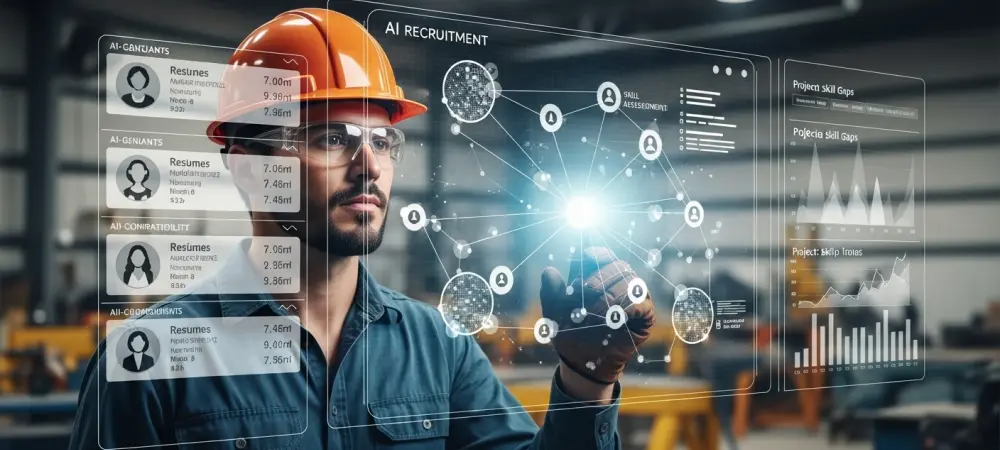
Modern sourcing has moved beyond the limitations of active job seekers by using AI to identify high-potential talent across diverse digital platforms. These systems proactively engage “passive” candidates—highly skilled professionals who may not be looking for work but are willing to move for a better culture or higher pay. This ensures that the candidate pool is always fresh and populated with individuals who haven’t yet been exhausted by the traditional job market churn.
Administrative efficiency serves as the backbone of this new pipeline, solving the problem of the “administrative black hole” where resumes vanish into cluttered inboxes. Centralized dashboards now consolidate every applicant and interview stage into a single view, allowing owners to monitor their workforce health at a glance. Furthermore, instant engagement tools reach out to qualified applicants within seconds of their submission, ensuring that a top-tier plumber isn’t hired by a faster rival while the owner is busy on a job site.
The most successful applications of this technology do not remove the human element but rather enhance it through a hybrid model. While algorithms can filter data and manage initial outreach, veteran recruiters provide the nuanced judgment required to assess cultural fit and specific technical mastery. This combination ensures that the final shortlist consists of candidates who are not just qualified on paper but are also prepared to contribute to the long-term health of the team.
Data-Driven Results and the Shift Toward AI-Native HR
The integration of “AI-native” technology means that intelligence is no longer an optional add-on; it is embedded directly into the workforce strategy. Companies adopting these automated pipelines report a significant reduction in the true cost per hire by eliminating inefficient ad spend and lowering turnover rates. When recruitment is treated as a scalable asset, businesses gain the confidence to bid on larger contracts, knowing they have the logistical support to staff the projects effectively.
Beyond simple cost savings, the shift toward these intelligent systems fosters a more professional environment that attracts higher-quality applicants. Data suggests that technicians are more likely to join a company that demonstrates a high level of organization and rapid communication during the hiring phase. This professionalism translates into higher operational stability, allowing leadership to move away from the stress of constant turnover and toward strategic business expansion.
Choosing the Right Framework for Scalable Hiring
Selecting the appropriate recruitment framework depends largely on the growth velocity and specific needs of the business. Some firms require a standard “always-on” system to maintain steady growth, while larger organizations may need enterprise-level solutions designed for high-volume, multi-location expansion. Identifying the necessary level of management—whether it be a fully outsourced model or a performance-based arrangement—allows owners to align their recruitment costs with their actual hiring success.
Success in the modern trades requires an obsession with response times and the removal of bottlenecks in the vetting process. Implementing instant response protocols ensures that no viable candidate is left waiting, which is critical in an industry where the first person to call often gets the hire. By offloading these repetitive tasks to an automated engine, business owners finally secured the time needed to focus on revenue-producing activities like sales training and customer satisfaction. The industry moved toward a future where human expertise and machine speed worked in tandem to keep the wheels of service turning.